
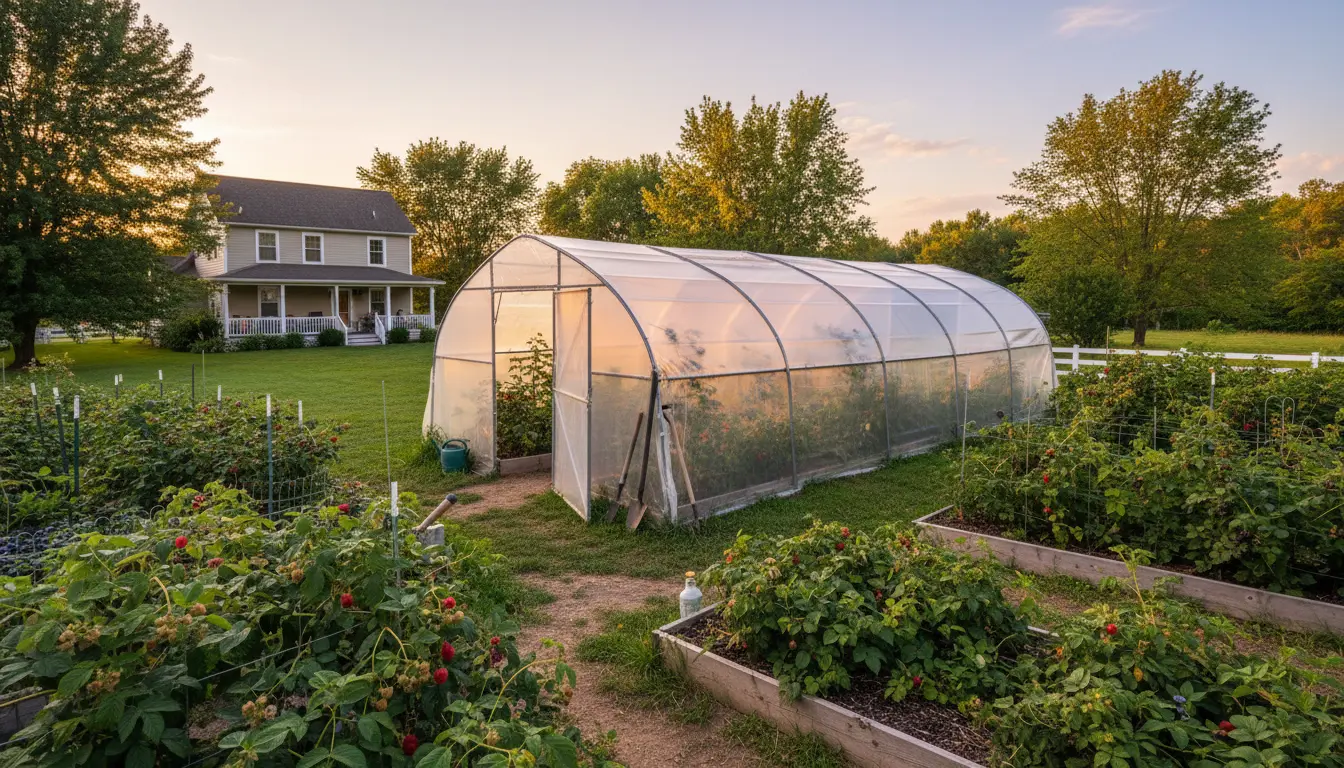
Harvest Fresh Berries Year-Round from Home Patches
Producing berries every month requires planning, selection, and simple season-extension techniques. Focus on a mix of varieties and a few protective structures to spread harvests across the year.
Plan your patch and pick the right varieties
Begin with varieties that naturally spread harvests. Combine early, mid, and late-season types so crops do not ripen all at once. Choose everbearing or day-neutral strawberries, remontant raspberries, and thornless blackberries to extend fruiting.
Key choices to consider:
- Strawberries: day-neutral and everbearing for repeated harvests.
- Raspberries: summer-bearing for peak season and fall-bearing (remontant) for autumn crop.
- Blackberries: choose primocane-fruiting varieties for late-summer to fall fruit.
- Blueberries: mix early and late cultivars for a spread-out season.
Soil, watering, and basic care to maximize yield
Healthy soil and consistent moisture produce reliable fruit. Test pH and add amendments; most berries like slightly acidic soil (pH 5.5–6.5).
Keep irrigation steady with drip lines or soaker hoses. Mulch keeps roots cool, retains water, and reduces weeds.
Season extension techniques for year-round harvests
Season extension is the practical core of year-round harvesting. Use low-cost solutions first, then scale up if needed.
Cold frames, row covers, and hoop houses
Cold frames and floating row covers add 4–10°F and protect against frost. They are ideal for early spring and late fall fruiting. Hoop houses or small polytunnels give more control and allow winter production of hardy varieties.
Tips for use:
- Install covers before expected cold snaps, and vent on warm days to avoid overheating.
- Use clear plastic on hoop houses for maximum solar gain in winter.
Containers, pots, and moving plants indoors
Growing berries in containers allows you to move plants to protected areas or indoors under lights. Day-neutral strawberries and small-fruited blueberries adapt well to pots.
Indoor culture works best with supplemental LED grow lights and good air circulation to prevent mildew.
Staggered planting and pruning for continuous fruit
Staggered planting means sowing or transplanting at different times so new plants come into production when older ones decline. It is simple and effective.
Prune according to type: remove old canes on summer-bearing raspberries but keep primocanes on primocane-fruiting types. Pruning directs energy into new shoots and improves fruit quality.
Monthly checklist for home patches
- Spring: plant new varieties, apply balanced fertilizer, mulch around plants.
- Summer: water deeply, net for birds, pick ripe fruit every 1–3 days.
- Fall: apply compost, set up row covers for cold nights, prune as needed.
- Winter: protect crowns with mulch, harvest late-season crops from hoop houses or containers indoors.
Harvesting tips to keep fruit fresh longer
Harvest in the cool part of the day—early morning is best. Pick only fully ripe berries; they do not continue to sweeten once picked.
Handle berries gently. Store in a shallow container in the refrigerator and wash only before eating to extend shelf life.
Day-neutral strawberries produce fruit throughout the growing season instead of a single big crop, making them ideal for staggered harvests and container culture.
Preserve and use surplus to enjoy berries all year
Even with year-round production, you may have peaks. Preserve excess with quick methods like freezing, jam-making, or drying.
- Freeze: spread berries on a tray, freeze, then transfer to airtight bags for long-term storage.
- Jam or preserves: cook berries with sugar and a bit of lemon juice; process in jars for pantry storage.
- Dehydrate: slice and dry for snacks that last months.
Small case study: A suburban family patch
In one suburban yard, a family planted two rows of early and late blueberries, a bed of day-neutral strawberries in containers, and a mix of remontant raspberries along a fence. They added a single hoop house for winter protection.
By using containers moved under lights in late winter and covering beds with floating row cover in early spring, they extended harvests from June through November, with small indoor picks in February and March from the containers. Freezing surplus each season cut grocery costs and provided fruit year-round.
Pest control and pollination
Protect crops from birds with netting and watch for common pests like slugs and aphids. Encourage pollinators by adding flowering herbs and avoiding broad-spectrum insecticides during bloom.
For greenhouse work, consider hand-pollination with a soft brush or use bumblebees if available for enclosed systems.
Final checklist to harvest fresh berries year-round
- Mix varieties (everbearing, remontant, primocane) to spread harvests.
- Use season extension: row covers, cold frames, and a hoop house.
- Grow some plants in containers to move indoors under lights.
- Prune and maintain soil fertility to maximize production.
- Preserve surplus to enjoy berries through winter months.
With variety selection, a few protective structures, and simple cultural practices, you can harvest fresh berries from your home patch most months of the year. Start small, track what works in your microclimate, and expand gradually for continuous fruit.