
Why start a vegetable garden
Growing your own vegetables saves money and gives fresher, tastier food. A small garden also reduces trips to the store and can be adapted to any outdoor space.
This guide explains how to start a vegetable garden step by step, with practical tips for soil, plants, watering, and simple maintenance.
Choose the right location to start a vegetable garden
Location affects plant health more than most other factors. Pick a spot with at least six hours of direct sunlight for most vegetables.
Consider access to water, drainage, and convenience. If space is limited, use containers or raised beds near your back door.
Sun, water, and soil access
Sunlight: Aim for full sun (6 to 8 hours) for tomatoes, peppers, and cucurbits. Leafy greens tolerate partial shade.
Water: Choose a place within easy reach of a hose or rain barrel. Regular watering is easier when the source is nearby.
Prepare the soil when you start a vegetable garden
Healthy soil is the foundation of a productive garden. Test the soil pH and texture if possible to know what to improve.
Most vegetables prefer slightly acidic to neutral soil (pH 6.0 to 7.0). Add compost to improve fertility and structure.
Steps to improve soil
- Clear weeds and debris from the chosen area.
- Loosen compacted soil to at least 8 inches using a fork or tiller.
- Mix in 2 to 3 inches of compost and a handful of slow-release organic fertilizer per 10 square feet.
- For poor clay or sandy soil, add organic matter and consider raised beds to control conditions.
Decide what to plant when you start a vegetable garden
Select plants that match your climate, season, and skill level. Beginners should start with easy, forgiving crops.
Examples of easy vegetables: lettuce, radishes, green beans, tomatoes, zucchini, and herbs like basil.
Plan your first season
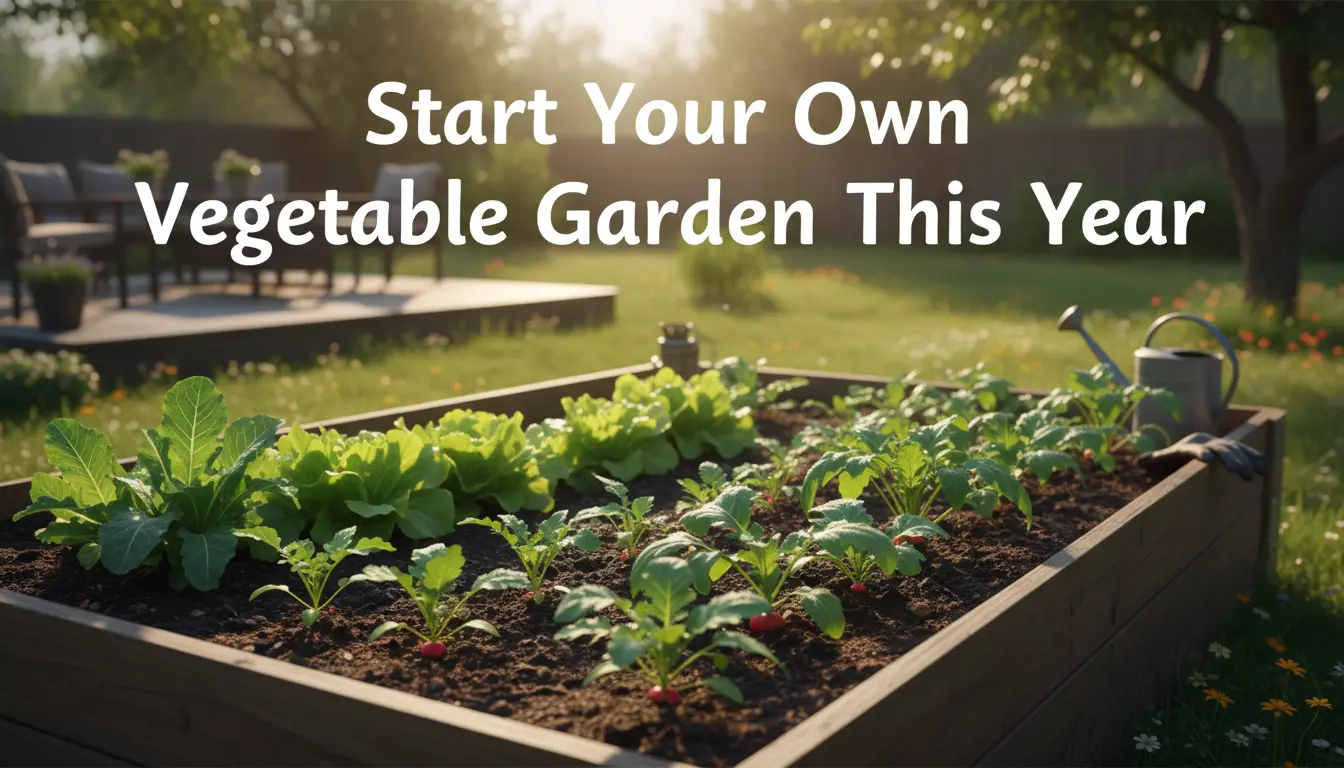
Start small to avoid overwhelm. A 4×8 foot raised bed or a few containers can provide plenty of fresh produce for a household.
Use seed packets and plant tags to follow spacing and depth instructions. Stagger plantings to extend the harvest.
Planting tips to start a vegetable garden
Follow these planting best practices for better results. Timing and spacing matter more than you might expect.
- Sow seeds at the recommended depth on the packet.
- Thin seedlings so remaining plants have room to grow.
- Transplant seedlings on an overcast day or in the evening to reduce shock.
- Mulch around plants to conserve moisture and reduce weeds.
Watering and feeding your vegetable garden
Consistent watering keeps plants healthy. Most vegetables need about 1 inch of water per week, more during heat waves.
Water deeply and less often to encourage strong root growth. Use drip irrigation or soaker hoses for efficiency.
Nutrition
Feed plants with a balanced organic fertilizer or compost tea every 4 to 6 weeks, depending on crop needs. Heavy feeders like tomatoes may need additional feeding.
Common pests and disease tips
Expect some pests. Monitor plants weekly and act early. Handpick larger pests and use barriers for small ones.
Rotate crops yearly and remove diseased plants promptly to reduce disease pressure. Healthy soil and proper spacing also prevent many problems.
Harvesting and ongoing care
Harvest regularly to encourage more production, especially with crops like beans and zucchini. Pick leaves and fruits when they are fresh and tender.
End-of-season cleanup includes removing spent plants, saving healthy seeds, and adding spent plants to your compost pile.
Interplanting basil near tomatoes can improve tomato flavor and may reduce some pests. Companion planting can be a simple, natural way to boost yields.
Simple example case study: One-season raised bed
Case study: A 4×8 foot raised bed was prepared with loam and 3 inches of compost in early spring. The gardener planted tomatoes, lettuce, bush beans, and basil.
With weekly watering and two light feedings, the bed produced 20 to 25 lbs of mixed vegetables in a single season. Tomatoes were the largest crop, and staggered lettuce sowings provided continuous greens.
Quick checklist to start a vegetable garden
- Choose sunny location with water access.
- Prepare soil and add compost.
- Select easy vegetables for your climate.
- Plant at proper depth and spacing.
- Water consistently and mulch.
- Monitor pests and rotate crops each year.
Final tips for those who want to start a vegetable garden
Keep a simple garden journal to track plant dates, harvests, and problems. This helps you improve each season.
Start small, learn from one season, and expand gradually. Gardening is practical and rewarding when you build skills step by step.