
Why composting at home matters
Composting at home turns kitchen scraps and yard waste into nutrient-rich soil. It reduces landfill waste and lowers household carbon footprint.
For gardeners, compost improves soil structure, water retention, and plant health. For non-gardeners, composting still cuts trash volume and supports community sustainability.
A typical household can divert up to 30% of its trash to compostable materials, saving money on waste removal and producing free soil amendment.
How to start composting at home: quick overview
Starting is simple: pick a system, gather materials, and follow basic maintenance. You do not need a large yard or special equipment to compost effectively.
This guide covers backyard bins, tumblers, and indoor options like worm bins and Bokashi systems. Choose what fits your space and lifestyle.
Choose a composting system
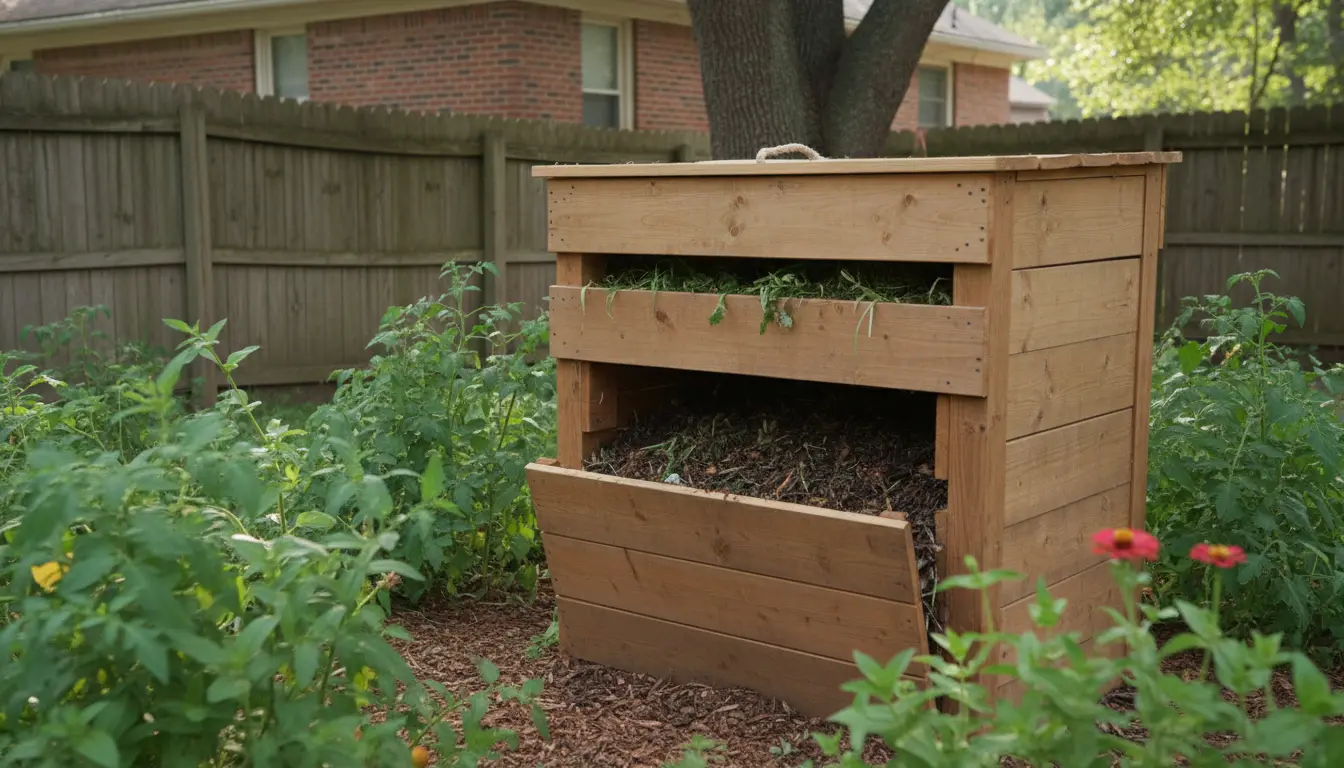
- Backyard bin: Good for yards and moderate waste. Low cost and low maintenance.
- Compost tumbler: Faster decomposition and fewer pests. Ideal for small yards.
- Worm bin (vermicomposting): Best for indoor spaces and kitchen scraps. Produces worm castings quickly.
- Bokashi: Fermentation method that handles meat and dairy. Needs a small outdoor finishing step.
Select location and container
Place a backyard bin on level ground with some shade to retain moisture. Ensure good drainage to avoid soggy compost.
For indoor or balcony systems, keep the bin in a ventilated area and manage odors by balancing materials and airflow.
Materials to compost at home
Successful compost needs a mix of carbon-rich browns and nitrogen-rich greens. Balance them to promote microbial activity and avoid smells.
Examples of browns and greens
- Browns (carbon): dry leaves, straw, shredded paper, cardboard, wood chips.
- Greens (nitrogen): vegetable scraps, coffee grounds, fresh grass clippings, tea bags.
Aim for roughly 3 parts browns to 1 part greens by volume. If the pile smells, add more browns. If it is dry and slow, add greens and water.
Step-by-step: how to start composting at home
Follow these steps to establish a stable compost pile or bin. Each step takes only a few minutes at setup and regular checks later.
- Assemble your bin or choose a spot for a pile.
- Add a 4-6 inch base layer of coarse browns for aeration.
- Alternate layers of greens and browns while shredding large pieces.
- Maintain moisture like a wrung-out sponge; water if too dry.
- Turn the pile every 1–3 weeks to add oxygen and speed decomposition.
- Harvest finished compost when dark, crumbly, and earthy-smelling (usually 2–6 months).
Troubleshooting composting at home
Common issues are easy to fix and part of the learning process. A few adjustments will keep the pile healthy.
Smells bad
If the compost smells sour or rotten, it is too wet or has too many greens. Add dry browns and turn the pile to introduce air.
Pile is dry and slow
Add moistened greens or water and mix. Covering the pile can help retain moisture and warmth during dry periods.
Pests and flies
Use an enclosed bin or cover fresh kitchen waste with browns. Avoid adding meat, oily foods, or large dairy scraps unless using Bokashi or a hot compost method.
Small real-world example: a neighborhood starter
Case study: A two-person household in a townhouse began backyard composting with a small tumbler. They saved a compost bucket under the sink and emptied it twice a week.
Within four months they produced enough compost to top-dress two container vegetable beds. Their trash volume dropped noticeably and tomato yields improved.
Practical tips for composting at home
- Chop or shred larger items to speed breakdown.
- Keep a small countertop caddy with a tight lid to collect scraps and reduce odors.
- Monitor temperature: active piles heat up; a cold pile just needs turning and moisture adjustment.
- Use finished compost as mulch, potting mix amendment, or soil conditioner.
Final checklist before you begin composting at home
- Pick a system that fits your space and routine.
- Stock up on browns like shredded paper or dry leaves.
- Commit to regular turning and moisture checks for the first few months.
- Learn to recognize when compost is ready to use.
Composting at home is a practical step anyone can take to reduce waste and improve soil. Start small, observe, and adjust. Over time you will refine your process and benefit from free, healthy compost.