
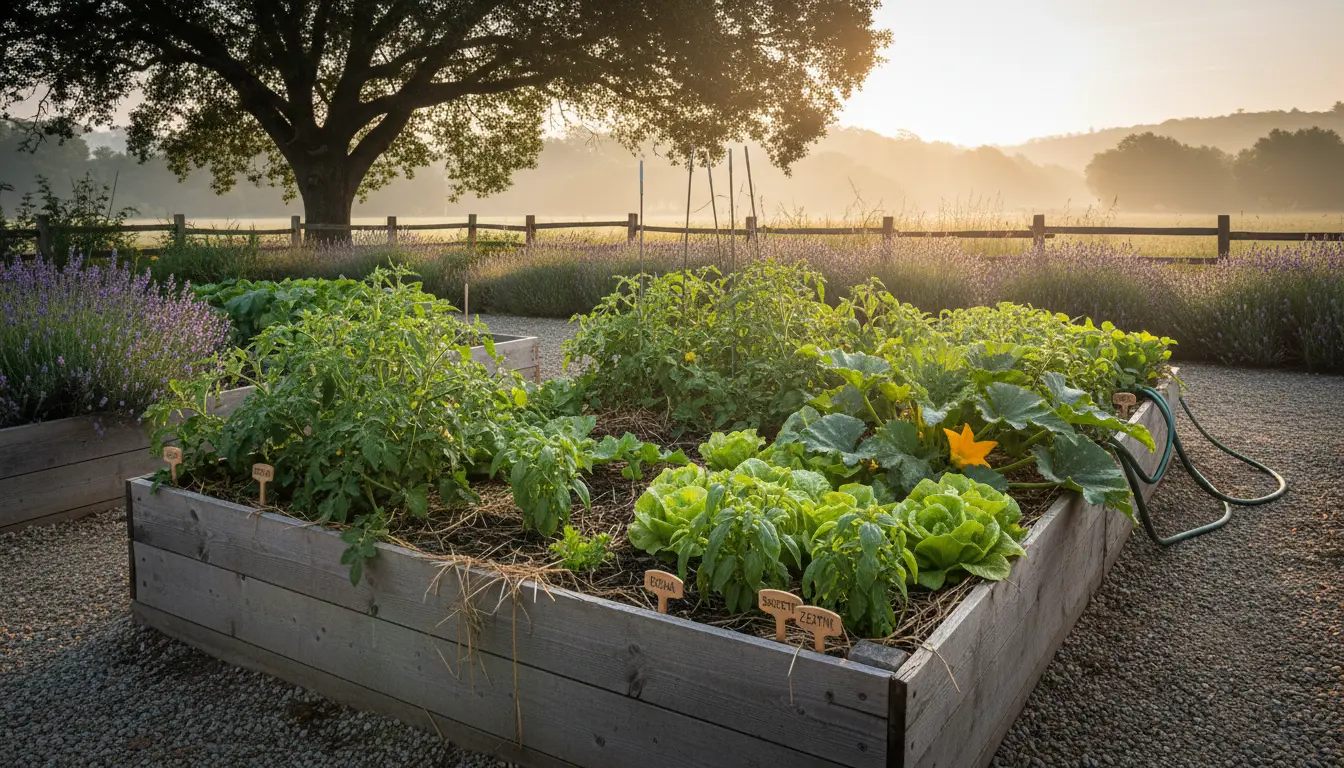
Why Start a Vegetable Garden
Starting a vegetable garden lets you grow fresh, healthy food at home. It saves money, reduces food miles, and gives satisfying hands-on work.
This guide shows practical, step-by-step instructions to help you start a vegetable garden with confidence.
Plan Before You Start a Vegetable Garden
Good planning reduces wasted time and effort. Begin by checking available space, sun exposure, and water access.
- Choose a site with at least 6 hours of direct sun for most vegetables.
- Ensure easy access to a water source and good drainage.
- Decide between in-ground beds, raised beds, or containers based on soil and space.
Choose What to Grow When You Start a Vegetable Garden
Select vegetables that match your climate and eating habits. For beginners, pick a few easy crops that give reliable yields.
- Leafy greens: lettuce, spinach, chard.
- Quick crops: radishes, bush beans, green onions.
- Low-maintenance: tomatoes, peppers, zucchini (if space allows).
Prepare the Site and Soil
Healthy soil is the foundation of every vegetable garden. Test and improve your soil before planting.
Begin with a simple soil test kit to check pH and basic nutrients. Most vegetables do best with pH 6.0–7.0.
How to Improve Soil to Start a Vegetable Garden
Use compost and organic matter to boost soil structure and fertility. Work compost into the top 6–12 inches.
- Add 2–4 inches of compost and mix into existing soil.
- For heavy clay, add coarse sand and compost to improve drainage.
- For sandy soil, add compost and leaf mold to increase water retention.
Planting Basics When You Start a Vegetable Garden
Follow seed packet instructions for spacing and planting depth. Planting at the right time is key to success.
Start seeds indoors for long-season crops or buy healthy seedlings from a nursery to make the process faster.
Planting Tips and Spacing
- Use rows or square-foot grids for small beds to maximize space.
- Avoid crowding—plants need airflow to reduce disease.
- Stagger plantings of fast crops like lettuce every 2–3 weeks for continuous harvests.
Watering, Mulching, and Feeding
Consistent watering and proper mulching help reduce weeds and keep plants healthy. Aim for deep, infrequent watering.
- Water early in the morning to reduce evaporation and disease risk.
- Apply 2–3 inches of organic mulch to conserve moisture and suppress weeds.
- Use a balanced fertilizer or side-dress with compost mid-season for heavy feeders like tomatoes.
Pest and Disease Management
Use integrated pest management (IPM) to handle pests with minimal chemicals. Observation and early action are effective.
- Inspect plants weekly and remove damaged leaves promptly.
- Encourage beneficial insects by planting flowers like marigolds and dill.
- Use row covers to protect young seedlings from insects and birds.
Maintenance and Seasonal Tasks
Regular tasks keep the garden productive. Develop a simple routine for weeding, pruning, and harvesting.
- Weed promptly; small weeds are easier to remove.
- Stake indeterminate tomatoes and prune as needed to improve airflow.
- Rotate crops each year to reduce disease and nutrient depletion.
Harvesting and Storage
Harvest vegetables at peak ripeness for best flavor. Frequent harvesting often encourages more production.
Store produce properly: leafy greens in the fridge, root crops in a cool, dark place.
Common Mistakes to Avoid When You Start a Vegetable Garden
- Planting too many varieties at once—start small and expand.
- Overwatering or shallow watering—aim for deeper, less frequent watering.
- Ignoring soil health—feeding the soil feeds the plants.
Crop rotation and adding a few inches of compost each year can boost yields and reduce pests without synthetic fertilizers.
Quick Seasonal Calendar
- Spring: Prepare beds, start seeds indoors, plant cool-season crops.
- Summer: Maintain watering, stake plants, harvest regularly.
- Fall: Plant late-season greens, remove spent plants, add compost.
Case Study: Small Urban Garden Success
Anna, a city apartment owner, used two raised beds (4×4 feet each) on a sunny balcony. She added compost and planted tomatoes, basil, lettuce, and radishes.
Within one season she harvested fresh salads weekly and saved over $150 on grocery produce. Her key steps were regular watering, mulching, and staggered planting.
Final Checklist to Start a Vegetable Garden
- Pick a sunny site and decide bed type (ground, raised, container).
- Test and amend soil with compost; check pH.
- Choose easy crops and follow planting schedules.
- Set up a watering routine, use mulch, and monitor pests.
Starting a vegetable garden is a practical way to grow fresh food and learn new skills. Start small, keep tasks simple, and expand as you gain experience.