
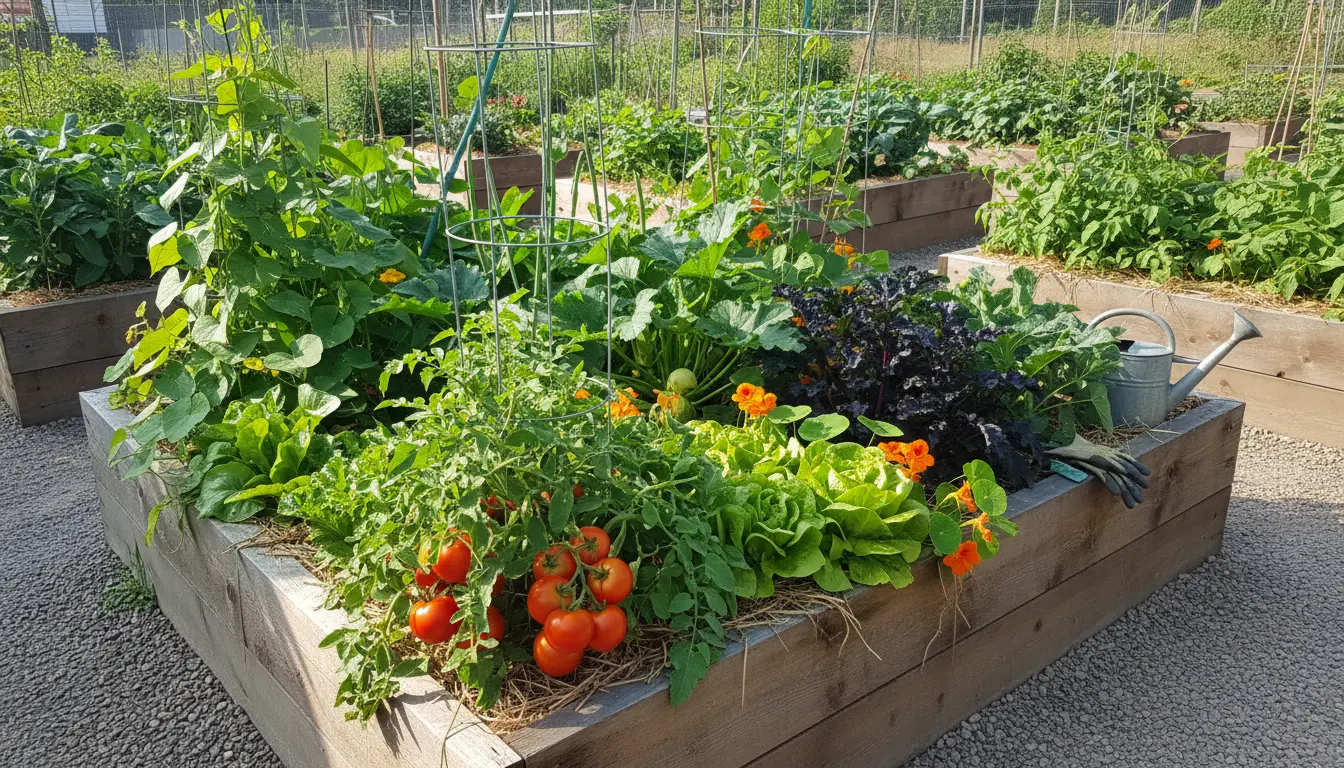
Quick overview: Why start a vegetable garden
Growing vegetables at home saves money and gives you fresher produce. It also teaches practical skills and can reduce food miles.
This guide explains how to start a vegetable garden with clear, actionable steps you can follow in a weekend or over a few weeks.
Choose the right spot for your vegetable garden
Select a location that gets at least 6 hours of direct sunlight daily for most vegetables. Good sunlight directly improves yield and flavor.
Look for level ground with good drainage and easy access to water. Avoid low spots that collect cold air or water.
Small-space options to start a vegetable garden
If you lack a yard, consider containers, raised beds, or vertical supports. Many common vegetables grow well in containers on balconies or patios.
- Containers: use 5–10 gallon pots for tomatoes and peppers.
- Raised beds: better soil control and drainage, ideal for rows of vegetables.
- Vertical gardening: trellises for cucumbers, beans, and peas save space.
Test and prepare soil before planting
Healthy soil is the foundation of a productive vegetable garden. A simple soil test will tell you pH and nutrient levels.
Amend the soil with organic matter like compost to improve structure and fertility. Mix 2–4 inches of compost into the top 6–8 inches of soil.
Basic soil checklist
- pH: Most vegetables prefer pH 6.0–7.0.
- Texture: Loamy soil holds moisture and drains well.
- Organic matter: Aim for at least 5–10% by volume in established beds.
Plan what to plant in your vegetable garden
Start with a few easy crops that provide reliable yields for beginners. Choose based on your climate and what you eat most.
Good beginner vegetables include tomatoes, lettuce, radishes, beans, and peppers. These have straightforward care and quick returns.
Planting schedule and spacing tips
- Read seed packet or plant tag timing for your frost dates.
- Space plants to avoid overcrowding (e.g., tomatoes 18–24 inches apart).
- Succession plant: sow quick crops like radishes between slower ones to maximize harvests.
Watering and fertilizing your vegetable garden
Consistent watering is more important than frequent light watering. Aim for deep, infrequent watering to encourage strong roots.
Use a mulch layer to keep soil moisture even and suppress weeds. Mulch also reduces evaporation and soil temperature swings.
Fertilizer basics
Apply a balanced organic fertilizer at planting and side-dress with compost or fertilizer during the season. Watch plant leaves for nutrient deficiency signs.
- Nitrogen shortage: yellowing leaves and slow growth.
- Phosphorus: slow root growth and poor flowering.
Manage pests and diseases in a vegetable garden
Prevention is the best approach: rotate crops, maintain clean beds, and use healthy seedlings. Monitor plants weekly for early signs of problems.
Use physical controls first, like row covers and hand-picking pests. Introduce beneficial insects like ladybugs to reduce aphids naturally.
Simple integrated pest steps
- Remove diseased foliage promptly and dispose of it away from the garden.
- Encourage biodiversity with companion plants and flowers to attract predators.
- Use targeted organic sprays only when necessary and follow label instructions.
Harvesting and extending the season
Harvest vegetables at peak ripeness for best flavor and to encourage more production. Pick regularly; many plants produce more when harvested often.
To extend the season, use cold frames, row covers, or move container crops to sheltered spots in cooler months.
Simple tools and supplies to start a vegetable garden
You don’t need fancy tools to begin. Basic items include a spade, hand trowel, watering can or hose, and gloves.
Optional but helpful: soil test kit, wheelbarrow, and a garden fork for turning compost.
Case study: Starting a 10×10 backyard vegetable garden
Maria converted a 10×10 ft patch of lawn into a raised bed and started a small vegetable garden. She prepared soil with compost and planted tomatoes, lettuce, and bush beans.
In her first season she harvested weekly salads and three tomato plants that produced over 25 lbs combined. Mulch reduced watering needs by nearly half.
Key takeaways from this simple case: plan space, amend soil, and start with a few crops you will use frequently.
Practical checklist to start a vegetable garden this weekend
- Pick a sunny spot and measure the area.
- Test soil or buy good topsoil for containers/raised beds.
- Choose 3–5 beginner-friendly crops and buy seeds or seedlings.
- Prepare soil with compost and set up simple irrigation or plan watering schedule.
- Mulch, plant, and label rows. Monitor weekly and harvest regularly.
Final tips for a lasting vegetable garden
Start small and expand as you gain confidence. Keeping notes on planting dates, varieties, and yields helps improve next season’s plan.
Enjoy the process: a productive vegetable garden grows with simple care, patience, and observation.