
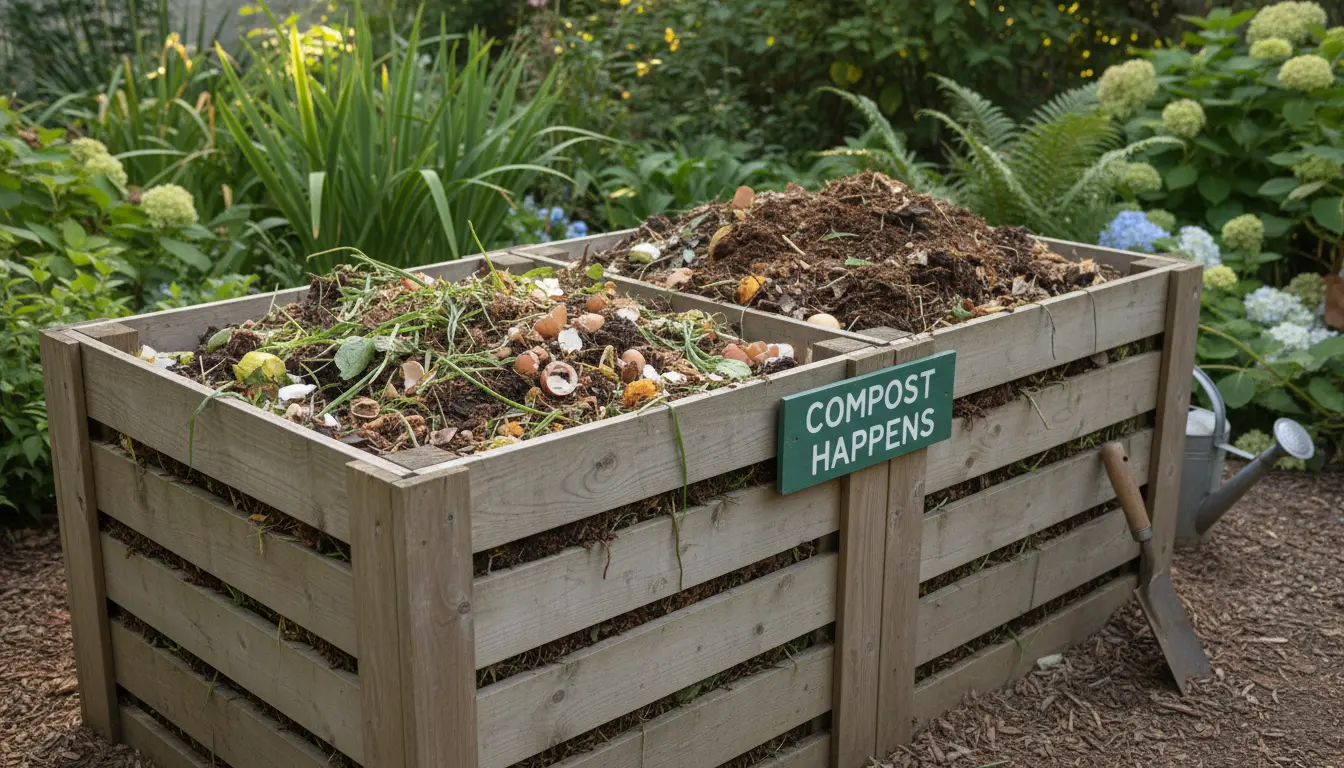
Why Home Composting Matters
Home composting turns kitchen scraps and yard waste into nutrient-rich soil that improves garden health. It reduces landfill waste and lowers your household’s carbon footprint.
Composting is simple to start and scaled to fit any space, from a small balcony to a suburban yard.
Basic Principles of Home Composting
Compost needs four things: organic material, air, water, and time. The right mix creates heat and microbes that break materials down into humus.
Balance, aeration, and moisture control are the most important ongoing tasks.
Balance: Greens and Browns
Greens are nitrogen-rich materials like vegetable peels, coffee grounds, and grass clippings. Browns are carbon-rich, such as dried leaves, cardboard, and straw.
Aim for roughly a 2:1 or 3:1 ratio of browns to greens by volume to avoid slimy, smelly compost.
Aeration and Moisture
Microbes need oxygen. Turn or mix the pile every 1–2 weeks to keep it aerobic. Too wet and it will smell; too dry and decomposition slows.
A good target moisture is like a wrung-out sponge—damp but not dripping.
Choosing a Compost System
Select a system that fits your space, budget, and patience. Options include a simple pile, a tumbling bin, or a worm composting (vermicompost) setup.
- Open pile: Low cost and flexible size, best in yards with space.
- Tumbler: Faster turning and cleaner appearance; good for small yards.
- Worm bin: Best for indoor or balcony use; handles kitchen scraps efficiently.
Where to Place Your Bin
Place the bin on soil if possible to allow organisms to enter. Choose partial shade to keep moisture balanced and odors low.
Avoid placing bins directly against a house wall to reduce pest access and moisture issues.
Step-by-Step Starter Routine
Follow these steps to set up a working compost system in a month.
- Pick a bin type and location.
- Start with a 2–4 inch layer of coarse browns like twigs for drainage.
- Add alternating layers: 2–3 inches of greens then 4–6 inches of browns.
- Moisten each layer if dry.
- Cover the top with a layer of browns to deter flies and reduce odors.
- Turn the pile every 1–2 weeks; adjust moisture as needed.
What to Compost and What to Avoid
Common compostable items include fruit and vegetable scraps, coffee grounds, eggshells, grass clippings, leaves, cardboard, and small yard waste.
Avoid meat, dairy, oils, diseased plants, and pet waste to reduce pests and pathogens.
Quick Reference: Compostable vs Not
- Compostable: fruit peels, vegetable scraps, coffee grounds, tea bags, paper towels, yard trimmings.
- Not compostable at home: meat, bones, dairy, oils, cooked food, pet feces, glossy paper.
Troubleshooting Common Problems
If your pile smells like rotten eggs, it is too wet or anaerobic. Turn the pile, add more browns, and increase airflow.
If decomposition is slow, add greens for nitrogen, increase moisture slightly, and check temperature.
- Smells: Add dry browns and turn.
- Flies: Cover food with browns and close lids or add a mesh.
- Fruit flies in kitchen: Store scraps in a sealed container or freeze until adding to the bin.
When Is Compost Ready?
Finished compost is dark, crumbly, and smells earthy. It may take 2 months to a year depending on the method.
Use finished compost as a soil amendment, top dressing, or in potting mixes to boost plant growth and water retention.
Simple Uses for Home Compost
- Mix 1 part compost to 3 parts garden soil when planting vegetables.
- Top-dress lawns with a thin layer to improve soil structure.
- Add to potted plants to refresh nutrients and increase moisture retention.
Household food waste makes up about 20–30% of residential trash in many countries. Composting that waste can reduce landfill methane and return nutrients to your garden.
Small Real-World Case Study
Case: A two-person household in a small city used a 60-liter tumbling bin on their balcony. They collected food scraps in a sealed countertop container and added them weekly.
Within six months they produced enough compost to feed two balcony planters and reduced their trash bags from weekly to every two weeks. Regular turning and a balance of shredded paper and coffee grounds prevented odors and pests.
Tips to Succeed with Home Composting
- Keep a small sealed container in the kitchen to collect scraps and prevent fruit flies.
- Shred or chop materials to speed decomposition.
- Rotate turning days on your calendar to build the habit.
- Try bokashi or worm composting if space or neighbors make open bins difficult.
Getting Started This Week
Choose a bin type, gather browns and greens, and set up the first layer. Start small and learn by adjusting moisture and mix.
Composting is a practical way to reduce waste and improve soil. With a basic routine, most beginners see results within a few months.