
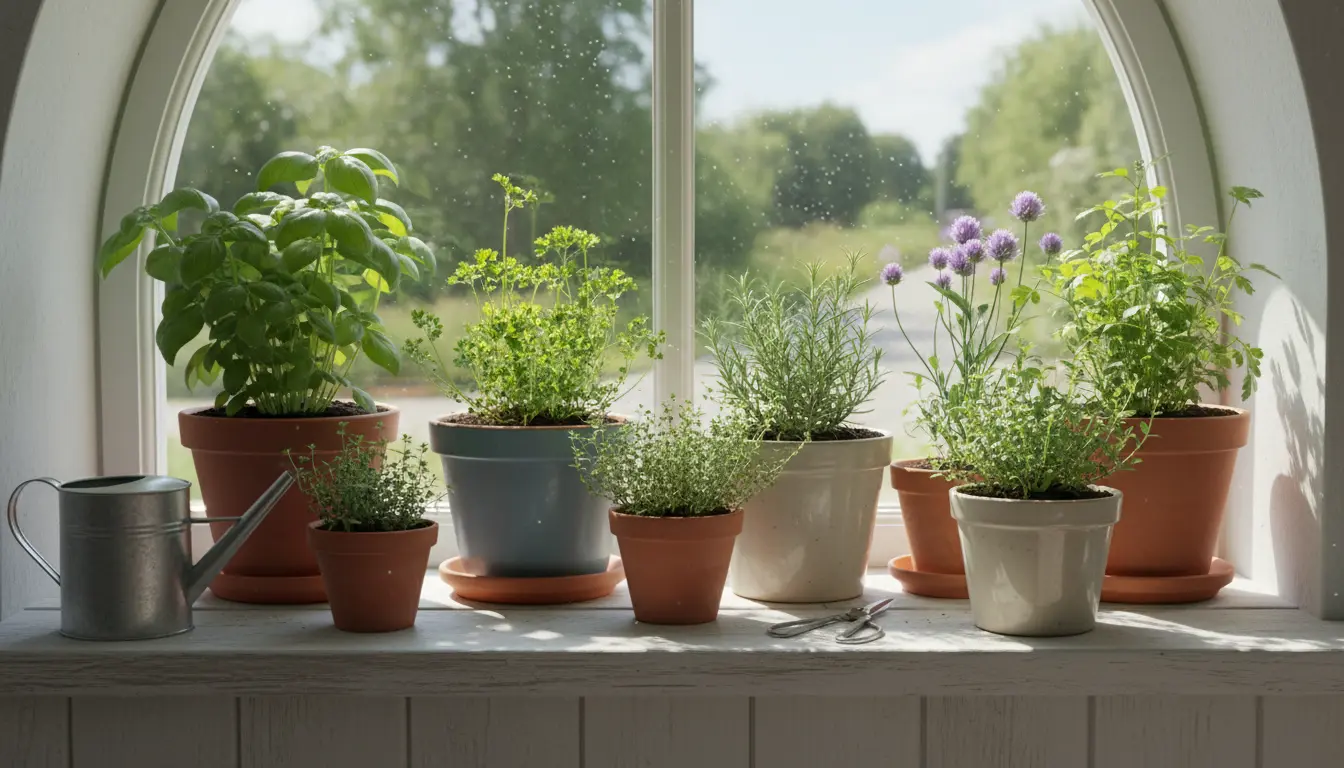
Growing herbs indoors is a practical way to have fresh flavor year-round and learn basic plant care. This guide focuses on clear, actionable steps for indoor herb gardening for beginners, so you can start with confidence.
Indoor Herb Gardening Basics
Indoor herb gardening relies on three core elements: light, water, and well-draining containers. Understanding these basics helps you avoid the most common mistakes and keep plants healthy.
Start small with 3–6 pots and expand as you gain experience. Small setups are less costly and easier to manage in limited spaces like windowsills.
Light and Location for Indoor Herb Gardening
Most culinary herbs need 6–8 hours of bright light each day. A south- or west-facing window is ideal in many climates.
If natural light is limited, use a full-spectrum LED grow light placed 6–12 inches above the plants for 10–12 hours daily.
Containers and Soil for Indoor Herb Gardening
Choose containers with drainage holes to prevent root rot. Terracotta, ceramic, or plastic pots work well when paired with saucers.
Use a lightweight potting mix formulated for container plants. Avoid garden soil, which compacts and drains poorly indoors.
Choosing Herbs for Indoor Herb Gardening
Pick herbs that tolerate pot culture and indoor conditions. Herbs vary in light and space needs, so match them to your environment.
Easy Herbs for Beginners
- Basil – Fast-growing and productive with good light.
- Mint – Vigorous and forgiving; best in its own pot.
- Parsley – Slow to start but steady once established.
- Thyme – Compact and drought-tolerant.
- Chives – Great for window boxes and regular harvests.
Start with two to three varieties to learn their differences before adding more.
Watering, Fertilizing, and Pruning
Watering frequency depends on pot size, soil, and light. Check soil moisture with your finger—water when the top 1 inch feels dry.
Feed herbs lightly with a balanced liquid fertilizer every 4–6 weeks during the active growth season. Overfertilizing reduces flavor intensity in some herbs.
Pruning and Harvesting for Indoor Herb Gardening
Regular harvesting encourages bushier growth and higher yields. Pinch back tips and remove flowers to keep herbs focused on leaf production.
For basil and mint, harvest the top third of the plant repeatedly. For thyme and rosemary, trim small stems as needed.
Troubleshooting Common Indoor Herb Gardening Problems
Yellowing leaves often mean overwatering or poor drainage. Move the pot to better light and reduce watering frequency.
Pests like aphids or spider mites appear occasionally indoors. Wipe leaves with soapy water spray or use an insecticidal soap as a safe first step.
Signs and Simple Fixes
- Leggy, stretched herbs: increase light or move closer to the window.
- Wilting despite wet soil: check for root rot and improve drainage.
- Slow growth: feed lightly and ensure at least 6 hours of bright light.
Simple Indoor Herb Gardening Plan
Follow this plan over the first six weeks to establish healthy herbs indoors:
- Week 1: Plant seeds or starter plants in pots with drainage and position in bright light.
- Week 2–3: Water when top inch is dry, maintain consistent light, begin light feeding in week 3 if using starters.
- Week 4–6: Start harvesting sparingly, prune to encourage branching, and adjust care based on plant response.
Case Study: A Small Real-World Example
Sarah, a busy home cook, started an indoor herb garden on a narrow south-facing windowsill. She chose basil, chives, and mint in three 4-inch pots and used a lightweight potting mix.
She kept a 10-minute care routine: morning inspection, touch-test for soil moisture, and a weekly light feed. Within six weeks she had steady harvests and fewer trips to buy fresh herbs.
Practical Tips and Examples
Label pots with planting dates to track progress and rotate pots weekly to keep growth even. Use saucers to protect surfaces from drainage and spills.
Example: Place basil near the stove for easy access, keep mint in a separate pot to avoid overcrowding, and situate parsley where it gets bright, indirect light.
Final Checklist for Indoor Herb Gardening for Beginners
- Choose 2–3 easy herbs to start.
- Use pots with drainage and a quality potting mix.
- Provide 6–8 hours of light or use a grow light.
- Water when the top inch of soil is dry.
- Feed lightly and prune regularly to promote growth.
Indoor herb gardening is an accessible hobby that rewards consistent, simple care. With the right light, containers, and a small routine, beginners can enjoy fresh, flavorful herbs year-round.