
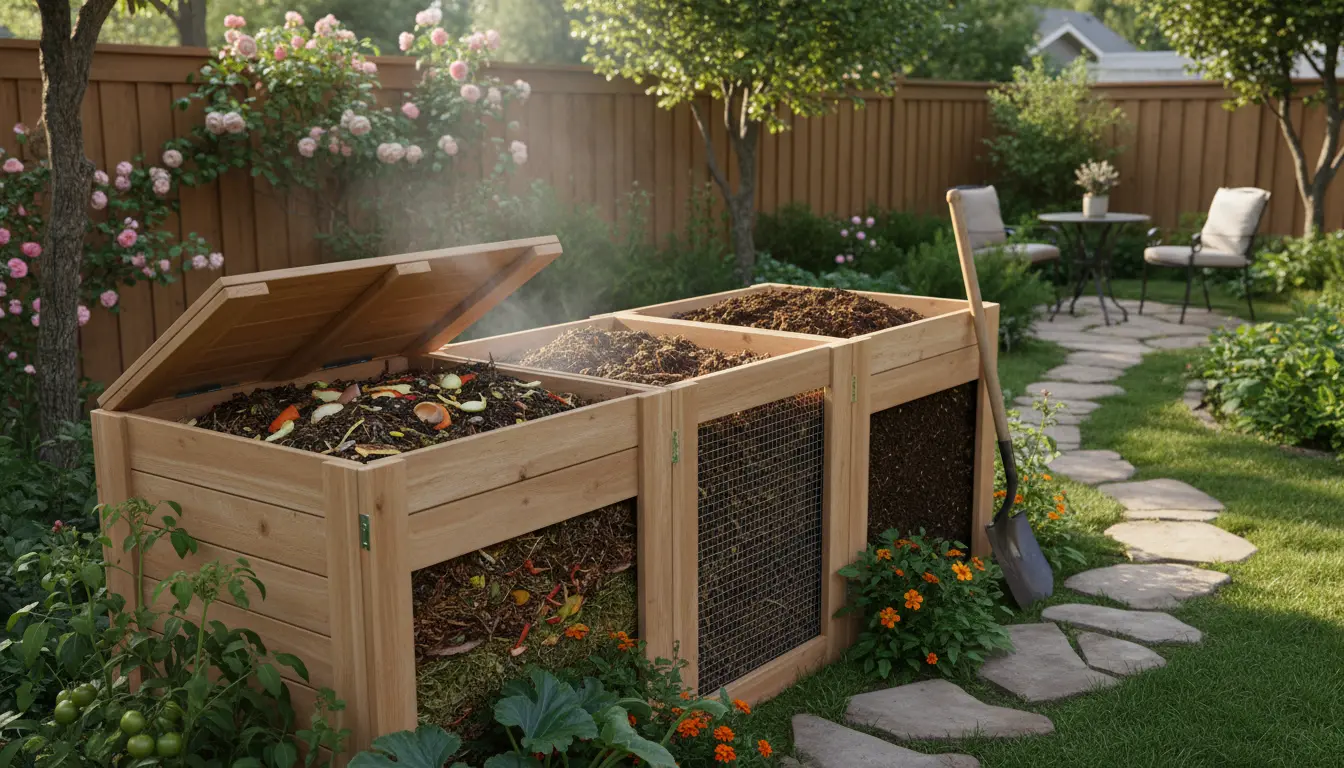
Home Composting Basics
Home composting turns kitchen scraps and yard waste into nutrient-rich soil. It reduces household waste and improves garden health when done correctly.
This guide explains simple steps, common mistakes, and maintenance tips for successful home composting for beginners.
How Home Composting Works
Composting is a biological process where microbes break down organic matter into humus. The key elements are carbon, nitrogen, moisture, and air.
A balanced mix lets decomposition proceed without bad odors and produces usable compost in months rather than years.
Getting Started with Home Composting
Choose a spot that is level, partially shaded, and easy to reach. You can use a bin, tumbler, or a simple pile depending on space and preference.
Decide on a system based on how much waste you produce and how much effort you want to invest.
Choose a Bin or Method
- Compost bin: Good for neatness and beginner control.
- Tumbler: Faster composting with easy turning.
- Open pile: Low cost but needs more management and space.
- Vermicomposting: Uses worms for indoor or small-space composting.
What to Compost
Balance green (nitrogen) and brown (carbon) materials for a healthy heap. Aim for roughly 2 parts brown to 1 part green by volume.
- Greens: vegetable scraps, coffee grounds, fresh grass clippings.
- Browns: dry leaves, shredded paper, straw, cardboard pieces.
- Avoid: meat, dairy, oils, diseased plants, and pet waste.
Setting Up Your First Pile
Start with a base layer of coarse material like twigs to improve drainage. Alternate layers of greens and browns and keep the pile moist like a wrung-out sponge.
Turn the pile every 1–2 weeks to supply oxygen and speed up breakdown. If you use a tumbler, rotate as recommended by the manufacturer.
Maintaining Your Home Compost
Monitoring is simple: check temperature, moisture, and smell. A hot, active pile will feel warm to the touch and have an earthy smell.
If the pile smells sour or ammonia-like, add more brown material and turn it to aerate. If it is dry and slow, add water and some green materials.
Troubleshooting Common Issues
- Foul odors: Too much green or lack of oxygen. Add carbon-rich browns and turn the pile.
- Slow breakdown: Pile may be too dry, too cold, or too small. Increase size, add water, or insulate.
- Pests: Secure the bin, bury food scraps, and avoid meat and dairy.
Composting can divert up to 30% of household waste from landfills and reduce methane emissions. Small changes in your kitchen habits add up quickly.
How to Tell When Compost Is Ready
Finished compost is dark, crumbly, and smells like soil. Larger particles should be broken down; you may need to sift to remove undecomposed bits.
Typical timeframe varies: hot, well-managed piles can finish in 2–3 months, while slower piles may take 6–12 months.
Using Finished Compost
Apply finished compost as a top-dressing for lawns, mix into planting beds, or use as potting mix component. It improves structure, water retention, and nutrient availability.
Use about 1–2 inches of compost on beds or mix 10–30% compost into potting soil for containers.
Small Case Study: Backyard Bin Success
Maria, a homeowner with a small vegetable garden, started a 3-bin compost system. She collected kitchen scraps in a sealed bucket and layered them with shredded leaves each week.
Within five months she had rich compost that she mixed into her raised beds. Her tomato plants produced fuller canopies and larger fruit the following season.
Key steps she followed: consistent layering, turning every two weeks, and avoiding meat scraps. This simple routine reduced her trash volume and improved garden yields.
Quick Checklist for Home Composting Beginners
- Choose a method: bin, tumbler, pile, or worm bin.
- Collect greens and browns separately for easy layering.
- Keep pile moist and aerated; turn regularly.
- Monitor for pests, odors, and balance issues.
- Use finished compost to enrich soil and reduce fertilizer needs.
Home composting is low cost and scalable to almost any living situation. Start small, observe changes, and adjust the process to fit your climate and waste stream.
With a balanced mix and routine care, home composting can become an easy part of your sustainable home routine.