
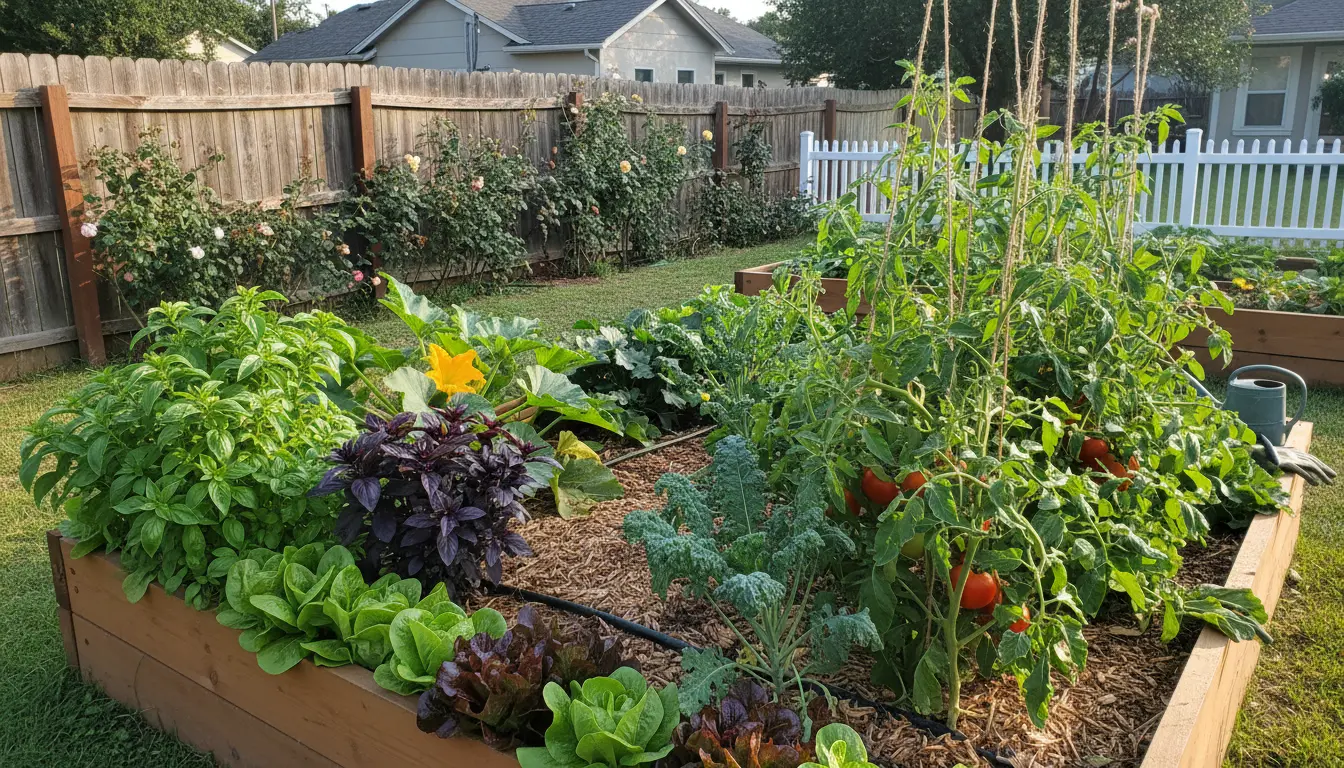
Start a Vegetable Garden: Quick Overview
Starting a vegetable garden at home is practical and rewarding. This guide gives clear, step-by-step instructions to get vegetables growing in soil or containers.
Choose the Right Spot to Start a Vegetable Garden
Location is the first important choice when you start a vegetable garden. Most vegetables need 6–8 hours of direct sunlight daily.
Pick a flat or gently sloped area with good drainage and easy access to water. If you lack yard space, consider balconies, patios, or window boxes.
Sunlight and Wind Considerations
Observe sunlight patterns for a few days to confirm full-sun areas. Avoid sites exposed to strong winds that can stress plants and dry soil quickly.
Use temporary shade for sensitive seedlings in the hottest part of the day if needed.
Prepare Soil and Containers
Healthy soil is the foundation when you start a vegetable garden. Test the soil pH and texture, aiming for a slightly acidic to neutral pH (6.0–7.0).
Improve heavy clay or sandy soils by adding compost, aged manure, or quality garden soil. For containers, use a good potting mix formulated for vegetables.
Steps to Improve Garden Soil
- Remove weeds and debris from the area.
- Loosen soil to at least 8–12 inches for root crops.
- Mix in 2–4 inches of compost and a balanced organic fertilizer if needed.
- Rake the bed level and moisten before planting.
Plan What to Plant First
Choose vegetables that match your climate, season, and experience level. Beginners should start with reliable, low-maintenance crops.
Good first choices include lettuce, radishes, tomatoes, bush beans, and herbs like basil and parsley.
Sowing Seeds vs. Transplants
Sow quick-growing seeds (radish, lettuce, spinach) directly into the garden. Use transplants for crops like tomatoes and peppers to extend the growing season.
Follow seed packet directions for spacing and depth. Overcrowding reduces yield and increases disease risk.
Watering, Mulch, and Maintenance
Consistent moisture is essential when you start a vegetable garden. Water deeply and less frequently to encourage strong root systems.
Apply 2–3 inches of organic mulch to retain moisture, suppress weeds, and regulate soil temperature.
Simple Care Routine
- Water in the morning when possible to reduce evaporation and disease risk.
- Check plants weekly for pests and signs of nutrient deficiency.
- Use stakes or cages for vining crops to improve air flow and access.
- Rotate crops yearly to reduce pest buildup and preserve soil health.
Organic and Pest Management
Start with prevention: healthy soil, proper spacing, and clean garden beds reduce pest and disease problems. Use physical barriers like row covers for insect control.
When intervention is needed, choose low-toxicity options first: handpicking, insecticidal soaps, or biological controls such as beneficial insects.
Small Case Study: The Apartment Balcony Garden
Sam, a city renter, converted a 6-foot balcony into a productive vegetable space. He used three 12-inch deep containers and a large trough bed.
Sam planted tomatoes, basil, lettuce, and green beans. By following a simple routine—watering twice weekly, using compost, and rotating pots—he harvested fresh salad greens within six weeks.
This low-cost, low-space approach shows how to start a vegetable garden even without a yard.
Harvesting and Extending the Season
Harvest vegetables at peak ripeness to encourage continuous production. Pick leafy greens regularly and remove spent plants to make room for fall crops.
To extend the season, use row covers, cloches, or move containers to a sunnier spot. Cold-hardy crops like kale can survive light frosts.
Beginner Mistakes to Avoid
- Planting too many varieties at once — start small and expand after success.
- Ignoring soil testing — nutrient imbalances reduce yields and can cause pest problems.
- Overwatering or shallow watering — both weaken roots and increase disease risk.
- Skipping record-keeping — track planting dates and varieties to learn what works.
Example Planting Plan for First-Time Gardeners
Week 1: Prepare bed or fill containers with quality soil and compost. Test pH and adjust if needed.
Week 2: Sow radishes and lettuce seeds. Transplant tomato seedlings after hardening off and when night temperatures are stable.
Week 4 onward: Mulch, monitor water needs, stake tomatoes, and check for pests weekly.
Final Tips When You Start a Vegetable Garden
Keep expectations realistic and treat early setbacks as learning opportunities. Gardening is iterative and improves with observation.
Join a local gardening group or online forum to ask questions and share experiences. Small, consistent care gives the best long-term results.
Ready to begin? Choose your spot, prepare the soil, pick two to four easy crops, and enjoy the learning process as you start a vegetable garden at home.