
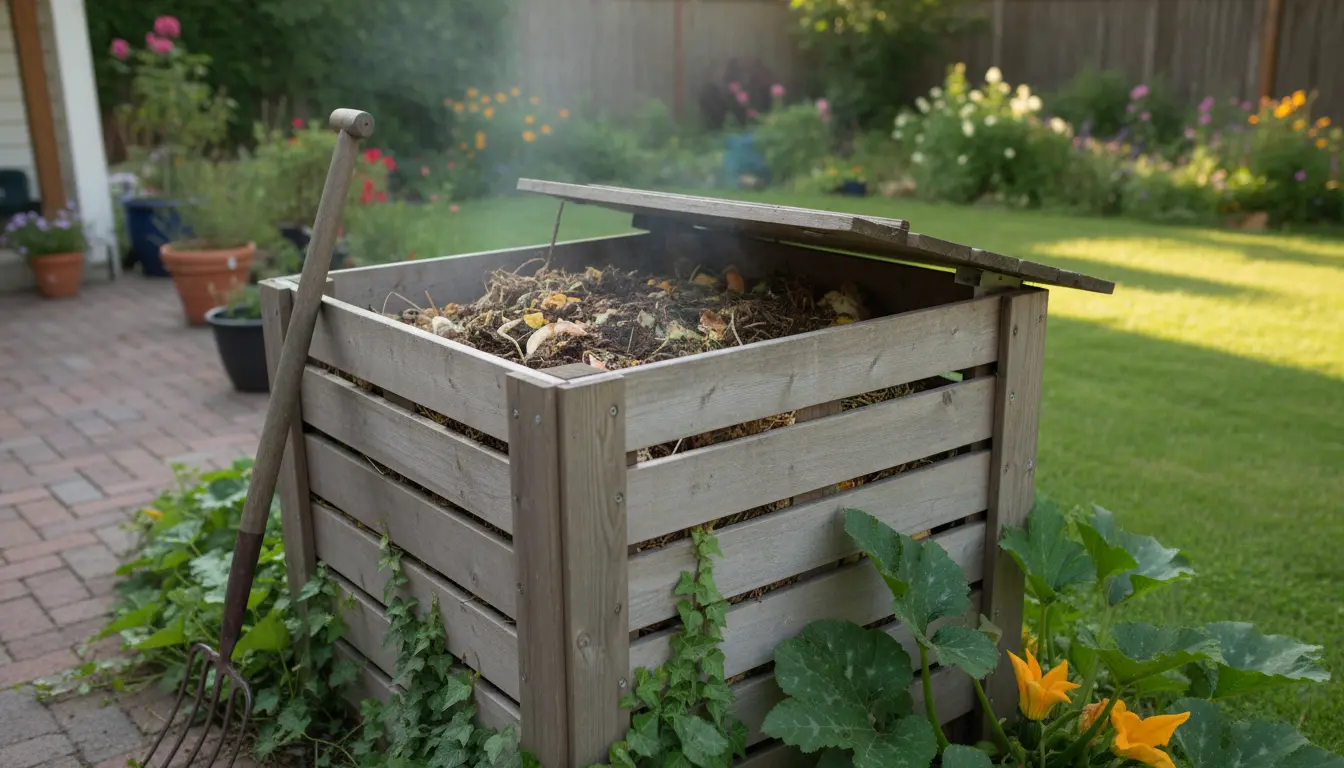
Why a Home Compost Bin Matters
Setting up a home compost bin turns kitchen and yard waste into nutrient-rich soil. It reduces trash, saves money on fertilizer, and supports healthy gardens.
A simple compost system works for apartments, yards, and community gardens. This guide shows practical steps to start and maintain a home compost bin without jargon.
Choose the Right Location for Your Home Compost Bin
Pick a level, well-drained spot with partial shade. Avoid direct sun that dries materials quickly and avoid low spots that collect water.
Consider accessibility. You will regularly add scraps and turn compost, so place the bin within a short walk from the kitchen or garden.
Select a Bin Type for Your Home Compost Bin
Selecting the right container depends on space, budget, and effort. Common choices include tumblers, wooden bins, and plastic bins.
- Tumbler: easy to turn, faster composting, good for small yards.
- Plastic bin: inexpensive, retains heat and moisture well.
- Wooden bin or pallet bin: breathable and affordable for larger volumes.
Materials You Need for a Home Compost Bin
Gather tools and starter items before you begin. Basic items include a bin, a pitchfork or compost aerator, and a coarse layer for drainage.
- Bin or container with drainage and ventilation.
- Kitchen scraps: fruit and vegetable peels, coffee grounds.
- Dry materials: leaves, shredded paper, dry grass clippings.
- Water source and a pitchfork for turning.
Start Your Home Compost Bin: Step-by-Step
Follow these steps to get your compost started and active. Keep each layer balanced and avoid adding unsuitable items.
- Place a 2–4 inch coarse layer of twigs or straw at the bottom for drainage.
- Add alternating layers of green (nitrogen) and brown (carbon) materials. Aim for roughly 2:1 brown to green by volume.
- Moisten the pile until it feels like a wrung-out sponge; avoid soggy conditions.
- Cover the bin to retain heat and moisture but allow air flow.
- Turn the pile every 1–2 weeks to introduce oxygen and speed decomposition.
What to Put in Your Home Compost Bin
Acceptable items are kitchen vegetable scraps, fruit peels, coffee grounds, eggshells, yard trimmings, and paper. Chop larger items to speed breakdown.
Avoid meat, dairy, oils, diseased plants, and pet waste to prevent pests and odors.
Maintain and Troubleshoot Your Home Compost Bin
Regular checks prevent common problems like bad smells, pests, or slow decomposition. Most issues are signs of imbalance in moisture, air, or material mix.
- Odor: Add more brown materials and turn the pile to increase aeration.
- Dry pile: Add water and more green materials to restart decomposition.
- Slow breakdown: Chop materials finer and maintain warm, moist conditions.
Speed Tips for Home Compost Bin Success
Smaller pieces decompose faster. Shred cardboard and chop garden waste to boost surface area.
Use a compost thermometer if available. Ideal internal temperatures range from 120–160°F (50–71°C) for active composting.
Composting can divert up to 30% of household waste from the trash. Many cities offer backyard composting rebates or free bins.
When Is Your Home Compost Bin Ready to Use?
Finished compost looks dark, crumbly, and smells earthy. The process usually takes 3–12 months depending on method and conditions.
Use finished compost to enrich garden beds, improve potting mixes, or topdress lawns. It boosts soil structure and nutrient content without chemicals.
Small Real-World Example: One-Season Kitchen Compost
Emma, a suburban gardener, set up a 55-gallon plastic bin in spring. She added kitchen scraps and layered shredded leaves weekly.
By autumn, Emma had a 6-inch layer of dark compost. She mixed it into raised beds and reported healthier tomato plants next season.
Basic Safety and Neighborhood Considerations
Keep bins contained and cover food scraps to avoid attracting animals. Check local rules; some HOAs and cities have composting guidelines.
If odors or pests become a persistent issue, switch to a closed tumbler or use a worm bin for indoor-friendly composting.
Quick Checklist to Start a Home Compost Bin
- Choose bin type and location.
- Gather green and brown materials.
- Layer, moisten, and cover the pile.
- Turn regularly and monitor moisture.
- Harvest finished compost and apply to soil.
Starting a home compost bin is low-cost and flexible. With simple steps and a little routine, you can turn waste into a valuable resource for your garden.