
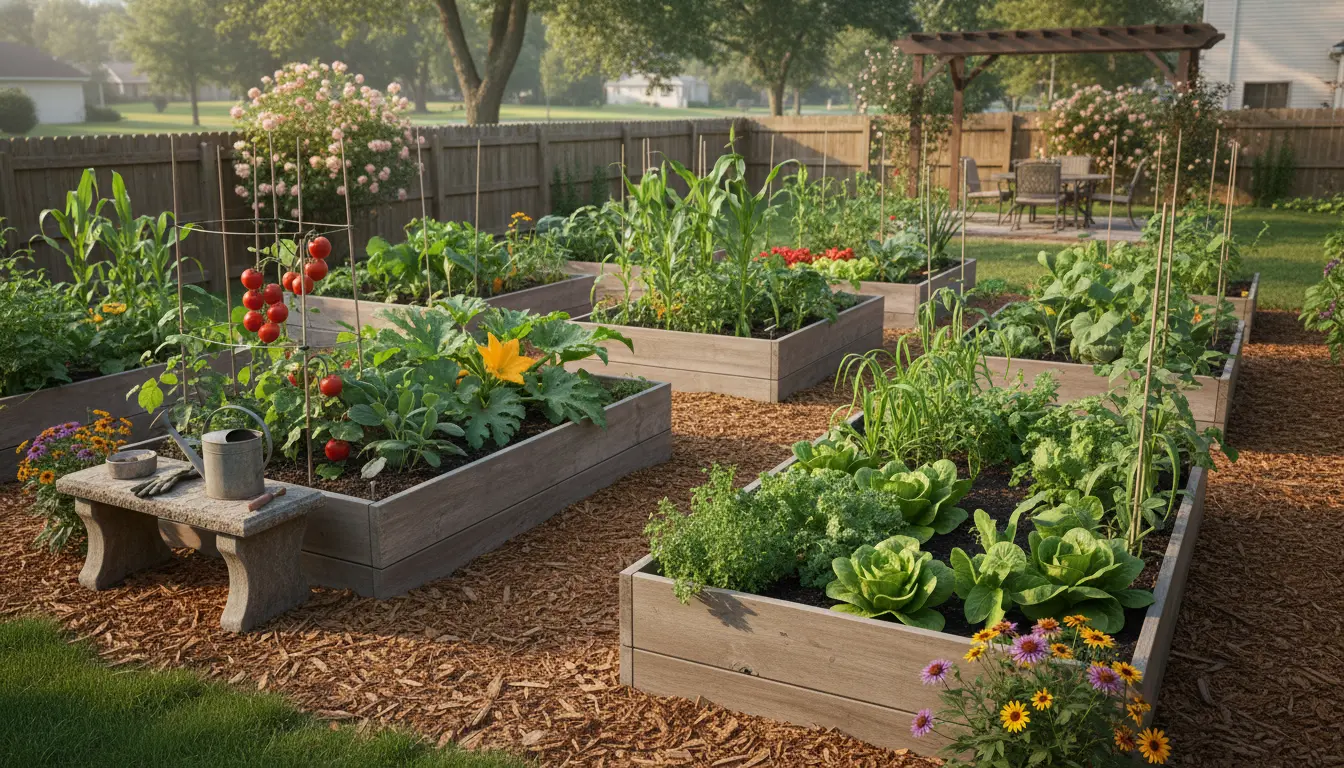
Why Start an Organic Vegetable Garden
Growing an organic vegetable garden saves money and improves food quality. It also reduces exposure to synthetic pesticides and supports local biodiversity.
This guide explains practical steps to start an organic vegetable garden, from site selection to harvest, with simple examples and a short case study.
Choose a Site for Your Organic Vegetable Garden
Pick a location with at least 6 hours of direct sunlight for most vegetables. Good sun exposure improves fruiting and overall plant health.
Avoid low spots that collect water. Ensure easy access to water and tools to reduce daily maintenance effort.
Site checklist for an organic vegetable garden
- 6+ hours of sun per day
- Well-drained soil or raised beds
- Close access to a water source
- protection from strong winds if needed
Prepare Soil and Compost for an Organic Vegetable Garden
Soil is the foundation of an organic vegetable garden. Test your soil pH and texture before planting to know what to improve.
Use compost and organic matter to build fertile soil rather than synthetic fertilizers. Compost improves structure, moisture retention, and nutrient supply.
How to make or buy compost
- Home compost: kitchen scraps, yard waste, and dry brown material mixed in layers.
- Commercial organic compost: look for certified organic or locally produced options.
- Apply a 1–3 inch layer of compost to beds and mix into the top 6–8 inches of soil.
Design and Layout of an Organic Vegetable Garden
Decide between in-ground beds, raised beds, or containers based on space, soil quality, and mobility. Raised beds warm faster and drain better.
Arrange beds with paths for easy access and include rotation plans to reduce pest build-up.
Simple layout tips
- Keep bed widths to 3–4 feet so you can reach the center without stepping in soil.
- Leave 18–36 inch paths for comfortable movement and tool access.
- Group plants with similar water and sunlight needs together.
Choosing Vegetables for Your Organic Vegetable Garden
Start with easy, fast-growing vegetables: lettuce, radishes, bush beans, and tomatoes. Choose varieties suited to your climate and season.
Consider succession planting to maximize harvests throughout the season.
Beginner-friendly plant list
- Lettuce and salad greens
- Radishes and carrots
- Green beans (bush types)
- Tomatoes and peppers
- Herbs: basil, parsley, chives
Organic Pest and Disease Management
Use prevention first: crop rotation, healthy soil, proper spacing, and resistant varieties reduce pest problems. Physical controls and beneficial insects come next.
Use organic-approved products only when necessary and follow label instructions closely.
Non-chemical techniques
- Hand-pick pests and remove infested leaves
- Use row covers to protect young crops from insects
- Introduce or attract beneficial insects (ladybugs, lacewings)
- Rotate crop families each year
Watering and Fertilizing an Organic Vegetable Garden
Water deeply and less frequently to encourage strong root growth. Early morning watering reduces disease risk and evaporation loss.
Top dress with compost or use compost tea for a slow, organic nutrient boost rather than synthetic fertilizers.
Watering tips
- Drip irrigation or soaker hoses minimize water waste.
- Mulch with straw or wood chips to retain moisture and suppress weeds.
Adding a 2-inch layer of compost to your garden soil each year can increase soil organic matter and crop yields over time.
Harvesting and Ongoing Care for an Organic Vegetable Garden
Harvest regularly to encourage continuous production. Remove spent plants promptly and add them to your compost pile if disease-free.
Keep records of planting dates, varieties, and pest issues to improve planning for future seasons.
Small Case Study: Maya’s Backyard Organic Vegetable Garden
Maya converted a 10×12 ft patch of lawn into three raised beds in spring. She used local compost and planted tomatoes, lettuce, and beans.
By summer she harvested weekly salads and two large buckets of tomatoes. She reduced store-bought produce and reported healthier tasting vegetables.
Key steps Maya used: soil testing, raised beds, drip irrigation, and rotating beans with leafy greens to fix nitrogen and replenish the soil.
Quick Start Checklist for an Organic Vegetable Garden
- Choose a sunny site and test the soil
- Build or prepare beds and add compost
- Select beginner-friendly crops suited to your season
- Install simple watering (drip or soaker hoses)
- Use mulch, rotate crops, and monitor pests
Conclusion
Starting an organic vegetable garden is achievable with basic planning and steady care. Focus on soil health, sensible layout, and organic pest prevention.
Begin small, keep records, and learn each season to improve yields and soil over time.