
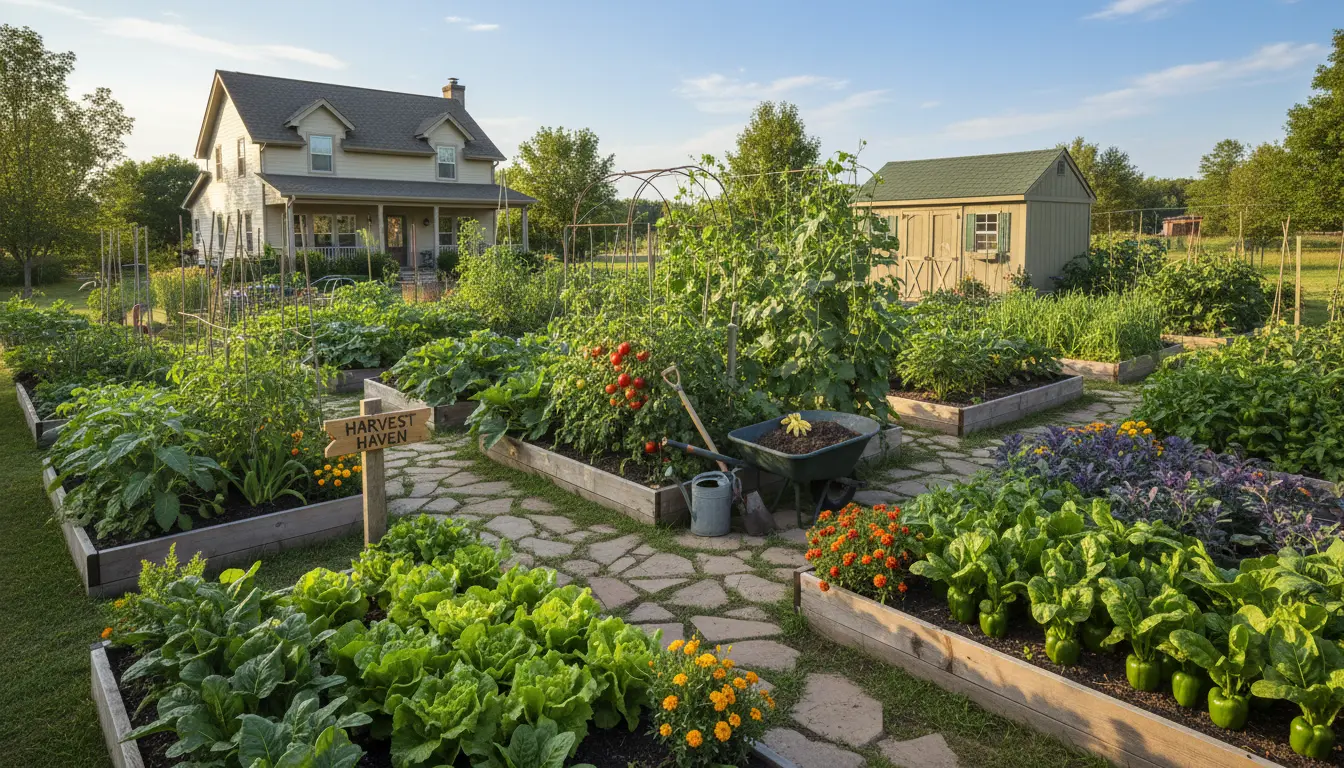
Why Start a Home Vegetable Garden
Growing vegetables at home saves money, improves food quality, and gives control over growing methods. A home vegetable garden can fit a backyard, balcony, or even a sunny windowsill.
This guide gives practical steps for planning, planting, and maintaining a productive home vegetable garden.
Planning Your Home Vegetable Garden
Good planning reduces wasted effort and increases yields. Start by assessing space, light, and time available for maintenance.
Site Selection for a Home Vegetable Garden
Choose a location with at least 6 hours of direct sunlight for most vegetables. Ensure easy access to water and good drainage.
If ground space is limited, consider raised beds, containers, or vertical supports for vining crops.
Choosing Vegetables for a Home Vegetable Garden
Select vegetables that match your climate, taste, and effort level. Fast-growing, low-maintenance plants help new gardeners stay motivated.
- Easy starters: lettuce, radishes, cherry tomatoes, bush beans, herbs
- Moderate care: peppers, carrots, beets, spinach
- Higher effort: corn, eggplant, vining squash
Soil, Containers, and Raised Beds
Soil quality is the foundation of a productive home vegetable garden. Test or observe soil texture and drainage before planting.
Preparing Garden Soil
A mix of loam, compost, and modest sand drains well and holds nutrients. Aim for a rich, crumbly texture and pH around 6.0–7.0 for most vegetables.
Add 2–4 inches of compost and gently fork into the top 6–8 inches before planting.
Using Containers and Raised Beds
Containers must be deep enough for root development. A 5-gallon bucket suits herbs and lettuce, while tomatoes need 10–20 gallons.
Raised beds warm earlier, drain better, and reduce soil compaction. Use untreated wood or metal and fill with a good topsoil-compost mix.
Planting and Spacing in a Home Vegetable Garden
Follow seed packet or plant tag instructions for spacing and planting depth. Overcrowding reduces air flow and increases disease risk.
- Direct sow: carrots, radishes, beans, peas
- Transplant: tomatoes, peppers, brassicas
- Succession sowing: sow small amounts every 2–3 weeks for continuous harvest
Row and Companion Planting Tips
Plant taller crops on the north side of beds to avoid shading smaller plants. Use companion planting to deter pests and maximize space.
Examples: basil near tomatoes, marigolds to reduce nematodes, beans fix nitrogen for leafy greens.
Watering, Feeding, and Routine Care
Consistent watering is crucial. Most vegetables need 1–1.5 inches of water per week, more in hot, dry weather.
Best Watering Practices
Water deeply and less often to encourage strong roots. Use drip irrigation or soaker hoses to reduce leaf wetness and fungal disease.
Water in the morning to allow foliage to dry during the day.
Mulching and Fertilizer
Mulch conserves moisture, suppresses weeds, and moderates soil temperature. Use straw, shredded bark, or compost as a 2–3 inch layer.
Apply balanced organic fertilizer or side-dress with compost mid-season for heavy feeders like tomatoes and corn.
Pest and Disease Management in a Home Vegetable Garden
Monitor plants weekly and remove damaged leaves early. Use integrated pest management to minimize chemical use.
Nonchemical Controls
- Hand-pick larger pests like caterpillars and beetles
- Use row covers to protect seedlings from insects
- Encourage beneficial insects with flowering plants and habitat
For persistent issues, use targeted organic treatments like neem oil or insecticidal soap following label instructions.
Harvesting and Storage
Harvest vegetables at peak ripeness for best flavor and nutrition. Regular harvesting often encourages continued production in many crops.
- Leafy greens: pick outer leaves regularly
- Tomatoes: harvest when color and slight give indicate ripeness
- Root crops: check recommended days-to-maturity
Store or preserve surplus by freezing, pickling, or drying to extend the harvest season.
Small Real-World Case Study
Case: A two-person household converted a 6 x 8 foot raised bed into a home vegetable garden. They planted cherry tomatoes, bush beans, lettuce, and herbs in spring.
With weekly watering, monthly compost additions, and simple pest checks, they harvested fresh salads and several jars of canned tomatoes. Their initial seed and soil investment paid back within the first season in grocery savings and meal quality.
Simple Seasonal Checklist for a Home Vegetable Garden
- Early spring: plan layout, start seeds indoors, prepare soil
- Planting time: transplant warm-season crops after frost danger
- Growing season: irrigate, mulch, and monitor pests weekly
- Late season: harvest, save seeds for next year, and add compost
Final Practical Tips for Success
- Start small and expand gradually to avoid burnout.
- Keep a simple garden journal: plant dates, varieties, and notes.
- Learn from each season and adjust crop choices and spacing.
With routine care and a bit of planning, a home vegetable garden can reliably supply fresh produce and satisfaction year after year.