
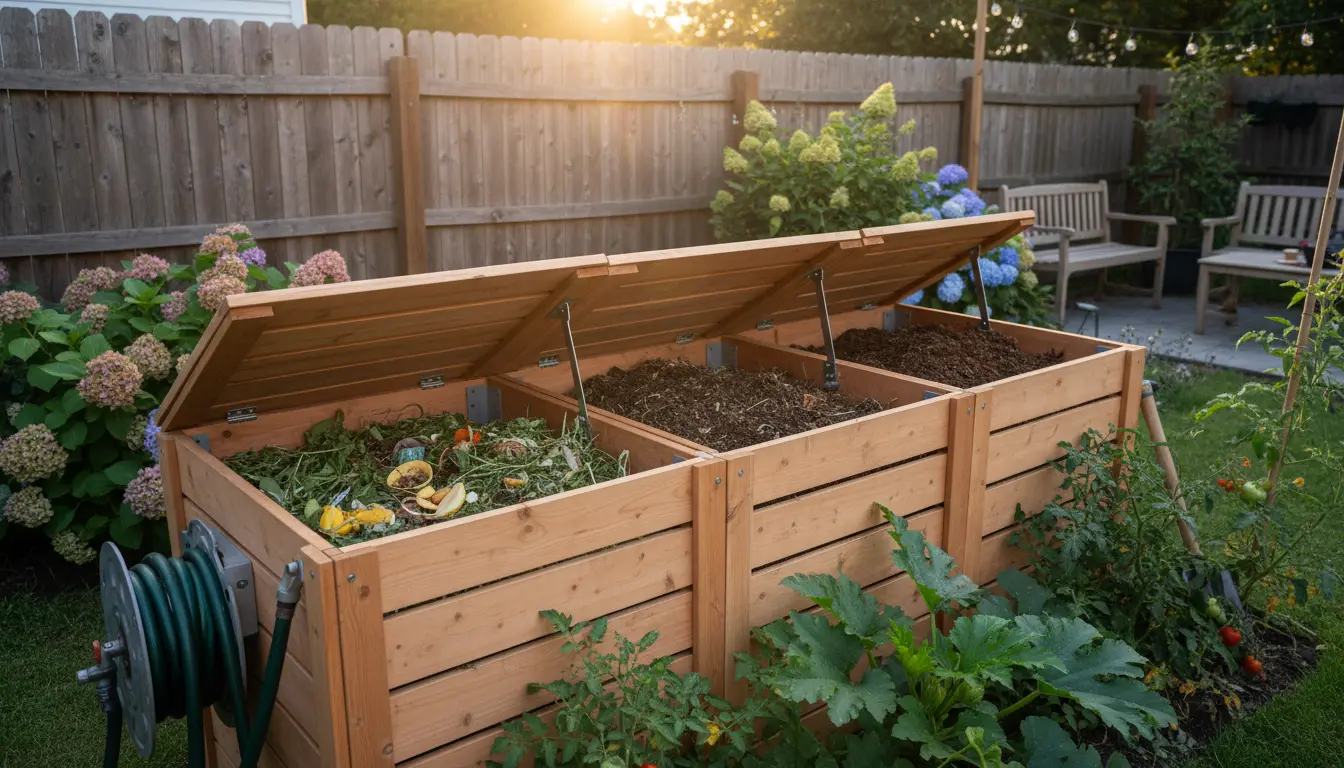
Home composting turns kitchen and yard waste into nutrient-rich soil you can use in pots, gardens, or lawn patches. This guide explains straightforward methods, common materials, and simple maintenance so beginners can get started quickly.
What is home composting?
Home composting is the controlled decomposition of organic waste at a household scale. Microbes break down food scraps, leaves, and paper into humus that improves soil structure and plant health.
There are several home systems: open piles, tumblers, and worm bins. Choose one that fits your space, time, and comfort level.
Why choose home composting
Composting reduces household waste and lowers landfill contributions. It also creates a free soil amendment that helps retain moisture and feed plants naturally.
- Reduce trash volume and curbside pickup costs.
- Improve garden soil without synthetic fertilizers.
- Cut methane emissions from food waste in landfills.
- Learn sustainable habits and close the nutrient loop.
How to start home composting for beginners
Follow these steps to set up a simple, effective system you can maintain with minimal effort. Each step includes quick tips to avoid common mistakes.
Choose a compost system
Pick a system that matches your living situation. For a backyard, a bin or open pile works well. For balconies or small spaces, consider a compact tumbler or a worm (vermicompost) bin.
- Open pile: Low cost, needs space and occasional turning.
- Tumbler: Faster mixing, easier to turn, contained and tidy.
- Vermicompost bin: Great for indoor or small-space composting; uses red worms to speed decomposition.
What to compost and what to avoid
Balance ‘greens’ (nitrogen) and ‘browns’ (carbon) to keep decomposition efficient and odor-free. Aim for roughly a 2:1 ratio of browns to greens by volume.
- Greens: fruit and vegetable scraps, coffee grounds, fresh grass clippings.
- Browns: dry leaves, shredded paper, cardboard, straw.
- Avoid: meat, dairy, oily foods, diseased plants, pet feces.
Chop larger items to speed composting and mix materials to prevent compacting and odor problems.
Basic maintenance for home composting
Maintenance is mostly about balance: moisture, airflow, and particle size. Check the pile weekly and act on simple cues.
- Moisture: Compost should be as damp as a wrung-out sponge. Add water if dry, add browns if too wet.
- Airflow: Turn the pile every 1–3 weeks to introduce oxygen and speed breakdown.
- Temperature: Active piles heat up. If it cools and slows, turning and adding greens can reactivate it.
Composting a kitchen’s weekly food scraps can reduce household waste by 20–30 percent and return valuable nutrients to your soil.
Troubleshooting common problems in home composting
Many beginner issues have simple fixes. Identify the symptom, then apply the matching adjustment.
- Bad smells: Add browns and turn the pile to increase oxygen.
- Slow decomposition: Chop materials smaller, increase surface area, or add more greens.
- Pests: Keep meat and oily foods out; use a closed bin or secure lid.
- Too dry: Add water and mix; cover pile to retain moisture.
Small real world example
A two-person apartment household started a 20-gallon worm bin on their balcony. They added fruit and vegetable scraps, shredded paper, and occasional coffee grounds.
Within three months they produced several liters of vermicompost. They used a cup of the finished compost in each potting mix, noticing healthier-looking herbs and reduced watering needs.
Quick checklist for composting for beginners
- Choose a bin type that fits your space (pile, tumbler, or worm bin).
- Collect greens and browns in two separate containers.
- Start with a base layer of browns for airflow.
- Add scraps, alternate greens and browns, and chop large items.
- Keep moisture like a wrung-out sponge and turn regularly.
- Monitor for pests, odors, or slowness and adjust accordingly.
Next steps
Pick a system and gather basic supplies: a bin, a mixing tool, and a kitchen scrap container. Start small and observe how your compost behaves. Small adjustments produce consistent results.
Home composting for beginners is low-cost and high-impact. With regular, simple care you can reduce waste and create living soil that benefits your plants and the environment.