
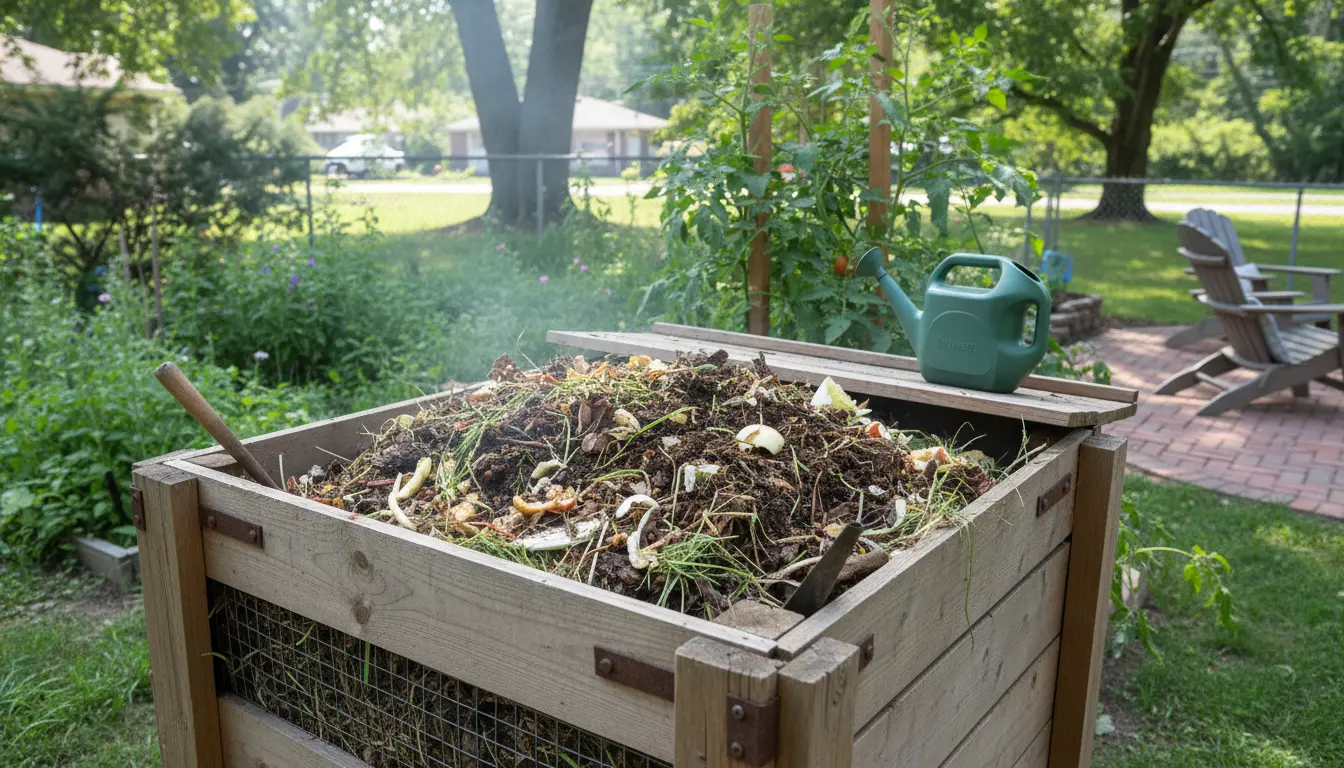
Why Home Composting for Beginners Works
Home composting turns kitchen and yard waste into a valuable soil amendment. It reduces landfill waste and improves garden soil without expensive equipment.
This guide gives clear, practical steps for beginners to set up and maintain a compost system at home. Follow these instructions to avoid common mistakes and get results faster.
Home Composting for Beginners: Essential Tools and Materials
You do not need fancy tools to compost. A basic setup includes a bin, a pitchfork or turning tool, and a small watering can.
Collect two categories of materials: green (nitrogen-rich) and brown (carbon-rich). Balance is the key to working compost.
What Counts as Green and Brown
- Greens: vegetable scraps, fruit peels, coffee grounds, fresh grass clippings.
- Browns: dry leaves, shredded cardboard, paper, straw, wood chips.
- Avoid: meat, dairy, oily foods, pet waste, and diseased plants.
Choosing a Compost Bin for Home Composting for Beginners
Select a bin that fits your space and output. Options include tumblers, stationary bins, and simple piles. Each has pros and cons for beginners.
- Tumbler: fast turning, less manual labor, good for small yards.
- Stationary bin: cheap, can hold more material, needs manual turning.
- Open pile: simplest, works for large yards, may attract pests.
Step-by-Step Home Composting for Beginners
Follow these steps to build and maintain an active compost pile. Keep routines simple and consistent for best results.
1. Build Layers
Start with coarse browns at the bottom to allow airflow. Alternate layers of greens and browns about 3–6 inches thick. Aim for roughly a 2:1 or 3:1 ratio of browns to greens by volume.
2. Manage Moisture and Aeration
Compost should feel like a wrung-out sponge — damp but not soggy. Add water if dry, or add more browns if too wet. Turn the pile every 1–2 weeks to add oxygen and speed decomposition.
3. Monitor Temperature
Active compost heats to 130–160°F (55–70°C) in the center. This kills many weed seeds and pathogens. If the pile never warms, add more greens and turn to increase activity.
4. Know When Compost Is Ready
Finished compost is dark, crumbly, and earthy-smelling. Depending on the method and materials, it can take 2–6 months for hot compost or 6–12 months for cold compost.
Troubleshooting Common Problems in Home Composting for Beginners
New composters often face a few predictable issues. Quick fixes keep the system healthy and productive.
- Bad smell: usually too wet or too many greens. Add dry browns and turn the pile.
- Too slow: increase surface area by shredding materials and turning more often.
- Pests: avoid adding meat or dairy, use a closed bin, or add a layer of browns to cover fresh greens.
Simple Tips to Speed Up Results
Small actions make a big difference. Chop or shred materials, maintain the moisture balance, and keep turning on a regular schedule.
- Use a kitchen caddy to collect scraps and empty often.
- Shred cardboard and larger items to increase surface area.
- Add finished compost back into the pile occasionally to introduce microbes.
Real-World Example: A Small Apartment Case Study
Clara lives in a two-bedroom apartment and started composting on her balcony with a small tumbling bin. She used coffee grounds, fruit and vegetable scraps, and shredded cardboard.
After six months, Clara had a steady supply of dark compost which she mixed into potted plants. Her household reduced trash to the curb by about 60 percent on weeks when she composted actively.
Key changes she made: weekly turning, keeping the bin shaded, and balancing greens with browns from online orders and paper mail.
Using Finished Compost from Home Composting for Beginners
Apply finished compost to garden beds, mix into potting soil, or use as a top dressing for lawns and potted plants. It improves soil structure, water retention, and nutrient content.
Start with a thin layer or mix 10–20 percent compost into garden soil for seedlings and established plants.
Getting Started with Home Composting for Beginners
Pick one method that fits your space and lifestyle, gather basic materials, and set a simple schedule. Small consistent actions yield useful compost and less household waste.
If you encounter persistent problems, adjust the greens-to-browns ratio, monitor moisture, and turn more frequently. Composting is forgiving and improves with practice.
Ready to start? Choose a bin today, collect your first batch of kitchen scraps, and build your first layer of greens and browns.