
Personal budgeting is a simple habit that helps you control spending, save for goals, and reduce stress. This guide explains clear steps a beginner can follow to create and maintain a realistic monthly budget.
What Is Personal Budgeting?
Personal budgeting means planning how you will use your income each month. It tracks income, fixed bills, variable spending, and savings goals.
A good budget is flexible. It guides choices rather than restricting every purchase.
Why Budgeting for Beginners Matters
For someone new to budgeting, the biggest benefits are clarity and control. You see where money goes and can make practical decisions.
Beginners often report reduced anxiety about bills and faster progress toward short-term and long-term goals.
Simple Steps to Start Personal Budgeting
Follow these easy steps to create a working budget.
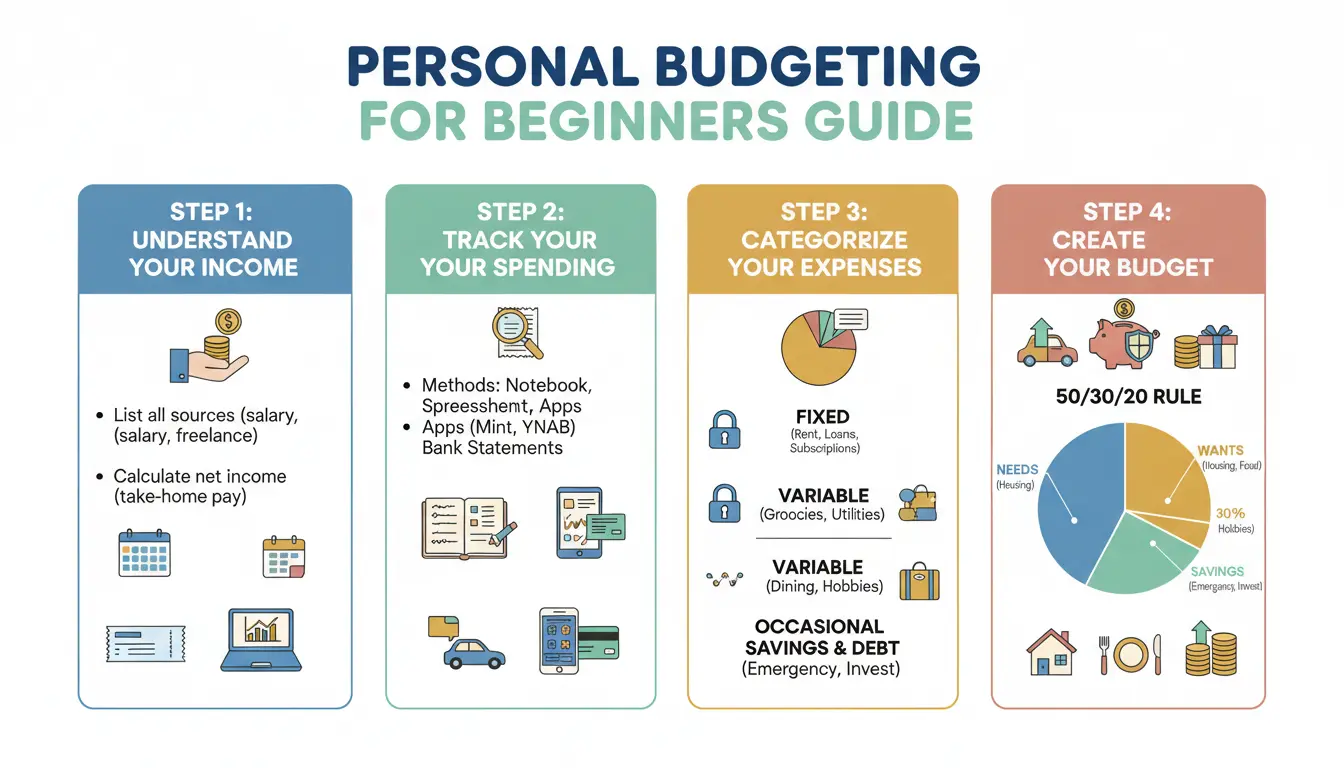
1. Record Your Income
List all reliable income sources you receive each month. Use net income (after taxes) for accuracy.
2. List Fixed Expenses
Fixed expenses are stable month to month: rent or mortgage, insurance, loan payments, subscriptions.
Write each item and its monthly cost. This becomes the foundation of your budget.
3. Estimate Variable Expenses
Variable costs change monthly: groceries, utilities, gas, entertainment. Use bank statements to estimate typical amounts.
Round up slightly for safety until you collect a month’s actual data.
4. Set Savings and Debt Goals
Decide what you want to save for: emergency fund, vacation, retirement, or paying off debt. Assign a monthly amount to each goal.
Treat savings like a fixed expense so it gets paid first.
5. Build the Budget
Subtract fixed expenses and savings from income. The remaining money covers variable expenses. If it’s negative, you must reduce spending or increase income.
Practical Budgeting Methods for Beginners
Pick a method that fits your personality. Here are three easy ones to try.
- Zero-Based Budgeting — Assign every dollar a job until income minus expenses equals zero.
- 50/30/20 Rule — 50% needs, 30% wants, 20% savings and debt repayment.
- Envelope System — Use separate accounts or envelopes for spending categories to limit overspending.
Tools and Templates for Budgeting for Beginners
Use simple tools to stay organized. Choose one that you will actually use.
- Spreadsheet template with income, fixed, variable, and savings sections.
- Budgeting apps that link to bank accounts for automatic tracking.
- Paper ledger or notebook for manual tracking if you prefer physical records.
How to Track and Adjust Your Budget
Track actual spending each week to spot drift. Compare planned vs actual in core categories like groceries and transport.
Adjust estimates after one or two months based on real data. Make small, sustainable changes rather than big cuts that are hard to keep.
Common Mistakes to Avoid in Budgeting for Beginners
- Not tracking small purchases — they add up quickly.
- Forgetting irregular expenses like annual fees or seasonal costs.
- Setting unrealistic savings targets that lead to quitting the budget.
Automatically saving a small amount each payday increases the chance you’ll reach emergency fund goals. Even 1% of income adds up over a year.
Case Study: How Sara Built a Budget and Paid Down Debt
Sara earned a modest salary and felt overwhelmed by credit card debt. She used a simple spreadsheet to list income and all monthly costs.
By switching to a zero-based budget, automating a $200 monthly payment to her high-interest card, and reducing dining out by $100, she cut debt by 15% in six months.
Key steps Sara used:
- Track all spending for one month to set realistic categories.
- Automate savings and debt payments to avoid temptation.
- Review the budget monthly and adjust categories conservatively.
Examples of Monthly Budget Categories
Use these common categories when you build your first budget.
- Housing: rent or mortgage, utilities, insurance
- Transport: fuel, public transit, car maintenance
- Groceries and household supplies
- Debt payments and minimums
- Savings: emergency fund, retirement, short-term goals
- Personal: subscriptions, entertainment, clothing
Maintaining Momentum With Your Budget
Make budgeting a short weekly habit. Spend 10–15 minutes reviewing transactions and adjusting small categories.
Celebrate milestones like setting aside three months of living expenses or paying off a loan. Positive reinforcement helps the habit stick.
Final Tips for Budgeting for Beginners
- Start simple and build complexity as you gain confidence.
- Automate savings and payments where possible.
- Review and adjust after two months based on actual spending.
Personal budgeting for beginners is a skill you improve with practice. Focus on clarity, consistency, and small improvements. Over time, those small changes become meaningful financial progress.