
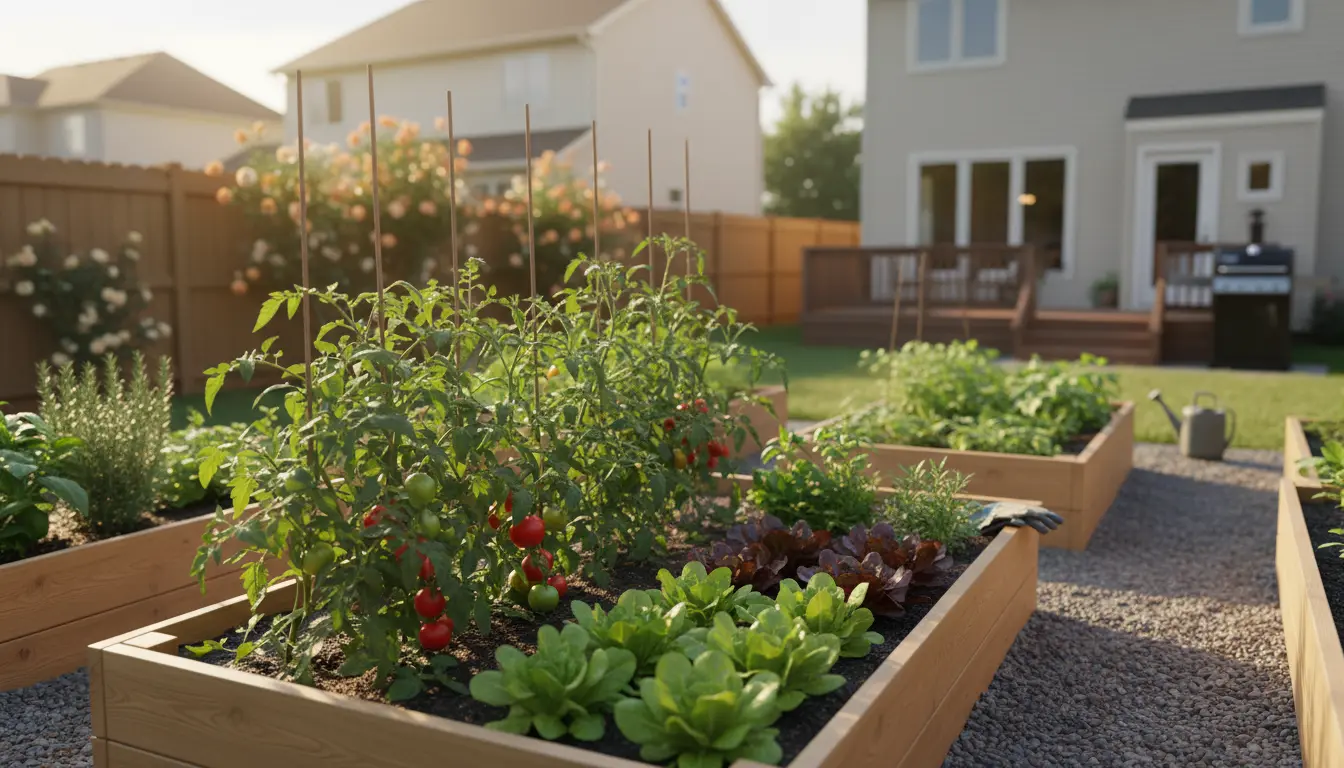
How to Start a Vegetable Garden for Beginners: Overview
Starting a vegetable garden can be simple and rewarding. This guide explains practical steps to plan, plant, and maintain a small vegetable garden, even with a limited budget.
Choose the Right Site to Start a Vegetable Garden for Beginners
Pick a spot that gets at least 6 hours of sunlight daily. Most vegetables need full sun to produce well.
Consider access to water and proximity to your kitchen for easy harvesting. If ground space is limited, containers or raised beds work very well.
Sunlight, Soil, and Space
- Sunlight: 6–8 hours for tomatoes, peppers, and cucumbers.
- Soil: Well-draining soil prevents root rot and compaction.
- Space: Start small—4×4 foot beds or a few containers are ideal for beginners.
Test and Improve Soil Before You Plant
Healthy soil is the foundation of a productive garden. Test pH with a simple kit or send a sample to a local extension service.
Most vegetables prefer a soil pH between 6.0 and 7.0. Add compost to boost fertility and structure.
Easy Soil Improvement Steps
- Add 2–4 inches of compost and work it into the top 6–8 inches of soil.
- Mix in a handful of balanced organic fertilizer if needed.
- Mulch with straw or shredded leaves to retain moisture and suppress weeds.
Pick Beginner-Friendly Vegetables
Choose crops that are forgiving and fast-growing to build confidence. Good options include lettuce, radishes, bush beans, zucchini, and cherry tomatoes.
Start with seedlings from a nursery if you want quicker results, or sow seeds directly for crops like radishes and beans.
Vegetable Suggestions and Timing
- Cool-season: lettuce, spinach, peas (plant in early spring or fall).
- Warm-season: tomatoes, peppers, cucumbers (plant after last frost).
- Quick harvest: radishes mature in 3–4 weeks and show fast success.
Planting Techniques for New Gardeners
Follow package directions for seed depth and spacing. Crowding reduces airflow and increases disease risk.
Water new seeds gently to keep soil consistently moist until seedlings establish their root systems.
Spacing and Companion Planting
- Use spacing charts or seed packet directions to avoid overcrowding.
- Consider companion planting: basil near tomatoes, marigolds to deter pests.
Watering and Maintenance
Water early in the morning to reduce evaporation and disease. Aim for deep, infrequent watering rather than light, frequent sprays.
Observe plants daily for pests, yellowing leaves, or wilting. Early action prevents small problems from becoming large ones.
Simple Maintenance Checklist
- Water 1–2 times per week deeply (adjust for rain and heat).
- Remove weeds weekly to reduce competition for nutrients.
- Stake tall plants like tomatoes to prevent breakage.
Adding a thin layer of compost each season can boost your soil’s fertility without heavy fertilizers and supports beneficial soil microbes.
Dealing With Pests and Common Problems
Most pests can be managed with cultural controls: crop rotation, healthy soil, and good spacing. Hand-pick larger pests like caterpillars and beetles.
Use row covers for young plants to prevent insect damage and netting to protect berries from birds.
Organic and Low-Cost Pest Tips
- Encourage beneficial insects by planting flowers such as calendula and dill.
- Use neem oil or insecticidal soap for soft-bodied insects like aphids.
- Rotate crops each year to reduce soil-borne diseases.
Small Real-World Case Study
Case Study: Sarah’s Balcony Tomato Garden. Sarah had a small south-facing balcony and wanted fresh tomatoes. She used two 10-gallon containers filled with a mix of potting soil and compost.
She planted one determinate tomato and several basil plants for companion planting. Watered deeply every 2–3 days and added a liquid fertilizer once a month.
Results: Sarah harvested cherry tomatoes for three months, saved about $40 in grocery costs, and learned to manage watering with a simple drip bottle system. Her key wins were choosing containers, improving soil, and staking plants early.
Harvesting and Extending Your Season
Harvest vegetables regularly to encourage continued production. Pick lettuce leaves when young for better flavor and remove spent plants to make space for fall crops.
Extend the season with row covers, cloches, or by moving containers to a protected location when temperatures drop.
Quick Harvest Tips
- Harvest tomatoes when they are fully colored for the best taste.
- Pick herbs in the morning for stronger flavor and slower wilting.
- Store or preserve excess produce by freezing, pickling, or drying.
Tools and Budget Tips for Beginners
You don’t need expensive tools to start. Essential items include a trowel, gloves, a watering can or hose with a gentle nozzle, and a soil fork or hand rake.
Save by making compost at home, reusing containers, and trading seeds or seedlings with neighbors.
Final Checklist to Start a Vegetable Garden for Beginners
- Choose a sunny site or suitable containers.
- Test and improve soil with compost.
- Select easy vegetables and follow spacing guidelines.
- Water deeply, mulch, and monitor for pests.
- Harvest regularly and learn from each season.
Starting a vegetable garden for beginners is about small steps and steady learning. Keep records of what you plant and when to improve results next season. With a little planning and hands-on care, you can grow fresh vegetables successfully in a yard, balcony, or small plot.