
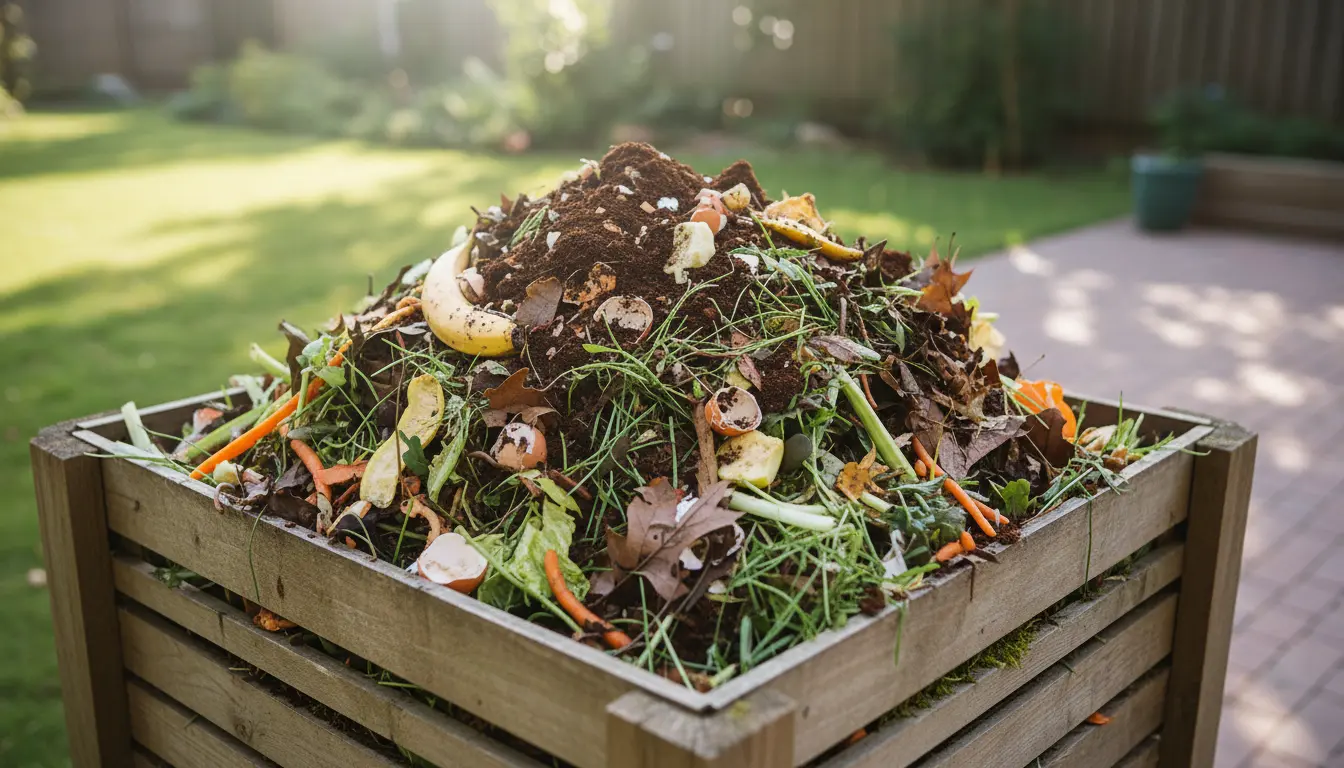
Home composting converts kitchen and yard waste into nutrient-rich soil. For beginners, a simple system can reduce trash, cut garden costs, and improve soil health. This guide gives clear, practical steps to start and keep a compost bin at home.
What Is Home Composting?
Home composting is the controlled breakdown of organic materials like vegetable peels, leaves, and paper into humus. Microorganisms, moisture, air, and a balance of materials drive the process. The final product, compost, is a stable, earthy material useful for gardens and potted plants.
Why Try Home Composting for Beginners?
Starting composting at home lowers household waste and creates free fertilizer. It also helps the environment by diverting organic matter from landfills where it would produce methane.
Getting Started: Tools and Materials for Home Composting
Begin with a few basic items. You do not need complicated equipment to succeed. A steady routine and a well-placed bin are more important than advanced tools.
- Compost bin or tumbler (or a simple pile if you have space)
- Kitchen pail for collecting scraps
- Garden fork or turning tool
- Carbon sources: dry leaves, shredded paper, cardboard
- Nitrogen sources: fruit and vegetable scraps, coffee grounds, fresh grass clippings
Choosing a Compost Bin
Select a bin based on space and goals. Tumblers speed up mixing. Stationary bins hold more material and are cheaper. For small balconies, use a compact indoor worm bin (vermicompost).
Step-by-Step Home Composting for Beginners
Follow these steps to build and maintain an effective compost system. Short, regular actions give the best results.
-
Pick a location.
Place the bin in a shaded, level spot with good drainage. Close proximity to the kitchen makes it easier to add scraps regularly.
-
Layer materials.
Start with coarse brown material (twigs, cardboard) to help aeration. Alternate layers of brown (carbon) and green (nitrogen) materials about a few inches thick.
-
Balance carbon and nitrogen.
A good target is roughly 25–30 parts carbon to 1 part nitrogen by weight. Practically, that means more dry leaves and paper than fresh food scraps.
-
Keep it moist.
Compost should feel like a wrung-out sponge. Add water during dry spells and cover or add dry brown material if too wet.
-
Turn periodically.
Turning every 1–2 weeks adds oxygen and speeds decomposition. If you use a tumbler, rotate as instructed.
-
Wait and use.
Compost is ready in 2–12 months depending on conditions. Finished compost is dark, crumbly, and smells earthy.
Troubleshooting Home Composting for Beginners
Common issues are easy to fix when you know what to check. Most problems relate to balance, moisture, or airflow.
- Bad odor: Add more brown material and turn the pile to add air.
- Not heating up: Add more nitrogen-rich greens, chop materials smaller, or increase pile size.
- Pests: Avoid meat, dairy, and oily foods; bury scraps beneath the surface and use a closed bin if rodents appear.
- Too wet or slimy: Mix in dry leaves or shredded paper and improve drainage.
Food scraps and yard waste make up nearly 30% of household trash. Composting at home can cut that portion dramatically and reduce methane emissions from landfills.
Real-World Example: Small Garden, Big Results
Case study: A two-person household began a 200-liter compost bin in their suburban backyard. They added most vegetable and fruit scraps, coffee grounds, shredded paper, and autumn leaves.
After nine months, they produced about 75 liters of finished compost. They used 2–3 cups mixed into each vegetable bed at planting, noticing improved soil structure and healthier tomato plants in the first season.
Why this worked
- Consistent additions of kitchen scraps and garden waste.
- Balanced brown and green materials.
- Regular turning every 2 weeks and good moisture control.
Practical Tips to Maintain Home Composting for Beginners
- Chop larger items to speed decomposition.
- Keep a small covered pail in the kitchen to reduce trips and odors.
- Use shredded paper and cardboard to absorb excess moisture and add carbon.
- Record additions and turning dates to spot patterns and improve results.
- If space is limited, use a worm bin to compost indoors with minimal odor.
Home composting for beginners is a manageable, rewarding practice. Start small, observe the pile, and adjust the balance of materials. With a few simple habits you can transform waste into a valuable resource for your plants.
If you want a quick checklist to begin today:
- Choose a bin and place it conveniently.
- Collect kitchen scraps in a small pail.
- Layer greens and browns and keep the pile moist.
- Turn regularly and harvest finished compost when ready.
Begin now and turn household waste into healthy soil with minimal effort.