
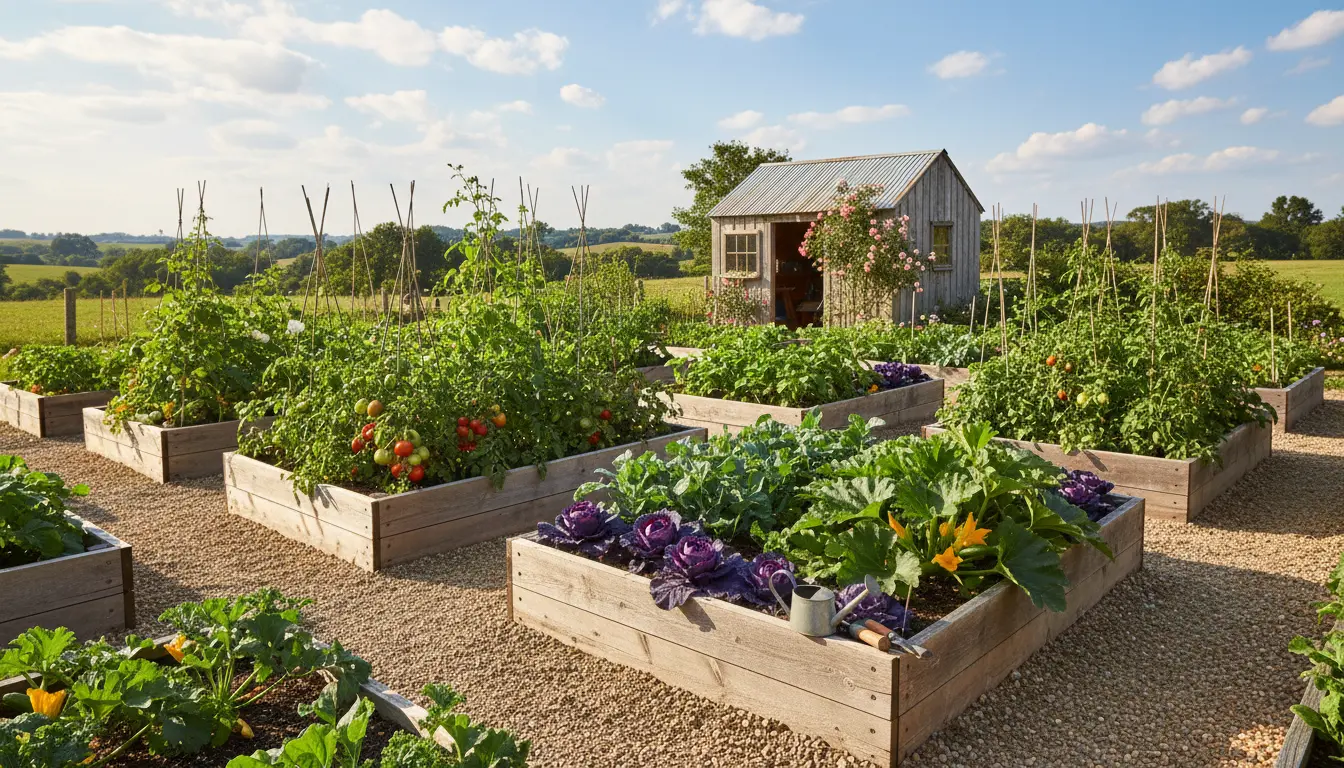
How to Start a Vegetable Garden: Plan and Prepare
Starting a vegetable garden is rewarding and can fit any space. This guide explains practical steps to start a vegetable garden, using simple, low-cost techniques for reliable results.
Decide Why and Where to Start a Vegetable Garden
Think about goals: fresh herbs, a few salad greens, or a full-season supply of tomatoes. Your goals determine the space, plant choices, and time commitment.
Choose a site with 6–8 hours of sun, good drainage, and easy access to water. If you lack ground space, raised beds or containers work well.
Start a Vegetable Garden: Choose Plants and Layout
Pick vegetables that match your climate and skill level. Beginners succeed with lettuce, radishes, green beans, tomatoes, peppers, and herbs.
- Easy starters: Lettuce, radish, spinach, bush beans
- Moderate: Tomatoes, peppers, cucumbers (need support)
- Long season: Squash, corn, root crops (more space)
Sketch a simple layout. Group plants with similar water and sun needs to simplify care.
Planting Examples for Small Spaces
In a 4×4 foot raised bed you can plant:
- 4 tomato plants with 2–3 basil plants
- Rows of lettuce and radishes along the edges
- One trellis for a cucumber or pole beans
Start a Vegetable Garden: Soil and Fertility
Soil quality matters more than space. Good soil holds water, drains, and supplies nutrients. Test or inspect soil before planting.
If starting in the ground, do a simple soil test or buy a basic kit. For raised beds or containers, use a mix of compost, topsoil, and coarse sand or perlite.
- Add 2–3 inches of compost annually to improve fertility
- Use organic fertilizer or balanced slow-release formulas as needed
- Adjust pH only if tests show an imbalance
Soil Preparation Steps
Loosen the top 6–12 inches of soil. Remove weeds and incorporate compost. Level the bed and firm lightly before planting.
Start a Vegetable Garden: Planting and Watering
Follow seed packet or plant tag spacing and depth. Overcrowding causes disease and reduces yields.
Water deeply and less often to encourage strong roots. Aim for consistent moisture rather than frequent shallow watering.
- New seedlings: keep soil moist but not waterlogged
- Mature plants: water 1–2 times per week depending on weather
- Use mulch to retain moisture and suppress weeds
Watering Tips
Water at the base of plants to keep leaves dry and reduce disease. Drip irrigation or soaker hoses save water and time.
Start a Vegetable Garden: Pest and Disease Management
Monitor regularly for pests and signs of disease. Early action prevents small problems from becoming large ones.
- Use row covers to protect seedlings from insects
- Handpick large pests like slugs and beetles
- Choose disease-resistant varieties when possible
Practice crop rotation and remove diseased plants promptly. Biological controls and organic sprays can help when needed.
Common Problems and Simple Remedies
- Aphids: Blast with water or use insecticidal soap
- Blight on tomatoes: remove affected leaves and avoid overhead watering
- Nutrient deficiency: add compost or targeted fertilizer after testing
Planting basil near tomatoes can improve tomato flavor and may help deter some pests. Companion planting is a low-cost way to support plant health.
Start a Vegetable Garden: Harvest and Continuous Planting
Harvest regularly to encourage production and prevent waste. Pick vegetables at peak ripeness for best flavor.
Succession planting extends harvests: sow a new row of lettuce every 2–3 weeks, or replace spent plants with fall crops.
Storage and Preservation
Use or preserve produce quickly. Some methods: freezing, pickling, and drying. Tomatoes can be canned or frozen into sauces.
Small Case Study: A Beginner Raised Bed
Maria started a single 4×8 foot raised bed in her apartment courtyard. She filled it with equal parts topsoil and compost, planted three tomato seedlings, two pepper plants, and rows of lettuce and radishes.
She used a simple drip line for watering and a 2-inch layer of straw mulch. By the end of the season she harvested regular salads and enough tomatoes to make two batches of sauce.
Key takeaways: start small, choose easy crops, and water consistently. Maria expanded to a second bed the following year.
Start a Vegetable Garden: Quick Tools and Materials List
- Raised bed or containers (if no in-ground space)
- Quality compost and topsoil
- Basic hand tools: trowel, fork, watering can or hose
- Mulch, stakes, or trellis for support
- Soil pH test kit and balanced fertilizer
Beginner Checklist to Start a Vegetable Garden
- Select a sunny site and decide bed size
- Choose 3–6 easy vegetables to begin
- Prepare soil with compost and test pH
- Plant according to spacing and depth guidelines
- Water deeply, mulch, and monitor weekly
Starting a vegetable garden is manageable with a little planning and simple routines. Focus on soil, water, and regular observation, and your garden will reward you with fresh produce and growing skills.