
Why Home Composting Matters
Home composting turns kitchen and garden waste into useful soil amendment. It reduces trash, lowers methane from landfills, and supports healthier plants.
This guide gives practical, step-by-step instructions for home composting for beginners. No special tools are required to start.
Getting Started with Home Composting for Beginners
Decide where to compost first. Choose a sunny or partly shaded spot with good drainage, close to your kitchen for convenience.
Consider space, the amount of waste you produce, and local regulations when choosing a system.
Choose a Compost System
Common systems for home composting include simple piles, tumblers, and bins. Each suits different spaces and user needs.
- Open pile: cheapest, needs more space and regular turning.
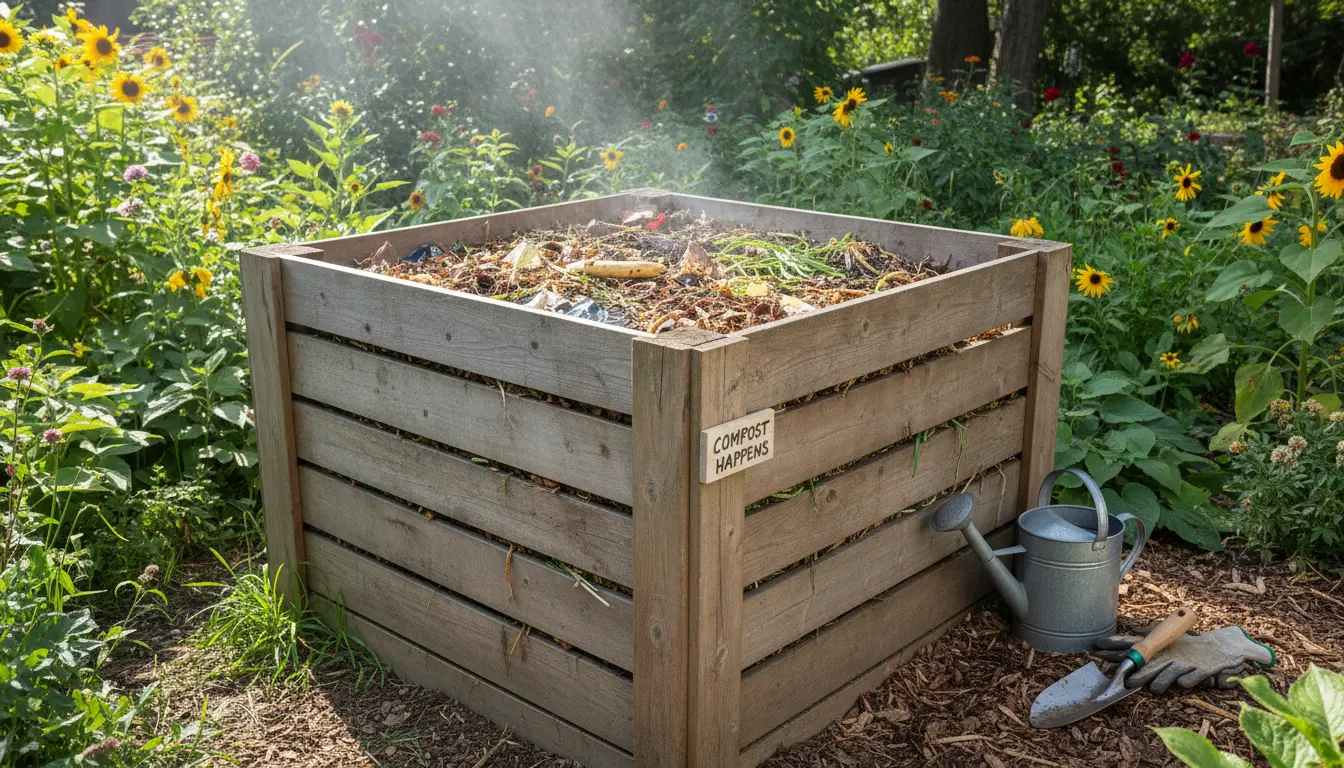
- Compost bin: contained and neater, can be homemade or purchased.
- Tumbler: faster composting with easy turning, good for small yards.
Essential Materials: Browns and Greens
Balance carbon-rich materials (browns) and nitrogen-rich materials (greens). This balance supports microbial activity and avoids odors.
- Greens: vegetable scraps, coffee grounds, fresh grass clippings.
- Browns: dry leaves, shredded paper, straw, cardboard pieces.
A practical starting ratio is about 3 parts browns to 1 part greens by volume. Adjust if the pile is too wet or too slow.
How to Build and Maintain Your Compost
Start with a base layer of coarse browns to help airflow. Alternate layers of greens and browns in 4–6 inch layers.
Keep the pile moist like a wrung-out sponge and turn it every 1–2 weeks to speed decomposition.
Temperature and Monitoring
Active composting generates heat. Internal temperatures of 130–150°F (54–66°C) speed breakdown and reduce pathogens.
For small home piles, aim for steady warm temperatures but don’t worry if it stays cooler; decomposition will continue more slowly.
When Is Compost Ready?
Compost is ready when material looks dark, crumbly, and smells earthy. Time varies from 2 months to a year depending on method and maintenance.
Screen or sift finished compost to remove larger undecomposed pieces and return them to the pile.
Troubleshooting Home Composting Problems
Common issues are odors, pests, and slow decomposition. Most problems come from imbalance in moisture, particle size, or an incorrect greens-to-browns ratio.
- Smelly or anaerobic pile: add more browns, increase turning, and improve drainage.
- Pests like rodents: avoid meat, dairy, oily foods, and use closed bins or bury kitchen scraps in the pile.
- Slow composting: chop materials smaller, add nitrogen (greens), and keep pile moist.
What Not to Compost
Avoid meat, bones, dairy, diseased plants, and pet waste. These items can attract pests or introduce pathogens to your compost.
Also limit oily foods and large wood pieces that take too long to break down.
Simple Tools and Supplies
You can start with basic items: a pitchfork or turning tool, a garden fork, a bin or tumbler, and a kitchen scrap container with a lid.
Optional tools include a compost thermometer and a screen for sifting finished compost.
Practical Schedule for Home Composting
Set a routine to keep your compost active. Empty kitchen caddy into the pile every 2–3 days. Turn the pile weekly or biweekly depending on your system.
Keep a small supply of shredded paper or dry leaves on hand to balance new wet greens.
Case Study: Small Backyard, Big Results
Sarah, a renter with a small backyard, started a 60-gallon tumbler and a kitchen caddy. She added all vegetable scraps, coffee grounds, and occasional yard trimmings.
After six months of weekly turning and maintaining a 3:1 browns-to-greens mix, Sarah produced about 2 cubic feet of finished compost. She used it to top-dress potted herbs and improve raised bed soil.
Her household reduced weekly trash by one small bag and cut grocery costs slightly by growing herbs healthier in enriched soil.
Tips to Keep Home Composting Simple
- Start small. A single bin or tumbler is easier to manage than a large pile.
- Chop or shred large items to speed decomposition.
- Record simple notes—dates of turning and additions—to track progress.
- Use finished compost as mulch, potting mix ingredient, or soil conditioner.
Final Checklist for Home Composting for Beginners
- Choose a system that fits your space and effort level.
- Balance browns and greens; keep moisture even and turn regularly.
- Avoid banned items like meat and pet waste.
- Use finished compost to improve soil health and reduce waste.
Home composting for beginners is practical and rewarding. With simple steps and routine care, most households can turn everyday scraps into a valuable resource for gardens and potted plants.