
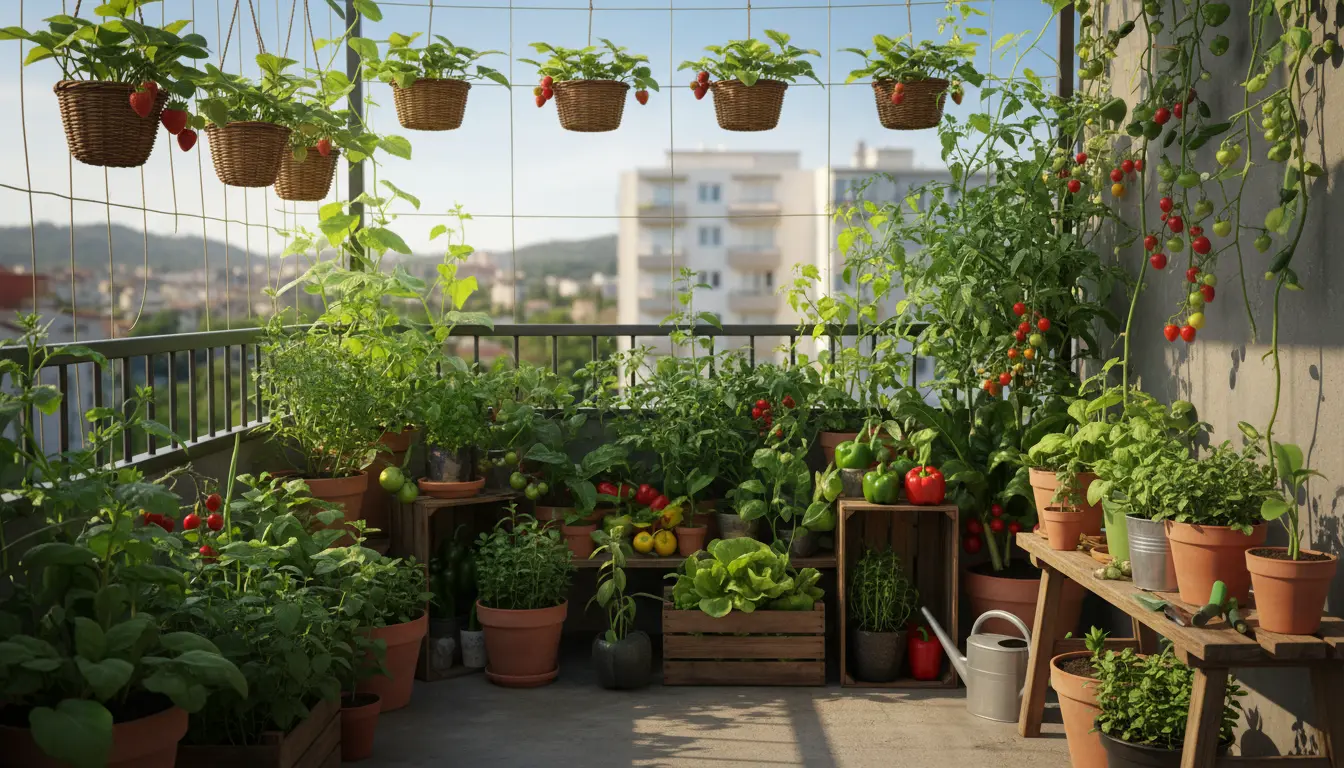
Why a small vegetable garden works
Starting a small vegetable garden is a practical way to grow fresh food with limited space. Small gardens use containers, raised beds, or balcony boxes and require less time and lower cost than full-sized plots.
This guide shows clear steps, simple materials, and common mistakes to avoid so you get consistent yields from a compact space.
Plan your small vegetable garden: location and goals
First, choose a location that gets at least 4–6 hours of direct sun for most vegetables. Observe light patterns for a few days to confirm the spot.
Decide your goals: fresh herbs, salad greens, tomatoes, or continuous snacking vegetables. Narrow goals help you select containers and plants that fit your routine.
Measure and map the space
Measure available floor or railing space in feet or meters. Sketch a simple layout showing container sizes and walking access.
Allow at least 12–18 inches (30–45 cm) around containers for watering and harvesting access.
Choosing containers and soil for a small vegetable garden
Container choice affects root space, watering frequency, and plant health. Use containers with drainage holes and breathable materials when possible.
- Small pots (1–3 gallons) – good for herbs and leafy greens.
- Medium containers (5–10 gallons) – suitable for peppers, dwarf tomatoes, and bush beans.
- Large containers (15+ gallons) – needed for full-size tomatoes, potatoes, and squash.
Use a high-quality potting mix labeled for vegetables. Avoid using garden soil alone because it compacts and drains poorly in containers.
Soil mix and amendments
Mix equal parts potting mix, compost, and a drainage amendment like perlite or coarse sand for a balanced container soil. This supports nutrients, water retention, and drainage.
Add a slow-release organic fertilizer at planting and supplement with liquid feed every 3–4 weeks during the growing season.
Selecting vegetables for a small vegetable garden
Choose compact, high-return varieties that fit containers and your climate. Focus on plants you will use often to maximize satisfaction.
- Best for tiny spaces: herbs (basil, parsley, cilantro), salad greens, radishes, and baby carrots.
- Medium space: dwarf tomatoes, bush beans, peppers, and shallower-rooted cucumbers trained vertically.
- Use succession planting to keep harvests steady — sow lettuce every 2–3 weeks for continuous leaves.
Planting and daily care for a small vegetable garden
Plant at the correct depth and spacing recommended on seed packets. Overcrowding causes disease and reduces yields.
Water consistently; containers dry faster than beds. Check soil moisture daily at first, then adjust to every 2–3 days depending on heat and wind.
Watering tips
- Water until it flows from the drainage hole to ensure the whole root zone is wet.
- Use a drip emitter or watering can for controlled, even application.
- Mulch the surface with straw or shredded bark to reduce evaporation.
Pests, disease, and troubleshooting in a small vegetable garden
Inspect plants weekly for pests or yellowing leaves. Early detection keeps problems manageable in small spaces.
Use organic controls first: hand-pick pests, spray insecticidal soap, or introduce beneficial insects like ladybugs when feasible.
Common issues and fixes
- Wilting: Check root zone moisture and drainage; repot if roots are pot-bound.
- Yellow leaves: Look for nutrient deficiency or overwatering; apply balanced fertilizer and adjust watering.
- Powdery mildew: Improve air circulation, remove affected leaves, and apply a baking soda spray if needed.
Harvesting and maximizing yield from a small vegetable garden
Harvest at peak maturity to encourage continued production. Many vegetables like greens and beans produce more when you pick regularly.
Save space by using vertical supports for vining plants and rotating fast-growing crops into freed containers after harvest.
Containers warm up faster than garden beds, so you can start planting earlier in spring. However, they also dry out faster and may need more frequent watering during heatwaves.
Small case study: One balcony, big flavor
Maria, a city renter, used a 4-foot balcony to grow a small vegetable garden. She placed two 10-gallon containers for tomatoes, three 5-gallon pots for peppers and basil, and a shallow tray for lettuce.
Using compost-amended potting mix, vertical trellises, and weekly liquid feed, she harvested cherry tomatoes for 12 weeks and replaced lettuces twice during the season. The whole setup fit on her balcony with room to sit.
Her key wins: consistent watering schedule, early pest removal, and choosing compact varieties labeled for containers.
Quick checklist to start your small vegetable garden
- Choose a sunny spot and measure available space.
- Select containers with drainage and high-quality potting mix.
- Pick compact vegetable varieties suited to containers.
- Set a watering routine and mulch container surfaces.
- Inspect weekly for pests and harvest regularly to boost production.
With modest planning and the right containers, a small vegetable garden can supply fresh produce and rewarding hands-on learning. Start small, track what works, and expand in future seasons based on your results.