
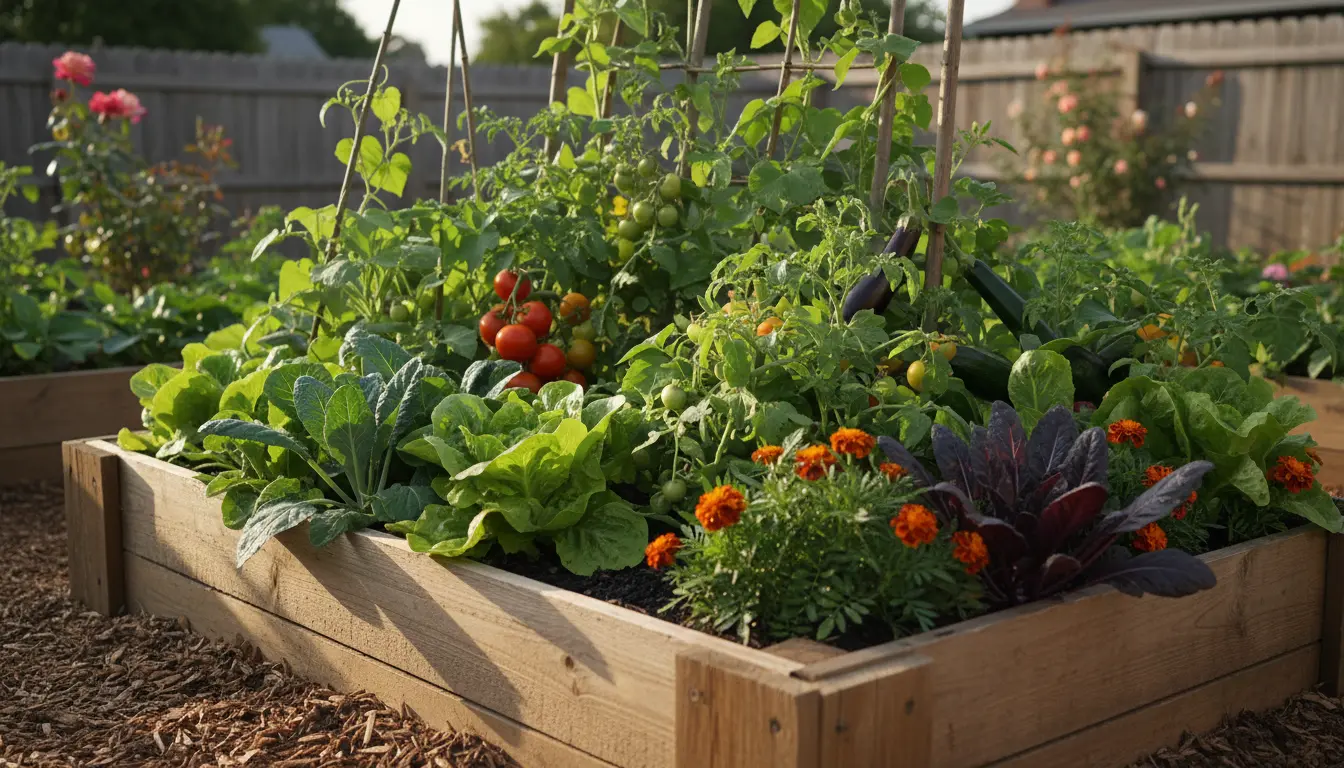
Why start a small vegetable garden?
Starting a small vegetable garden is a practical way to get fresh produce, save money, and enjoy hands-on activity. Small gardens fit patios, balconies, and small yards, so you don’t need a large space to grow food.
This guide shows clear, step-by-step actions to plan, plant, and maintain a productive small vegetable garden.
Plan your small vegetable garden
Good planning reduces wasted time and effort. Decide what you want to grow and how much you can realistically maintain.
Choose vegetables for a small garden
Select easy, high-yield crops suitable for limited space. Good options include:
- Leafy greens: lettuce, spinach, swiss chard
- Compact fruiting plants: cherry tomatoes, bush beans, peppers
- Root crops: radishes, baby carrots
- Herbs: basil, parsley, chives
Pick 3–6 varieties to keep care simple.
Decide the layout and containers
Measure your available space and choose between containers, raised beds, or small in-ground plots. For tight spaces, use:
- Wide containers (12+ inches deep) for roots
- Raised beds (4×4 or 4×8 feet) for intensive planting
- Vertical supports for vining crops
Choose the right location for a small vegetable garden
Sunlight is the most important site factor. Most vegetables need at least 6 hours of direct sun daily. Morning sun is best when afternoon heat is intense.
Also consider access to water, wind protection, and proximity to your kitchen to encourage regular harvesting.
Soil preparation and containers
Good soil is the foundation of a productive small vegetable garden. If using the ground, test and amend the soil. For containers, use a quality potting mix.
Improve garden soil
Test for pH and basic nutrients with a kit. Most vegetables prefer pH 6.0–7.0. Improve soil by adding:
- Compost to increase nutrients and structure
- Compost-based mulch to retain moisture
- Coarse sand or grit if drainage is poor
Soil for containers
Use a light potting mix labeled for vegetables or herbs. Mix in slow-release organic fertilizer if needed.
Planting: timing and spacing
Follow seed packet or plant tag instructions for sowing depth and spacing. Planting at the correct time increases success.
Succession planting for continuous harvest
To maximize yield in a small area, use succession planting. For example, sow quick crops like radishes or lettuce between slower crops such as tomatoes.
Watering and feeding a small vegetable garden
Consistent moisture is critical. Water early in the morning to reduce evaporation and disease risk. Use a soaker hose or drip irrigation for efficient delivery.
- Water frequency: 2–3 times per week for beds, daily for shallow container soil in hot weather
- Mulch to reduce evaporation and suppress weeds
- Fertilize according to crop needs—leafy greens need more nitrogen, fruiting crops need balanced N-P-K
Pest and disease basics for small gardens
Small gardens still face pests and disease, but early detection makes control easier. Inspect plants weekly and take quick action when problems appear.
- Handpick large pests like caterpillars and snails
- Use row covers to protect young plants from insects
- Practice crop rotation and remove diseased plants promptly
Seasonal care and harvest tips
Adjust care with the seasons. In summer, provide shade cloth for heat-sensitive crops. In early spring and fall, protect plants from frost with covers or cloches.
Harvest frequently; many vegetables produce more when picked regularly. Store or preserve surplus produce to avoid waste.
Growing herbs and leafy greens in partial shade can yield as well as full sun in small gardens, because these crops tolerate less light and benefit from cooler conditions.
Simple case study: 4×4 raised bed success
Maria, a city renter, used a 4×4 raised cedar bed on her balcony. She planted cherry tomatoes in one corner, basil beside them, lettuce along the front, and bush beans in the remaining space.
By using compost-amended soil, drip irrigation, and weekly fertilizing, she harvested salad greens for six months and two rounds of tomatoes in the first year. The compact layout made maintenance quick and taught her which crops performed best in her microclimate.
Common beginner mistakes and quick fixes
- Overcrowding plants — thin seedlings to avoid poor air flow.
- Too much fertilizer — follow recommended rates to prevent leaf burn.
- Irregular watering — set a simple schedule or use a timer for consistency.
Final checklist to start a small vegetable garden
- Choose 3–6 easy crops for your space
- Pick a sunny, accessible location
- Prepare soil or buy quality potting mix
- Use containers or a raised bed sized to your schedule
- Set up simple irrigation and mulch
- Inspect plants weekly and harvest often
Starting a small vegetable garden is manageable with deliberate planning and routine care. Begin small, learn how different crops behave in your space, and expand gradually as you gain confidence.