
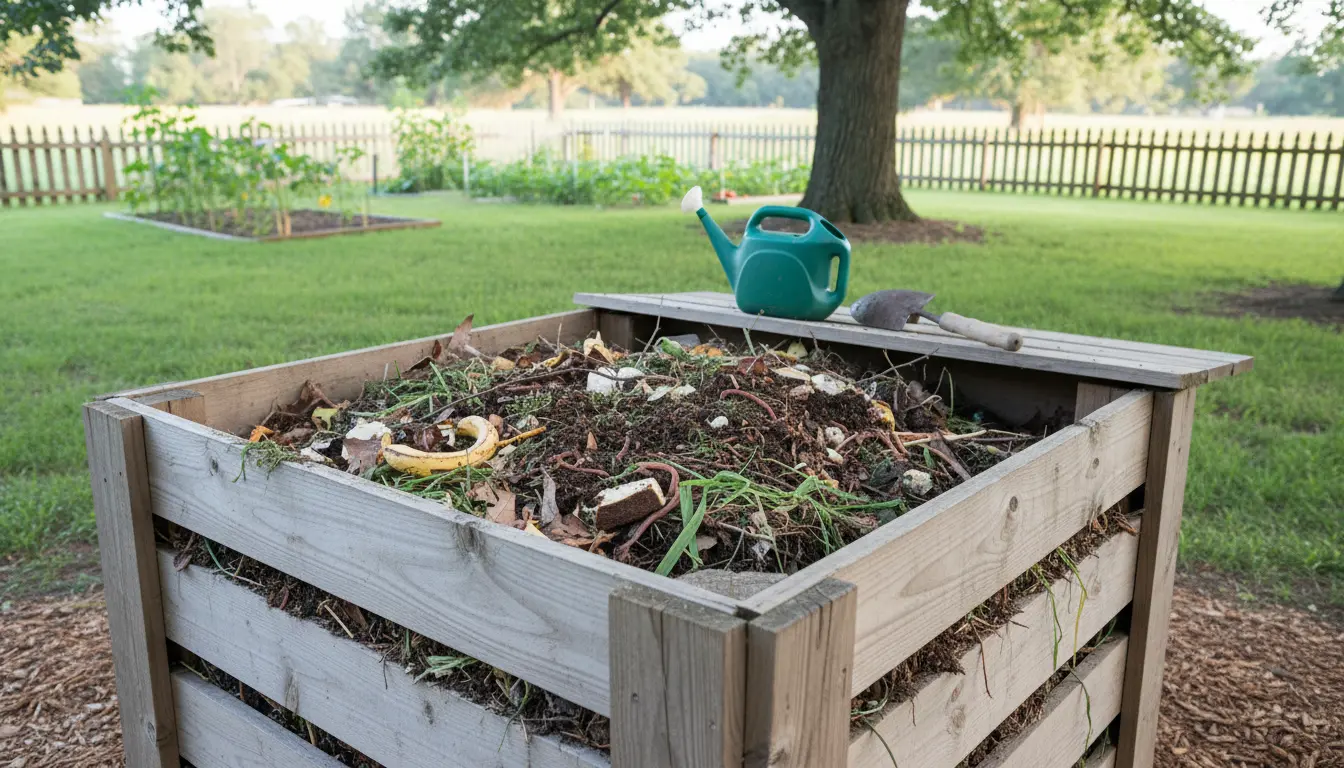
Why home composting matters
Home composting turns kitchen and yard waste into nutrient-rich soil. It reduces household garbage and improves garden health.
This guide gives practical, step-by-step instructions for successful home composting. You will learn what to compost, how to maintain a pile or bin, and common fixes.
What is home composting?
Home composting is the controlled decomposition of organic materials in your backyard or a container. Microbes and small invertebrates break down food scraps and yard waste into humus.
Finished compost is dark, crumbly, and smells earthy. It adds nutrients and structure to soil when mixed into garden beds or potting mixes.
Getting started with home composting
Choose a method that fits your space and lifestyle. Common options include a simple heap, a closed bin, or a tumbler.
- Heap: Best for yards with space; low cost but slower decomposition.
- Stationary bin: Keeps pests out and looks tidy; balances moisture and heat well.
- Tumbler: Easy turning and faster results; good for small spaces and limited lifting.
Choosing a compost bin for home composting
Consider volume, accessibility, and how often you will turn the material. A 200–400 liter bin suits most households.
If you have limited space, a small tumbler or worm composter (vermicompost) works well indoors or on balconies.
What to put in a home compost
Balance carbon-rich “browns” and nitrogen-rich “greens” to speed decomposition. Aim for about 3:1 browns to greens by volume.
- Greens (nitrogen): vegetable scraps, fruit peels, coffee grounds, fresh grass clippings.
- Browns (carbon): dry leaves, shredded paper, cardboard, straw, wood chips.
Items to avoid in home composting
- Meat, dairy, and oily foods (attract pests and create odor).
- Diseased plants or invasive weeds that might survive the process.
- Pet feces and treated wood residues (may contain pathogens or chemicals).
Step-by-step home composting process
Follow these steps for a steady composting routine that requires minimal effort.
- Pick a dry, shady spot with good drainage or place a bin on compacted soil or a paved area.
- Start with a layer of coarse browns (twigs or straw) to promote airflow at the base.
- Add alternating layers of greens and browns. Chop larger items to speed breakdown.
- Keep the pile moist like a wrung-out sponge. Add water during dry periods.
- Turn the pile every 1–3 weeks for aerobic composting; use a pitchfork or tumbler crank.
- Harvest finished compost in 2–6 months depending on temperature and how often you turn it.
Troubleshooting common home composting problems
Problems are usually caused by imbalance of moisture, air, or materials. Simple fixes often work.
- Bad odor: Add more browns and turn the pile to add air.
- Too dry: Add water and some fresh greens; cover the pile to retain moisture.
- Slow decomposition: Chop materials smaller and increase turning frequency.
- Pests: Avoid meat/dairy, use a closed bin, and bury food scraps within the pile.
Speeding up decomposition
Smaller pieces, proper moisture, and turning increase microbial activity. Add finished compost or garden soil to introduce microbes.
Aerobic conditions (good airflow) result in faster, odor-free composting than anaerobic conditions.
Using finished compost from home composting
Finished compost should be dark, crumbly, and smell earthy. Use it to improve soil structure and fertility.
- Top-dress lawns with a thin layer of compost to add nutrients.
- Mix compost into garden beds to improve water retention and nutrient content.
- Use as part of potting mixes for container plants (limit to 20–30% of mix).
Small case study: One family, less waste
A family of four in Seattle started a 200 L tumbler bin and followed the 3:1 browns to greens rule. They collected food scraps in a small counter caddy and emptied it into the bin twice a week.
Within six months they reduced weekly trash volume by nearly half and produced enough compost to top-dress two raised beds. The garden yield improved and they reported less grocery waste.
Practical tips for long-term success with home composting
- Keep a small kitchen compost caddy to avoid throwing food away; empty it regularly.
- Shred or chop large items to speed the process and reduce turning effort.
- Use fallen leaves in autumn to stockpile browns for winter composting.
- Label bins and keep a simple log to track turning and additions if you want consistent results.
Home composting is a low-cost way to reduce waste and improve soil. With simple tools and regular attention, most households can produce useful compost within a few months.
Start small, adjust the balance of greens and browns, and you will quickly learn what works for your home and garden.