
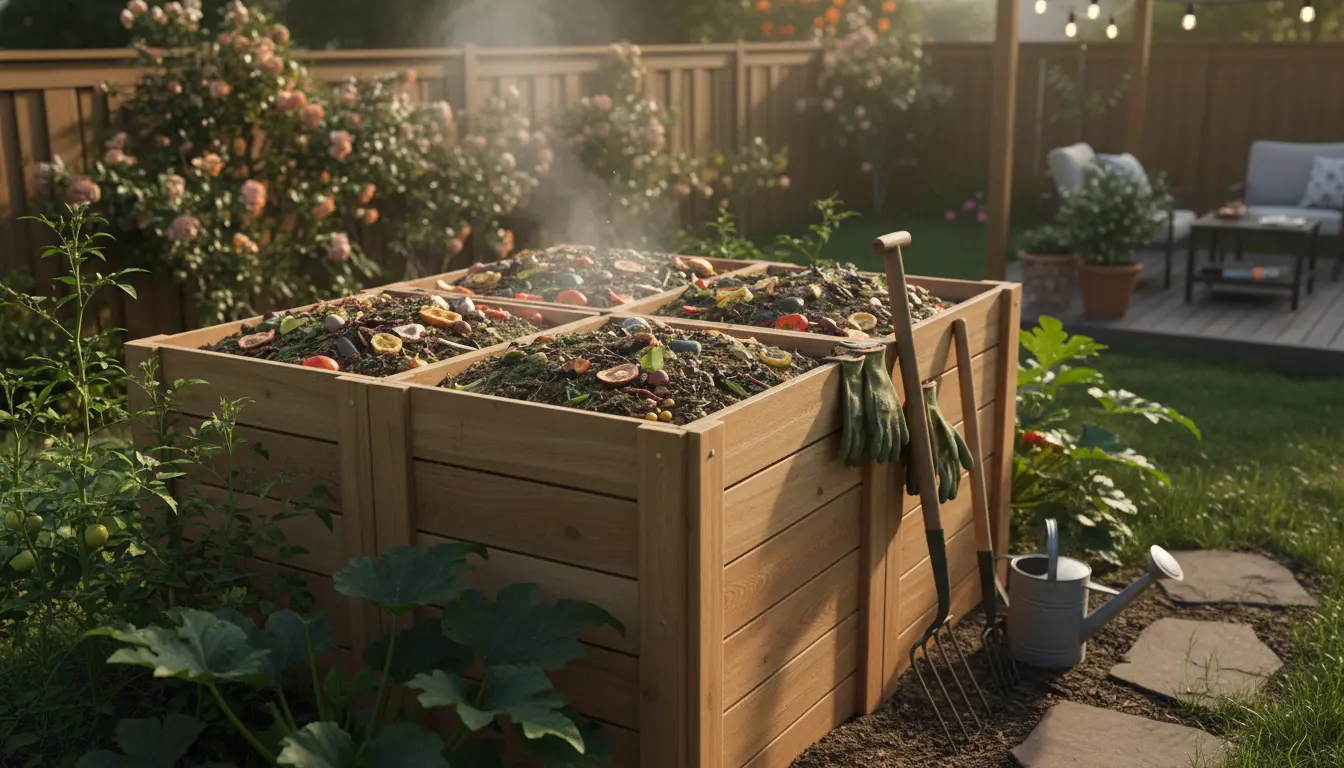
Home Composting for Beginners: Getting Started
Composting at home reduces kitchen waste and creates rich soil for plants. This guide gives practical steps you can apply whether you have a backyard or a small balcony.
Why choose home composting for beginners
Composting diverts organic waste from the trash and improves garden soil. For beginners, it also teaches simple habits that cut waste and save money.
Choose the Right Bin for Home Composting for Beginners
Select a bin based on space, budget, and how much waste you produce. Options include open piles, tumblers, and enclosed bins for smaller spaces.
- Open pile: low cost, needs space and regular turning.
- Tumbler: faster breakdown, easier turning, good for small yards.
- Enclosed bin or compost bin for balcony: compact and tidy, suitable for apartments.
Placement and basic setup
Place the bin on soil or a breathable surface to allow drainage and access for beneficial organisms. Start with a layer of coarse material to improve airflow.
What To Compost: Materials for Home Composting for Beginners
Compost needs a balance of green and brown materials. Greens provide nitrogen and browns provide carbon.
- Greens: vegetable scraps, coffee grounds, fresh grass clippings.
- Browns: dry leaves, shredded paper, cardboard, straw.
Avoid meat, dairy, diseased plants, and oily foods in small home setups to limit pests and odors.
Simple ratio to follow
A practical ratio is about 2 parts browns to 1 part greens by volume. If the pile smells, add more browns; if it is very dry, add more greens or water.
Managing Moisture and Aeration
Proper moisture and oxygen are key to an active compost pile. Think damp like a wrung-out sponge.
- Moisture: add water during dry spells and cover during heavy rain.
- Aeration: turn the pile every 1–3 weeks with a pitchfork or use a tumbler for easy mixing.
Good airflow prevents bad odors and keeps microbes working.
Troubleshooting common issues
Smelly compost usually means too wet or too much green material. Add dry browns and turn the pile. A pile that won’t heat up may need more greens or smaller pieces of material.
Speeding Up Decomposition for Home Composting for Beginners
To produce finished compost faster, shred materials, maintain the green-to-brown balance, and keep the pile warm by insulating in cold weather.
- Chop kitchen scraps before adding.
- Layer materials to encourage even decomposition.
- Use a compost starter or a handful of garden soil to introduce microbes.
Indoor and small-space tips
Vermicomposting with worms is effective indoors and on balconies. Use a worm bin, feed appropriate scraps, and keep conditions cool and moist.
Using Finished Compost and When It’s Ready
Compost is ready when it looks dark, crumbly, and smells earthy. This can take 2 months to a year depending on methods and conditions.
- Top-dress: apply a thin layer on garden beds.
- Potting mix: blend with soil for container plants.
- Mulch: use around trees and shrubs to retain moisture.
Testing readiness
If large pieces remain, sieve the compost and return big bits to the bin to continue decomposing. Mature compost will not heat up further.
Common Problems and Practical Fixes
Beginners often face odors, pests, or slow decomposition. Most problems are solvable with small adjustments.
- Odors: add browns and turn the pile to add oxygen.
- Pests: avoid meat and dairy; use a sealed bin or bury food scraps inside the pile.
- Slow breakdown: increase surface area by chopping and ensure moisture and greens.
Small real-world example
Case study: The Rivera Family started a 200-liter tumbler in their suburban yard. Within 6 months they reduced organic trash by 50% and produced enough compost to top-dress two vegetable beds.
They followed basic rules: chop scraps, maintain a 2:1 brown to green ratio, and turn the tumbler weekly. Problems were minimal — occasional fruit flies were fixed by covering fresh scraps with dry leaves.
Practical Checklist for Home Composting for Beginners
- Choose a bin suited to space and budget.
- Keep a small kitchen caddy to collect compostables.
- Maintain approximate 2:1 browns to greens ratio.
- Keep moisture like a wrung-out sponge and aerate regularly.
- Use finished compost as mulch or soil amendment.
Home composting is a low-cost, practical way to turn waste into a resource. Start small, observe the pile, and make adjustments. Over time you will learn what local conditions and materials work best for healthy compost.