
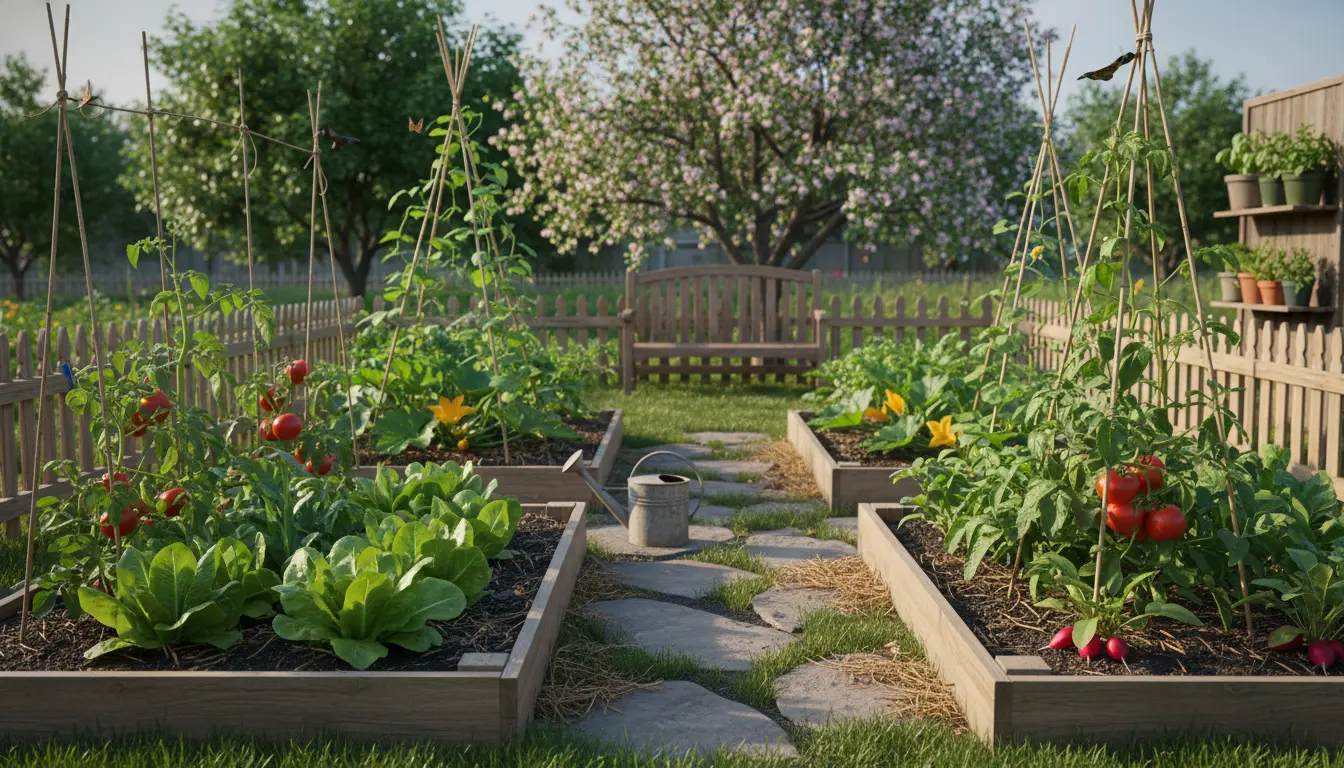
Why start a small vegetable garden
Growing your own vegetables is practical and achievable even in limited space. A small vegetable garden can reduce grocery costs, improve food quality, and give you control over how your food is grown.
Many beginners worry about scale and complexity. With focused planning and simple techniques, a compact plot or a few containers can produce a steady supply of fresh produce.
How to start a small vegetable garden: overview
Start a small vegetable garden by choosing the right location, preparing soil, selecting suitable crops, and setting a basic watering and maintenance plan. Follow step-by-step instructions and adjust based on your local climate.
Step 1: Choose the best location for a small vegetable garden
Select a spot that gets at least 6 hours of direct sunlight a day for most vegetables. If full sun is not available, choose crops that tolerate partial shade such as leafy greens and herbs.
Consider access to water and proximity to your home. A kitchen-side garden is easier to maintain and encourages frequent harvesting.
Step 2: Decide on garden type
For a small vegetable garden, choose between containers, raised beds, or a small in-ground plot. Each has pros and cons related to soil control, drainage, cost, and labor.
- Containers: Good for balconies and patios. Use potting mix and select compact varieties.
- Raised beds: Offer excellent drainage and soil control. Ideal for 3×6 ft or 4×6 ft setups.
- In-ground: Works if soil is reasonably healthy and space is available.
Step 3: Prepare soil for a small vegetable garden
Healthy soil is the foundation. Test soil pH and add compost to improve structure and fertility. Aim for a loose, crumbly soil that drains well.
For containers, use a high-quality potting mix. For raised beds, fill with a blend of topsoil, compost, and a small amount of coarse sand or perlite for drainage.
Choosing plants for a small vegetable garden
Pick vegetables that match your space and climate. Choose compact and high-yield varieties to maximize production.
- Easy starters: Lettuce, kale, radishes, bush beans, cherry tomatoes.
- Space-savers: Vertical cucumbers, pole beans, and indeterminate tomatoes with cages.
- Herbs: Basil, parsley, chives are useful and grow well in small spaces.
Planting schedule and succession planting
Plan multiple plantings to keep the harvest steady. For example, sow lettuce every 2–3 weeks for continuous greens.
Use a simple calendar: spring cool-season crops, warm-season crops after frost, and a fall sowing of fast-maturing greens.
Watering and feeding a small vegetable garden
Consistent watering is crucial. Small gardens and containers dry out faster, so check soil moisture frequently and water deeply when needed.
- Water in the morning to reduce evaporation and disease risk.
- Mulch around plants to retain moisture and suppress weeds.
- Use a balanced organic fertilizer or compost tea every 3–4 weeks during the growing season.
Simple pest and disease control
Use preventive strategies: crop rotation, proper spacing for air flow, and removing affected leaves early. Encourage beneficial insects like ladybugs and lacewings.
Physical barriers such as row covers can protect seedlings from pests without chemicals. For persistent problems, choose organic solutions like neem oil or insecticidal soap.
Maintenance tips for a productive small vegetable garden
Keep tasks small and regular: weekly weeding, checking for pests, and harvesting ripe produce. Short consistent efforts prevent problems from growing out of control.
- Prune indeterminate tomatoes to focus energy on fruit.
- Pinch back herbs to encourage bushier growth.
- Stagger plantings to avoid harvest gluts and shortages.
Tools and materials you need to start a small vegetable garden
Keep the tool list minimal and practical. Basic tools reduce initial cost and simplify setup.
- Hand trowel and spade
- Watering can or hose with a gentle nozzle
- Quality potting mix and compost
- Mulch, stakes, and cages for support
Budget-friendly tips
Reuse containers, make compost from kitchen scraps, and start seeds indoors to save money. Seed packets are inexpensive and often yield many plants.
Case study: Small raised bed success
Maria set up a 4×6 ft raised bed on her apartment balcony. She filled it with a mix of compost and topsoil and planted cherry tomatoes, basil, lettuce, and bush beans.
By rotating plantings and watering daily in hot weather, she harvested fresh salad greens weekly and 12–15 pints of cherry tomatoes over the season. The compact layout and regular maintenance kept pests low and yields high.
Common mistakes and how to avoid them
Avoid these frequent errors: planting too densely, overwatering, and skipping soil preparation. Each leads to lower yields or plant stress.
- Too dense planting: Follow spacing recommendations on seed packets.
- Overwatering: Check soil moisture before adding water.
- Poor soil: Invest in compost or good potting mix for immediate benefits.
Final checklist to start a small vegetable garden
- Choose a sunny, accessible site.
- Select containers or build a raised bed.
- Prepare soil with compost and test pH if possible.
- Pick easy, space-efficient crops and a simple watering plan.
- Plan for weekly maintenance and succession planting.
Starting a small vegetable garden is a manageable project that pays back in fresh food and satisfaction. With basic planning and consistent care, even a tiny space can become a productive source of vegetables.