
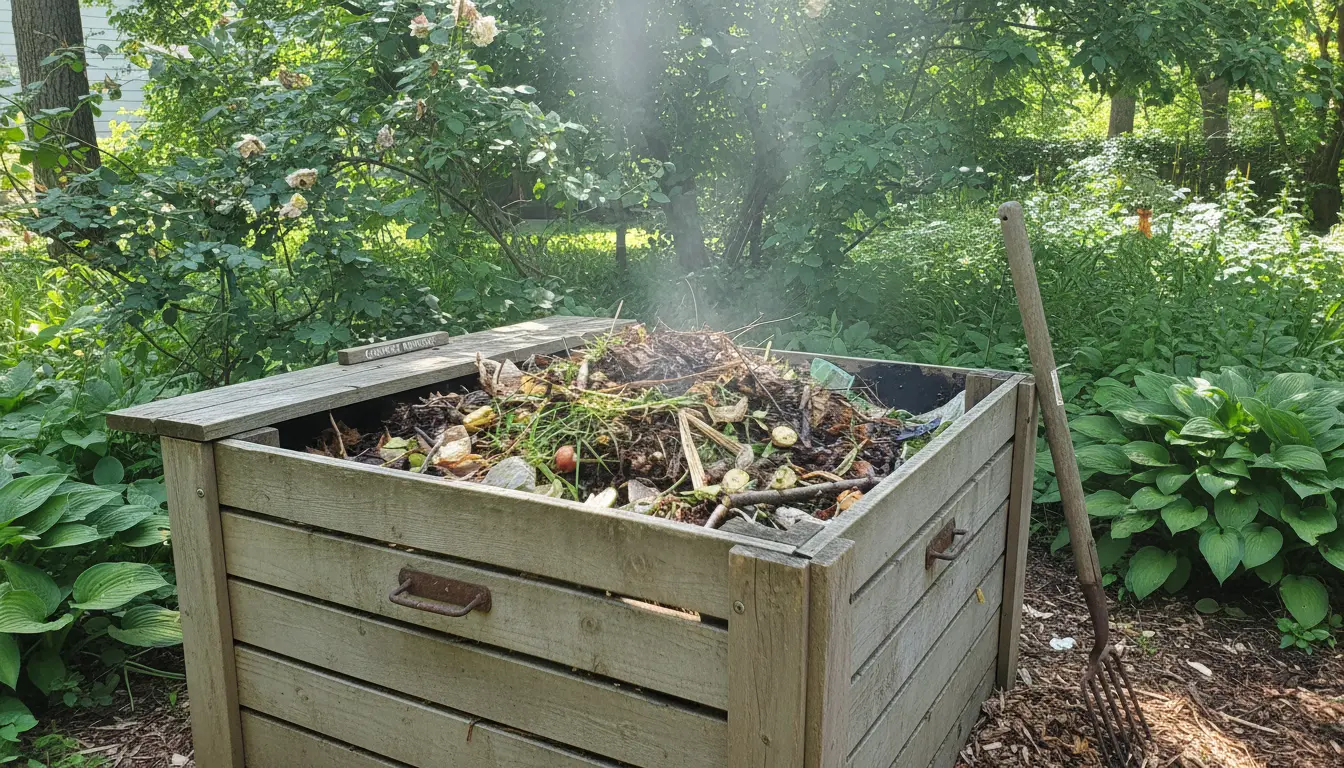
Composting at home turns kitchen scraps and yard waste into rich soil. This guide gives clear, actionable steps for beginners to start and maintain a simple compost system.
Why Home Composting Matters
Home composting reduces landfill waste and returns nutrients to soil. It supports healthier plants while lowering household trash volume.
Composting also saves money on store-bought soil amendments and can improve water retention in garden beds.
Getting Started with Home Composting for Beginners
Choose a compost method that fits your space and schedule. Common options include a backyard bin, a tumbling composter, or an indoor worm bin (vermicompost).
- Backyard bin: Low cost and low effort, best for yards.
- Tumbler: Speeds up mixing and decomposition.
- Vermicompost: Ideal for apartments and small indoor spaces.
Select a location with partial shade and good drainage. Place the bin on soil to allow organisms and moisture exchange.
Essential Tools and Materials
- Compost bin or container
- Garden fork or pitchfork for turning
- Kitchen bin or compost pail for scraps
- Basic thermometer (optional) to monitor temperature
What to Compost: A Simple List
Understanding what to add keeps your compost healthy. Balance carbon rich (brown) and nitrogen rich (green) materials.
- Greens (nitrogen): fruit and vegetable scraps, coffee grounds, fresh grass clippings
- Browns (carbon): dry leaves, shredded paper, cardboard, straw
- Do not compost: meat, dairy, oils, diseased plants, pet waste
A general rule is 2–3 parts brown to 1 part green by volume to avoid odors and pests.
How to Maintain a Home Composting Bin
Maintenance for home composting is straightforward: add materials, keep it moist, and turn occasionally. Regular attention prevents problems.
Moisture and Aeration
Compost should feel like a wrung-out sponge: damp but not soaking. Add water if too dry; add dry browns if too wet.
Turning the pile every 1–2 weeks introduces oxygen and speeds decomposition. Tumblers make this task easier for beginners.
Temperature and Time
Active compost piles heat to 120–160°F, which helps break down material. Small backyard or worm bins may stay cooler and still produce quality compost over longer periods.
Most home systems produce usable compost in 3–12 months depending on method and maintenance.
Troubleshooting Common Problems in Home Composting
Problems are typically easy to fix when you know the signs. Here are quick checks for common issues.
- Bad odor: Add more brown material and turn the pile to introduce air.
- Slow decomposition: Chop materials smaller, increase greens, or raise moisture.
- Pests: Avoid adding meat or oily foods; use a closed bin or bury kitchen scraps in the center.
Dealing with Flies and Fruit Flies
Scraps should be covered with brown material or buried under a few inches of finished compost. A sealed kitchen pail with a charcoal filter helps prevent flies indoors.
Composting diverts roughly 20–30% of household waste by weight and can reduce methane emissions from landfills.
Small Case Study: Apartment Composting Success
Case: Maria, a city renter, started vermicomposting in a two-bin system under her kitchen counter. She used food scraps and shredded paper and fed the worms small amounts weekly.
After four months she harvested dark, crumbly compost and used it on potted herbs. Her food waste dropped by half, and her plants grew more vigorously.
Key takeaways from Maria’s example:
- Choose a method that fits your living situation (vermicompost for small spaces).
- Start small and scale up as you learn.
- Simple, consistent care yields results in months, not years.
How to Use Finished Compost
Finished compost looks dark and crumbly and smells earthy. Use it as a soil conditioner, top dressing, or mix into potting soil.
- Garden beds: Work 1–3 inches into the topsoil before planting.
- Potted plants: Mix up to 25% compost with potting mix.
- Lawn: Top-dress thinly to improve soil over time.
Final Checklist for Composting for Beginners
- Pick the right bin for your space.
- Balance browns and greens and monitor moisture.
- Turn occasionally and watch for pests or odors.
- Harvest and use finished compost to boost soil health.
Starting home composting is a small change that pays long-term environmental and gardening benefits. With basic tools and attention, beginners can produce valuable compost and reduce household waste.