
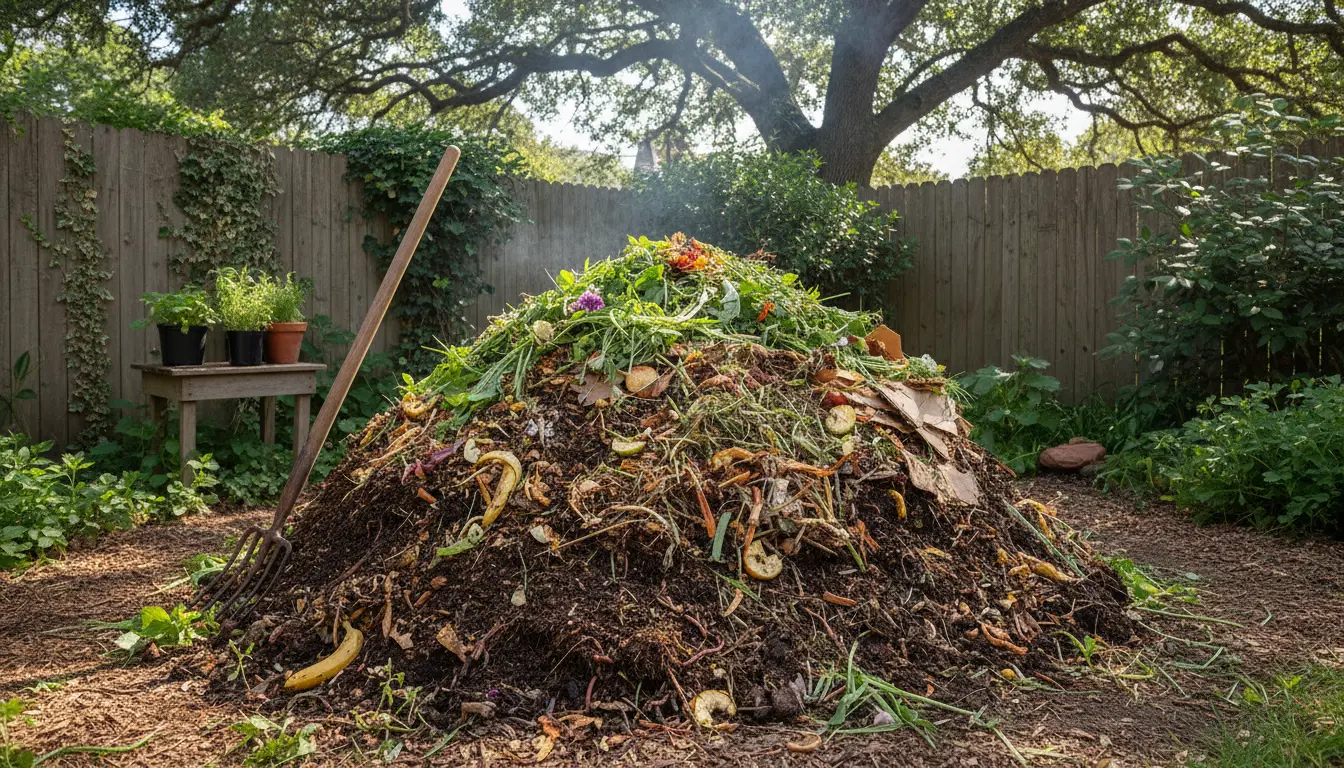
Why Home Composting for Beginners Matters
Home composting turns kitchen scraps and yard waste into nutrient-rich soil. It reduces trash, lowers greenhouse gas emissions, and improves garden health.
This guide explains simple, practical steps for home composting for beginners so you can start confidently and avoid common mistakes.
What You Need to Start Home Composting
Begin with a few basic items and a small plan. You don’t need expensive equipment.
- Compost bin or pile (tumbler, stationary bin, or open pile)
- Mix of brown and green materials
- Pitchfork or garden fork for turning
- Water source for maintaining moisture
Brown vs Green Materials
Knowing the difference keeps your compost healthy. Aim for a balanced mix.
- Greens (nitrogen): fruit and vegetable scraps, coffee grounds, fresh grass clippings
- Browns (carbon): dry leaves, shredded paper, straw, cardboard
Step-by-Step: How to Start Composting at Home
Follow these steps to set up a functional compost system that fits your space and needs.
1. Choose a Location and Container
Pick a shady spot with good drainage. For small yards, a compact bin or tumbler works well. Apartment dwellers can use a worm bin or bokashi system.
2. Build the First Layer
Start with a 4–6 inch layer of coarse brown material like small branches or straw to promote airflow. Then add alternating layers of green and brown materials.
3. Maintain Moisture and Aeration
Compost should be as damp as a wrung-out sponge. If it’s too dry, add water and more greens. Turn the pile every 1–2 weeks to add oxygen and speed decomposition.
4. Monitor Temperature
Active compost heats up to 130–160°F (55–70°C) if balanced correctly. For small home piles, aim for a warm center and regular turning rather than exact temperatures.
5. Know When Compost Is Ready
Finished compost is dark, crumbly, and smells earthy. Large items should be broken down; sifting can remove larger bits for reprocessing.
Troubleshooting Common Problems in Home Composting
Beginners often face a few recurring issues. These quick fixes solve most problems.
- Bad smell: Add more brown materials and turn the pile to introduce oxygen.
- Too dry: Add water and greens; cover with a tarp in dry weather.
- Too wet/messy: Add browns and mix thoroughly; improve drainage.
- Slow decomposition: Chop materials smaller, turn regularly, and check moisture.
Compost Uses and Application
Finished compost improves soil structure, retains moisture, and feeds plants. Use it as top dressing, potting mix ingredient, or soil amendment.
Application tips:
- Mix 2–3 inches into vegetable garden beds before planting.
- Top-dress houseplants with a thin layer and water lightly.
- Use as mulch around shrubs to retain moisture and suppress weeds.
Composting reduces household waste by up to 30 percent and can lower methane emissions from landfills when organics are diverted.
Small Case Study: Urban Composting Success
Maria, a renter in a small city apartment, started a worm bin six months ago. She used kitchen scraps and shredded paper and fed the worms twice weekly.
Results after six months:
- Produced 15 liters of vermicompost for container tomatoes
- Reduced weekly trash by about 35 percent
- Noticed improved plant growth and fewer fertilizer needs
Her approach: consistent feeding, occasional bedding changes, and keeping the bin in a cool, shaded balcony corner.
Tips for Scaling and Choosing the Right Method
Match the method to your space and goals. Here are common options for home composting for beginners:
- Open pile — best for yards with space; low cost and easy to add materials.
- Bin or tumbler — neater and faster; good for homeowners with limited space.
- Worm composting (vermicompost) — ideal for apartments and small kitchens.
- Bokashi — fermentation method that accepts meat and dairy; needs a small outdoor or indoor space for final burial or mixing.
Final Checklist for Home Composting for Beginners
- Balance greens and browns (aim for roughly 2:1 browns to greens by volume)
- Keep compost moist but not waterlogged
- Turn or aerate the pile every 1–2 weeks
- Chop large pieces to speed decomposition
- Use finished compost in garden beds, potted plants, or as mulch
Home composting for beginners is achievable with simple materials and a little regular attention. Start small, learn from experience, and expand your system as you get comfortable.