
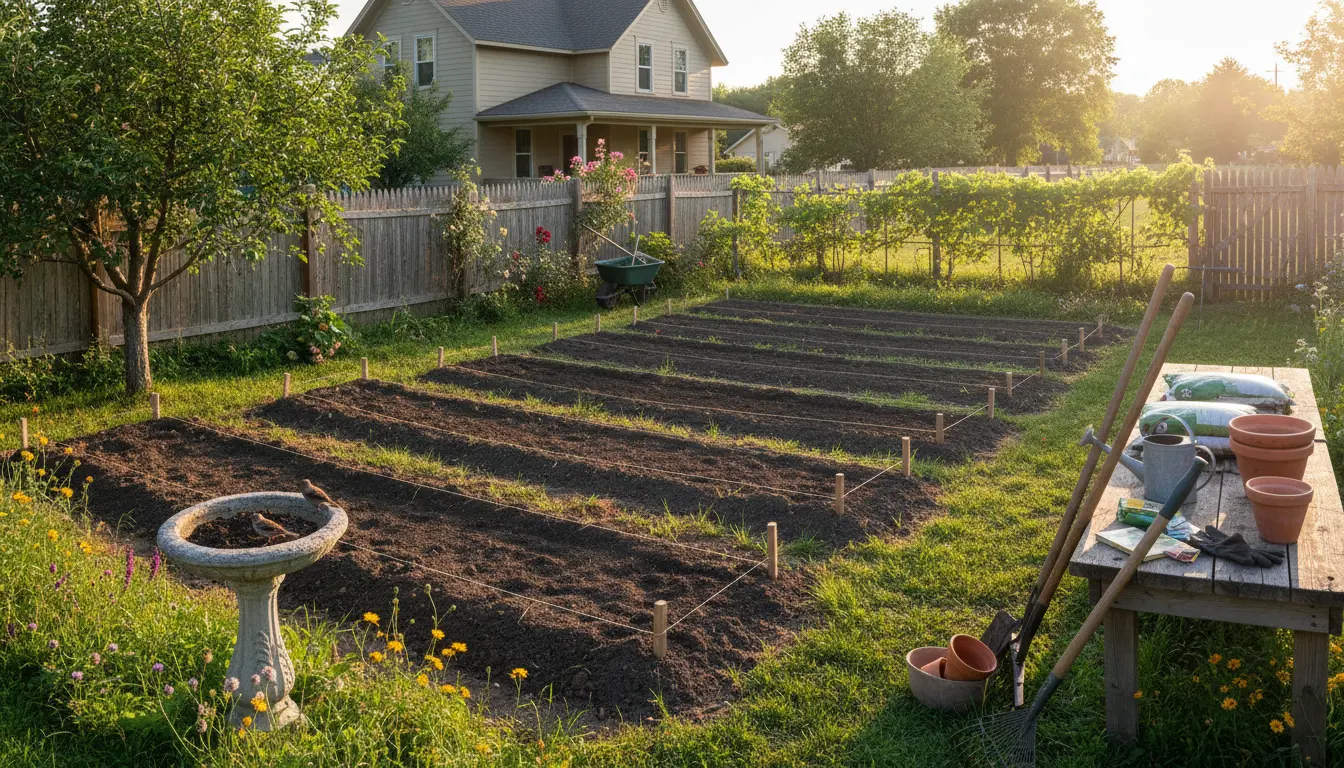
Why Start a Vegetable Garden
Growing your own vegetables saves money and gives you fresher, tastier food. A small garden also supports health, reduces food miles, and can be adapted to any space.
Choosing a Site for Your Vegetable Garden
Pick a site that gets at least six hours of direct sunlight each day. Vegetables need sun to produce the sugars that make them grow and taste good.
Look for level ground with good drainage and reasonably easy access to water. Avoid low spots where water pools after rain.
Sunlight and Microclimates
Observe the location at different times of day. Note shadows from buildings or trees that may reduce sun. Use a sunnier spot for fruiting crops like tomatoes and peppers.
Space and Layout
Decide between in-ground beds, raised beds, or containers. Raised beds warm earlier in spring and drain better. Containers are ideal for balconies or patios.
Preparing Soil for a Vegetable Garden
Healthy soil is the foundation of a productive vegetable garden. Test soil texture and pH before planting to make informed amendments.
Common tests include a simple pH kit and a jar test for soil texture. Many extension offices offer free or low-cost soil testing.
Amending Soil
Add compost to improve structure and nutrients. Work 2–4 inches of compost into the top 6–8 inches of soil for raised beds and in-ground plots.
For clay soils, add coarse sand and organic matter to improve drainage. For sandy soils, add compost and mulch to retain moisture.
Choosing Vegetables for Beginners
Start with easy, reliable crops to build confidence. Select varieties suited to your climate and growing season length.
- Leafy greens: lettuce, spinach, Swiss chard
- Roots: carrots, radishes, beets
- Legumes: bush beans, snap peas
- Nightshades (with more care): cherry tomatoes, peppers
Planting and Timing
Follow seed packet or plant tag directions for planting depth and spacing. Sow cool-season crops early and warm-season crops after the last frost date.
Stagger plantings every 2–3 weeks to extend harvests of lettuce and greens. Use succession planting to maximize small plots.
Watering and Mulching
Water deeply and less frequently to encourage strong root growth. Aim for consistent moisture; avoid letting soil dry out completely between waterings.
Apply 2–3 inches of organic mulch to suppress weeds, conserve moisture, and keep soil temperatures stable.
Pest and Disease Management
Inspect plants regularly for signs of pests or disease. Early detection makes control easier and reduces crop loss.
- Use row covers to protect young plants from insect pests.
- Encourage beneficial insects like ladybugs and lacewings.
- Practice crop rotation to reduce soil-borne diseases.
Nonchemical Controls
Hand-pick larger pests such as slugs and caterpillars. Use soapy water sprays for soft-bodied insects and remove severely affected leaves promptly.
Harvesting and Storage
Harvest vegetables at peak ripeness for best flavor and nutrition. Many crops taste better when picked frequently, which also encourages more production.
Store harvests correctly: leafy greens in cool, humid conditions and root crops in a cool dry place. Preserve extras by freezing, canning, or fermenting.
Small Real-World Example
Case study: A community gardener converted a 4-by-8-foot raised bed to grow tomatoes, lettuce, and bush beans. They added 3 inches of compost, planted in late spring, and used drip irrigation. By midsummer they harvested daily salads and a dozen cherry tomatoes weekly. Minimal pest issues were solved by hand removal and companion planting.
Practical Tips for Ongoing Success
- Keep a garden journal to note planting dates and outcomes.
- Start small and expand as you gain experience.
- Learn local planting dates from an extension service or gardening group.
- Share surplus with neighbors to reduce waste and build community.
Common Mistakes to Avoid
- Planting too densely — overcrowding reduces air flow and increases disease risk.
- Inconsistent watering — leads to blossom end rot in tomatoes and cracked roots in carrots.
- Skipping soil testing — you may waste time on ineffective amendments.
Next Steps
Plan your first bed using a simple sketch, list the crops you want, and schedule planting dates. Start with fast-growing greens and one or two fruiting plants.
With attention to soil, water, and light, a new vegetable garden will reward you with fresh produce and seasonal learning. Keep notes, adjust practices, and enjoy the process.