
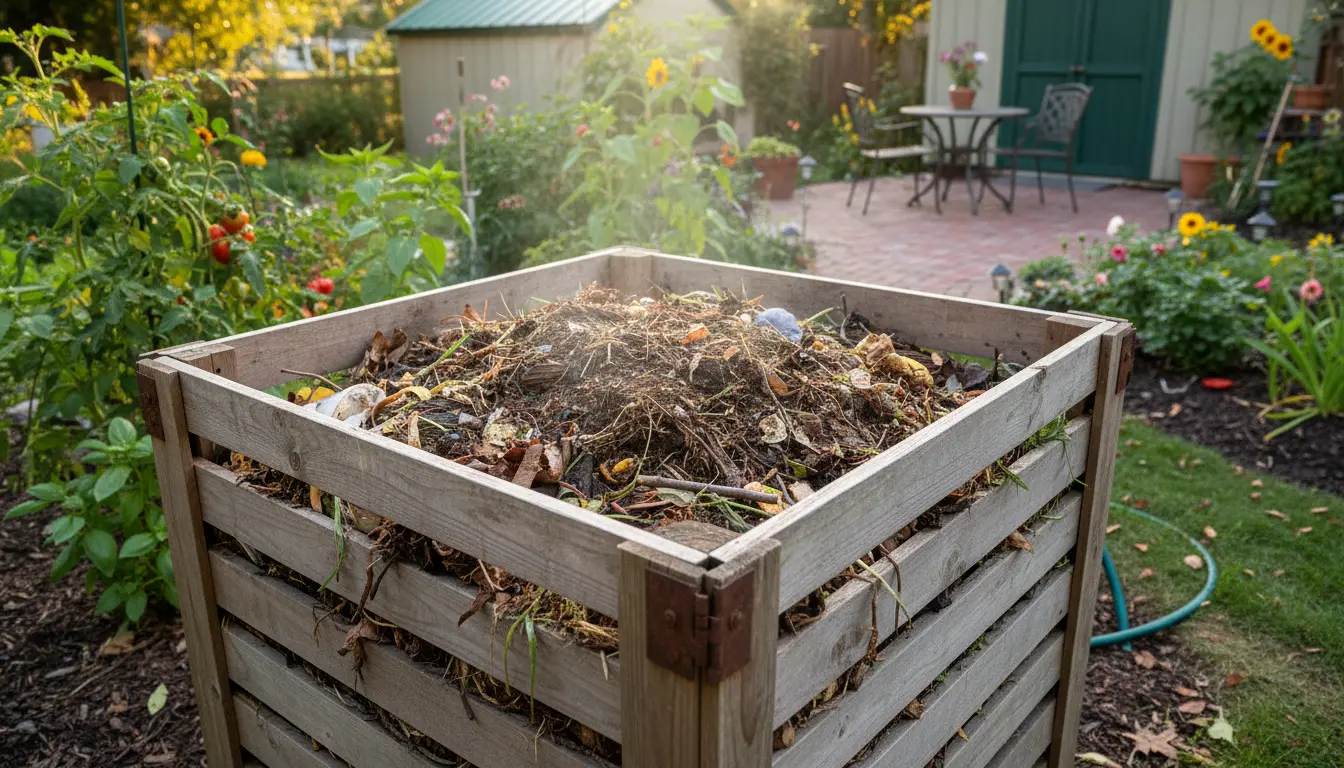
Why Home Composting for Beginners Matters
Home composting turns kitchen and yard waste into rich soil amendment. It reduces household trash, lowers methane from landfills, and improves garden health.
This guide explains simple, actionable steps so anyone can start composting at home. No special tools or advanced skills are required.
Basic Concepts for Home Composting for Beginners
Composting relies on natural decomposition by microbes, worms, and other organisms. You provide the right mix of materials and conditions, and nature does the rest.
Key factors are carbon, nitrogen, moisture, and airflow. Balancing these creates warm, active compost that breaks down quickly.
Carbon and Nitrogen
Carbon-rich materials (brown) include dried leaves, shredded paper, and straw. Nitrogen-rich materials (green) include vegetable scraps, coffee grounds, and grass clippings.
A common target ratio is roughly 25–30 parts carbon to 1 part nitrogen by mass in large piles, but for beginners aim for a simple mix of 2 parts brown to 1 part green by volume.
Moisture and Air
Compost should be as damp as a wrung-out sponge. Too dry and microbes slow down; too wet and it smells.
Airflow matters. Turning the pile every 1–2 weeks speeds decomposition and prevents odors.
How to Start Home Composting for Beginners
Choose a method that fits your space: bin, tumbler, pile, or worm bin (vermicomposting). Many beginners start with a simple bin or tumbler.
Step-by-Step Setup
- Pick a location: a level spot with partial sun and good drainage.
- Select a container: a plastic bin, wood frame, or purchased compost tumbler works well.
- Layer base materials: add coarse browns (small twigs or straw) to improve airflow.
- Add scraps: alternate greens and browns in layers rather than dumping all greens at once.
- Maintain moisture and turn: check moisture weekly and turn or mix every 1–2 weeks.
Materials to Use and Avoid
Acceptable materials:
- Fruit and vegetable scraps, coffee grounds, tea bags
- Leaves, shredded paper, cardboard, straw
- Yard trimmings, egg shells (crushed)
Avoid meat, dairy, oily foods, pet waste, and diseased plants. These invite pests and create odors.
Compost can reach internal temperatures of 130–160°F in a well-managed hot pile, which helps kill weed seeds and pathogens.
Troubleshooting for Home Composting for Beginners
Common problems are odor, slow decomposition, and pests. Most issues come from imbalance in materials or moisture.
Fixing Odor
Bad smell usually means too wet or too many greens. Add dry browns and turn the pile to reintroduce air.
Slow Breakdown
If decomposition is slow, add more nitrogen (greens), chop materials smaller, and keep the pile moist and warm. Turning speeds things up.
Pest Control
To keep rodents and flies away, bury food scraps under 6–8 inches of brown material or use a closed tumbler. Avoid leaving meat and dairy in the bin.
Finishing and Using Compost
Compost is ready when it looks dark, crumbly, and smells earthy. This can take 2 months to a year depending on method and effort.
Use finished compost to:
- Mix into potting soil for seedlings
- Top-dress lawns or garden beds
- Make a compost tea for liquid fertilizing
Storage and Curing
Let compost cure for a few weeks after it looks finished. Curing stabilizes nutrients and eliminates remaining heat.
Real-World Example: Small Apartment Balcony Case Study
Maria lives in a city apartment with a small balcony. She started a worm bin in a compact plastic container that fits a shelf.
In six months she diverted nearly 150 pounds of food waste from the trash and used the vermicompost on potted herbs. She feeds the worms kitchen scraps twice weekly and harvests finished castings every 2–3 months.
Key wins: minimal odor, no pests, and healthier herb growth. Maria’s approach shows how home composting for beginners can work in small spaces.
Quick Tips for Success
- Chop or shred materials to speed breakdown.
- Balance greens and browns; if unsure, add more browns.
- Keep the pile moist like a wrung-out sponge.
- Turn or aerate regularly to keep microbes active.
- Use a closed bin in urban areas to reduce pests.
Final Thoughts on Home Composting for Beginners
Starting a compost system is low-cost and high-impact. Small habits—like saving vegetable peels—add up quickly to reduce waste and enrich soil.
Begin with a simple bin, learn by doing, and adjust based on conditions. Composting is a practical step toward more sustainable home living.