
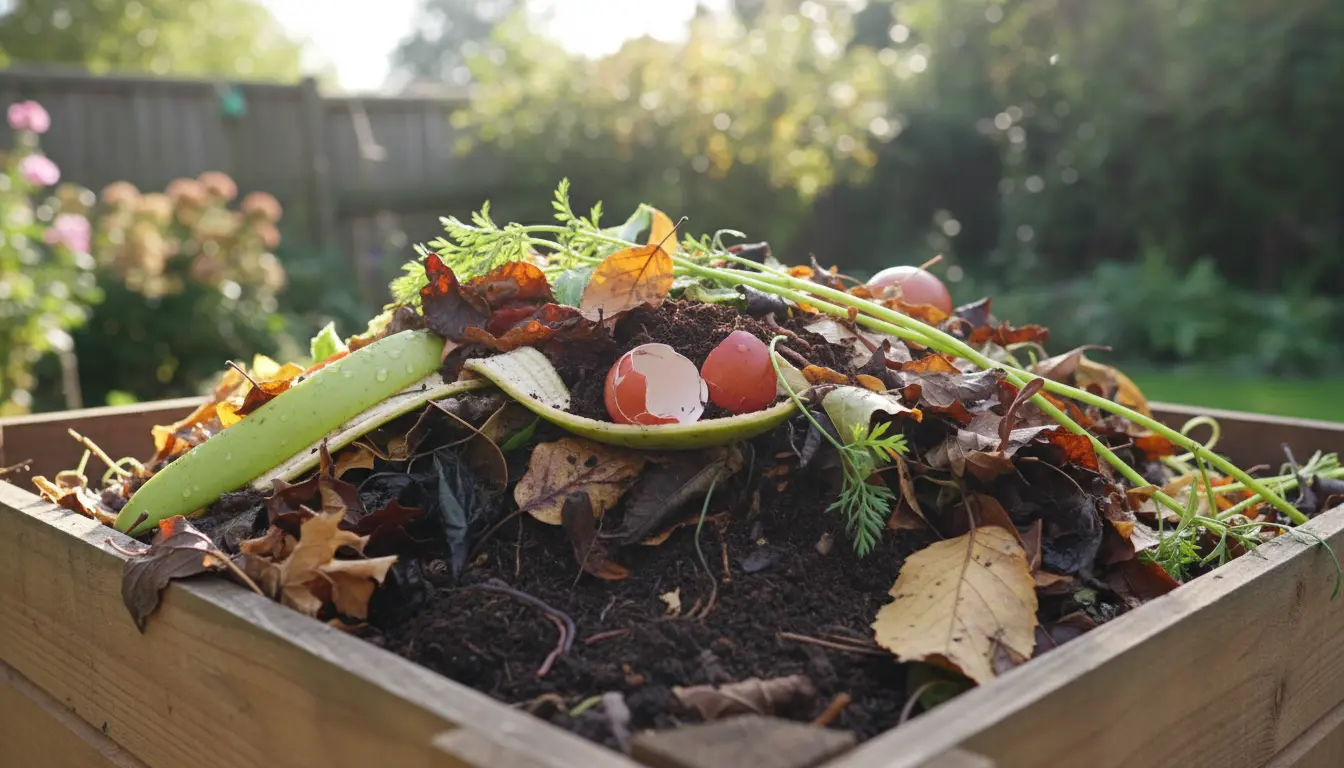
Home Composting Basics: What You Need to Know
Home composting turns kitchen and yard waste into nutrient-rich soil that feeds plants. It reduces landfill waste and improves soil structure, moisture retention, and plant health.
Start with a simple plan: choose a compost method, collect the right materials, and manage moisture and air. Below are practical steps to get you composting at home.
Choose a Compost System for Home Composting
Select a system that fits your space and schedule. Popular options include open piles, tumbler bins, and stationary bins.
- Open pile: Best for larger yards, low cost, but needs more management.
- Tumbler bin: Easier to turn and faster to break down, good for small yards or balconies.
- Stationary bin: Simple and low-maintenance, works well when layered properly.
Where to Place Your Compost
Place bins on soil or grass to allow microbes and worms to enter. Pick a spot with partial shade to protect from excess heat or drying.
Ensure access for adding material and turning the pile. Keep it within easy reach of your kitchen for convenience.
What to Compost: Greens and Browns
Balance is key. Compost needs carbon-rich “browns” and nitrogen-rich “greens” to decompose efficiently.
- Greens (nitrogen): kitchen scraps (vegetable peels, fruit), coffee grounds, fresh grass clippings.
- Browns (carbon): dry leaves, paper, cardboard, straw, shredded wood.
A good rule is roughly 2–3 parts browns to 1 part greens by volume. Chop or shred larger items to speed decomposition.
Keep Out These Items
Avoid meat, dairy, oils, diseased plants, and pet waste. These attract pests and can create odors or pathogens.
How to Build and Maintain Your Compost Pile
Layer materials for best results. Start with coarse browns to aid airflow, then alternate greens and browns in 4–6 inch layers.
- Moisture: Keep the pile damp like a wrung-out sponge. Too dry slows decomposition; too wet causes odor.
- Air: Turn the pile weekly or use a tumbler to introduce oxygen and speed up breakdown.
- Size: Aim for a pile at least 3x3x3 feet for heat retention, but smaller systems work with regular turning.
Monitoring Temperature
Compost heats up as microbes work. A thermometer can help: 130–160°F (55–70°C) kills most weed seeds and pathogens. If your pile never warms, add more greens and turn it.
Troubleshooting Common Home Composting Problems
Smells, slow breakdown, and pests are common issues. Each has a simple fix.
- Bad odors: Add more browns, turn the pile, and check drainage.
- Slow decomposition: Chop materials smaller, add greens for nitrogen, and increase turning.
- Pests: Remove meat/dairy, cover food scraps with browns, or use a closed bin.
When Is Compost Ready?
Finished compost is dark, crumbly, and smells earthy. It may take 2–12 months depending on method and management.
Use finished compost in garden beds, as potting mix amendment, or as a top dressing for lawns and containers.
Using Finished Compost in Your Garden
Incorporate compost into soil at planting time to improve structure and nutrient content. Typical rates are 1–3 inches worked into the top 6–8 inches of soil.
- Vegetable beds: Mix 20–30% compost into the bed before planting.
- Lawns: Apply a thin layer (1/4–1/2 inch) as top dressing once or twice a year.
- Containers: Replace 20–30% of potting mix with compost for better moisture retention.
Composting can divert up to 30% of household waste from the trash and reduce methane emissions from landfills.
Small Case Study: Backyard Composting Success
Sara, a homeowner with a small yard, started a 35-gallon tumbler. She collected kitchen scraps and dry leaves, maintaining a 2:1 brown-to-green ratio.
Within four months of regular turning, her compost was dark and crumbly. She mixed 25% compost into two raised vegetable beds and reported stronger plant growth and better moisture retention that season.
Sara’s weekly effort took 10 minutes and reduced her kitchen waste by half. The result was healthier soil and fewer store-bought soil amendments.
Tips for Successful Home Composting
- Keep a countertop compost container with a tight lid to collect scraps.
- Chop or shred materials to speed decomposition.
- Rotate or turn the pile regularly to add oxygen.
- Use a thermometer if you want to monitor microbial activity.
- Be patient: even slow composting produces valuable soil over time.
Final Thoughts on Home Composting
Home composting is an achievable, low-cost way to improve your garden and reduce waste. Start simple and refine your system as you learn what works in your climate and yard.
With consistent layering, moisture control, and occasional turning, most households can produce high-quality compost in months rather than years.