
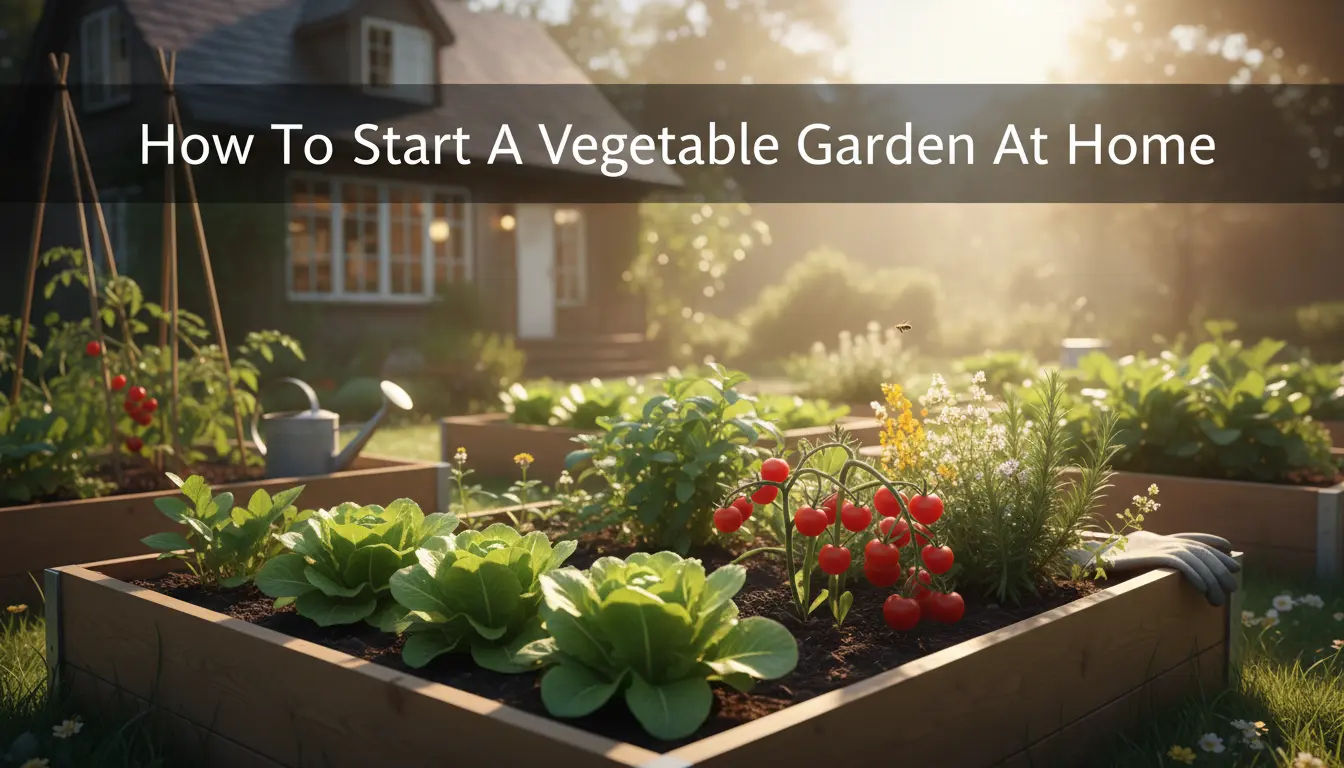
Starting a vegetable garden can be simple and rewarding. This guide gives clear steps you can follow to plan, plant, and maintain a productive garden at home.
How to Start a Vegetable Garden: Plan Your Garden
Begin by deciding what you want to grow and why. Choose vegetables you and your family like to eat, and consider ease of care for your first season.
Sketch a simple layout showing beds or containers, a water source, and sun exposure. Keep the garden compact at first; a 4×8 foot bed is enough for many families.
Choose Vegetables for Beginners
Start with fast, forgiving crops. Examples include lettuce, radishes, cherry tomatoes, bush beans, and zucchini.
- Lettuce: fast growth, multiple harvests
- Radishes: mature in weeks, great for beginners
- Beans: low maintenance, high yield
- Cherry tomatoes: space efficient and productive
How to Start a Vegetable Garden: Select Site and Light
Choose a site with at least 6 hours of direct sun for most vegetables. Observe the space through the day to confirm sun patterns and avoid shaded spots near trees.
Consider access to water and proximity to your home. Easier access increases the chance you’ll water and tend the garden regularly.
Site Considerations
- Sun: 6–8 hours of direct sunlight is ideal
- Water: nearby hose or irrigation makes care easier
- Drainage: avoid low spots that collect water
- Wind: a windbreak may be needed for exposed areas
Soil Preparation and Fertility
Good soil is the foundation of a productive garden. Test your soil or start with raised beds filled with quality mix if in doubt.
Amend existing soil with compost and a balanced organic fertilizer. Compost improves structure, drainage, and nutrient availability.
Quick Soil Prep Steps
- Clear weeds and debris from the area.
- Loosen soil to a depth of 8–12 inches with a fork or tiller.
- Spread 2–3 inches of compost and mix into topsoil.
- Level beds and form rows or planting holes.
How to Start a Vegetable Garden: Planting and Timing
Follow local frost dates to time sowing and transplanting. Use seed packets and plant tags to track spacing and days to maturity.
Start some seeds indoors for a head start on the season, and direct-sow quick crops like carrots and beans into the garden.
Planting Tips
- Thin seedlings to the recommended spacing to avoid competition.
- Stagger plantings of lettuce or radishes every 2–3 weeks for continuous harvests.
- Use mulch to retain moisture and suppress weeds around established plants.
Watering, Maintenance, and Pest Care
Water deeply and less often to encourage strong root systems. Aim for about 1 inch of water per week, adjusted for rainfall and soil type.
Monitor plants regularly for pests and diseases. Hand-pick pests, use row covers, or apply organic controls when needed.
Routine Tasks
- Weed weekly to reduce competition.
- Inspect leaves and stems for pests or disease signs.
- Harvest regularly to encourage more production.
Many common vegetables grow well in containers. Tomatoes, peppers, and lettuce can thrive in pots on a sunny balcony with the right potting mix and regular watering.
Simple Layouts and Companion Planting
Design small beds or containers to maximize space. Companion planting helps deter pests and supports pollinators.
Examples of companions: basil near tomatoes, marigolds near peppers, and beans near corn. Use these pairings to improve growth and reduce problems naturally.
Sample Garden Checklist
- Choose 1–2 easy vegetables for your first season.
- Pick a sunny, accessible site near water.
- Prepare soil with compost and check drainage.
- Plant according to seed packet or transplant guidance.
- Water deeply, mulch, and check plants weekly.
Case Study: Small Raised Bed Success
Maria converted a 4×8 foot patch near her kitchen into a raised bed. She started with compost-rich soil and planted cherry tomatoes, lettuce, and bush beans.
She staggered lettuce sowings, watered in the morning, and used a simple drip hose. By mid-summer she harvested fresh salads weekly and found the garden required under an hour a week to maintain.
Her success shows that careful planning, good soil, and small, manageable plots make starting a vegetable garden achievable for busy people.
Final Tips for New Gardeners
Start small, observe, and adapt. Record planting dates and results to improve next season’s choices.
Join a local gardening group or consult extension service guides for region-specific planting dates and pest advice. With basic steps and regular care, you can enjoy fresh vegetables from your own garden.
Quick Starter Checklist:
- Site with 6+ hours of sun
- Quality soil or raised bed mix
- 2–3 beginner vegetables
- Water source and mulch
- Weekly checks and timely harvesting