
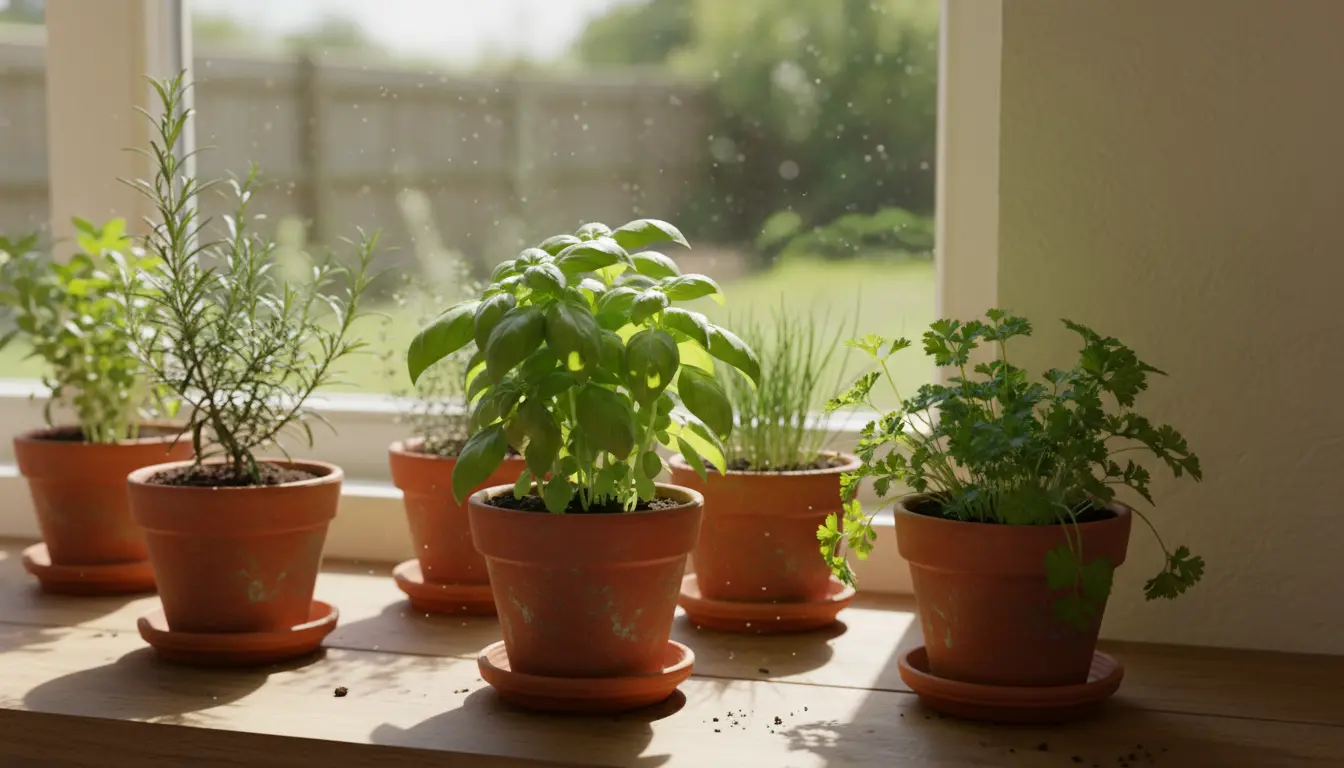
Why an Indoor Herb Garden Works
An indoor herb garden gives you fresh flavor for cooking and saves money. It is practical for small homes, apartments, or kitchens without yard space.
This guide explains how to set up and maintain an indoor herb garden with simple steps you can follow today.
What to Know Before You Start an Indoor Herb Garden
Decide where you will keep your herbs. Most herbs need bright light, so a south- or west-facing windowsill is ideal.
Consider how much time you can spend on care. Some herbs are lower maintenance than others and are better for beginners.
Pick the Right Herbs for Your Indoor Herb Garden
- Basil — annual but fast-growing and great for cooking.
- Parsley — biennial commonly grown as an annual indoors.
- Chives — hardy and forgiving with mild onion flavor.
- Mint — vigorous; grow in its own pot to avoid spreading.
- Thyme and rosemary — prefer drier soil and bright light.
Step-by-Step: Build Your Indoor Herb Garden
Follow these steps to set up a small and productive herb garden indoors. Each step focuses on what matters most: light, soil, containers, and water.
1. Choose the Location and Light
Herbs typically need 6–8 hours of light daily. Place plants near a sunny window or use a full-spectrum grow light for 12–16 hours if natural light is limited.
Rotate pots weekly so plants grow evenly and do not lean toward the light.
2. Select Containers and Drainage
Use pots with drainage holes to prevent root rot. If you prefer a decorative container without holes, keep the herb in a nursery pot and set it inside the decorative one.
- Size: 4–8 inch pots for single herbs; larger planters for mixed beds.
- Materials: Terracotta dries faster; plastic retains moisture longer.
3. Use the Right Soil
Choose a lightweight potting mix formulated for containers. Avoid garden soil that compacts and drains poorly.
Mix in a small amount of perlite or coarse sand for herbs that prefer drier conditions, like rosemary or thyme.
4. Planting and Spacing
Plant seedlings at the same depth they were in the nursery pot. Leave a couple of inches between plants in the same container to allow airflow.
For seed starting, follow seed packet depths and thin seedlings to the strongest plants once they have true leaves.
Care and Maintenance for an Indoor Herb Garden
Regular care keeps herbs productive and healthy. Focus on feeding, watering, pruning, and pest checks.
Watering Schedule
Water when the top inch of soil feels dry. Stick your finger into the soil to test moisture before watering.
- Water thoroughly until water drains from the bottom.
- Avoid overwatering: soggy soil causes root rot and yellow leaves.
Feeding and Fertilizing
Apply a balanced, water-soluble fertilizer once a month during the active growing season. Use half the label strength for potted herbs to avoid overfeeding.
Compost tea or diluted fish emulsion work well for an organic option.
Pruning and Harvesting
Harvest regularly to encourage bushy growth. Pinch back tips rather than cutting large sections to keep plants productive.
Remove flowers from basil and parsley to extend leaf production, unless you want seeds.
Pest Control for Your Indoor Herb Garden
Indoors you may still see aphids, spider mites, or whiteflies. Inspect plants weekly and wipe leaves with a damp cloth.
- Use insecticidal soap or neem oil for persistent problems.
- Isolate new plants for a week to avoid introducing pests.
Many common herbs like mint and basil trace back to the Mediterranean. Basil was used both for food and medicinal purposes for thousands of years.
Troubleshooting Common Problems in an Indoor Herb Garden
Yellow leaves often mean overwatering or poor drainage. Leggy growth indicates insufficient light.
Slow growth in winter can be normal. Increase light with a grow lamp and reduce watering frequency.
When to Repot
Repot herbs to a slightly larger pot when roots circle the container or appear through drainage holes. Refresh soil every 12–18 months.
Small Case Study: Kitchen Basil Success
Maria, an apartment cook, started an indoor herb garden on a south-facing windowsill with three basil plants in 6-inch pots. She used a lightweight potting mix and a small balanced fertilizer every month.
Within four weeks she was harvesting fresh leaves twice a week. Regular pinching prevented flowering and produced bushier plants. The kitchen aroma and fresh pesto savings convinced her to add parsley and chives the next season.
Quick Checklist for a Successful Indoor Herb Garden
- Pick herbs suited to your light level.
- Use pots with good drainage and quality potting mix.
- Water when the top inch of soil is dry.
- Provide 6–8 hours of light or use grow lights.
- Prune regularly and monitor for pests.
Final Tips for Your Indoor Herb Garden
Start small with three to five herbs. Learn each plant’s preferences and adjust care as needed.
With the right location and simple routine, an indoor herb garden can give you fresh flavors and year-round satisfaction.