
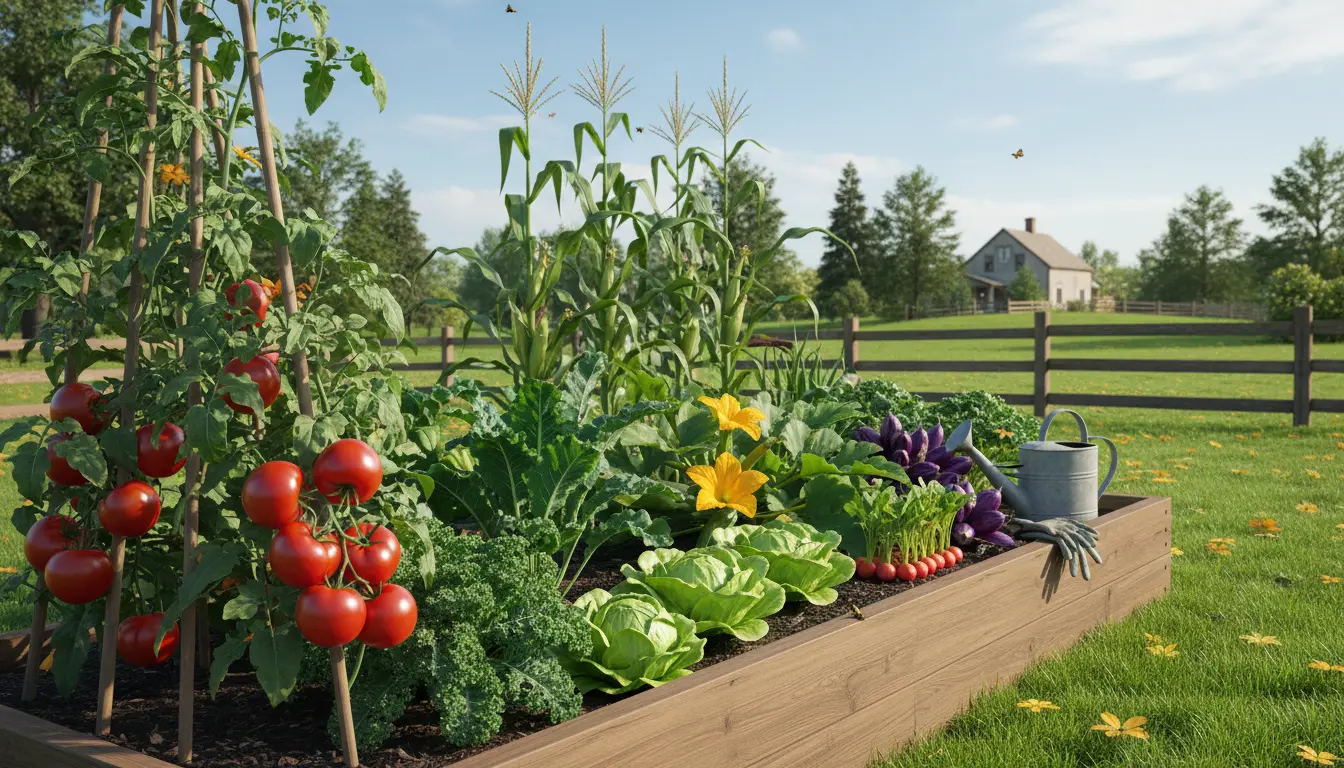
Starting a vegetable garden can be simple and rewarding. This guide explains how to start a vegetable garden with clear steps you can follow this season.
How to Start a Vegetable Garden: A Simple Plan
Begin with a concise plan: pick a location, test the soil, choose easy crops, and set a maintenance schedule. A small, well-managed garden often produces more than a large, neglected one.
Choose the Best Spot to Start a Vegetable Garden
Most vegetables need 6–8 hours of direct sunlight. Observe your yard through a full day to choose a sunny spot.
Consider access to water, flat ground, and protection from strong winds. If you lack open ground, use raised beds or large containers.
Soil and Compost When You Start a Vegetable Garden
Good soil is the most important factor for a productive garden. Aim for loose, well-draining loam rich in organic matter.
Test the soil pH if possible; most vegetables prefer pH 6.0–7.0. Add compost to improve texture and fertility.
- Add 2–4 inches of compost on top and mix into the top 6–8 inches of soil.
- For heavy clay, mix in coarse sand and compost to improve drainage.
- For sandy soil, add compost and shredded leaves to retain moisture.
How to Start a Vegetable Garden: What to Plant First
Choose easy, fast-growing vegetables for your first garden. These give quick success and build experience.
- Leafy greens: lettuce, spinach, arugula
- Radishes and baby carrots
- Beans and peas
- Tomatoes and peppers in warm climates
Follow seed packet dates for planting times in your region. Start seeds indoors for warm-season crops if your season is short.
Layout and Spacing for a New Vegetable Garden
Mark rows or use square-foot spacing in raised beds. Allow enough space for airflow and harvesting access.
Companion planting can maximize space: pair tall crops with low ground covers to shade the soil and reduce weeds.
How to Start a Vegetable Garden: Watering, Feeding, and Care
Proper water and routine care keep plants productive. Deep, infrequent watering promotes strong roots.
- Water early morning to reduce evaporation and disease risk.
- Use 1–1.5 inches of water per week as a general guideline, more in hot weather.
- Mulch with straw or shredded leaves to keep moisture and suppress weeds.
Fertilize based on plant needs. Compost and slow-release organic fertilizers work well for most home gardens.
Pest and Disease Basics for New Gardeners
Watch for common pests like aphids, slugs, and caterpillars. Inspect plants weekly and remove problems early.
- Use row covers to protect young plants from insect damage.
- Encourage beneficial insects with flowering herbs and companion plants.
- Rotate crops to limit soil-borne diseases and nutrient depletion.
How to Start a Vegetable Garden: Seasonal Tips and Maintenance
Plan a seasonal cycle: plant, care, harvest, and prepare beds for the next crop. Keep a simple calendar of sowing and harvest dates.
Use succession planting to maintain continuous harvests. Sow small amounts of fast crops every 2–3 weeks.
Root crops like carrots and radishes can be ready in as little as 4 weeks. Fast-growing greens can supply fresh salads all season with succession sowing.
Small Real-World Example
Case study: A first-time gardener planted two 4×4 raised beds with compost-amended soil. They chose lettuce, radishes, bush beans, and a tomato plant.
By following a weekly watering schedule and using mulch, the gardener harvested salad greens within 5 weeks and beans by 8 weeks. The tomato produced a steady supply later in the season. Minimal pest problems were managed by handpicking and a row cover early on.
Quick Checklist to Start a Vegetable Garden
- Pick a sunny, accessible location.
- Prepare soil with compost and check pH if possible.
- Choose 4–6 easy crops for your first season.
- Set a regular deep-watering schedule and mulch beds.
- Inspect plants weekly for pests and disease.
- Keep a simple planting and harvest calendar.
Final Tips for How to Start a Vegetable Garden
Start small and expand after your first season. Consistent care beats perfect technique for beginners.
Track what worked and what did not; gardening is iterative. With basic planning, you can have a productive vegetable garden that grows each year.