
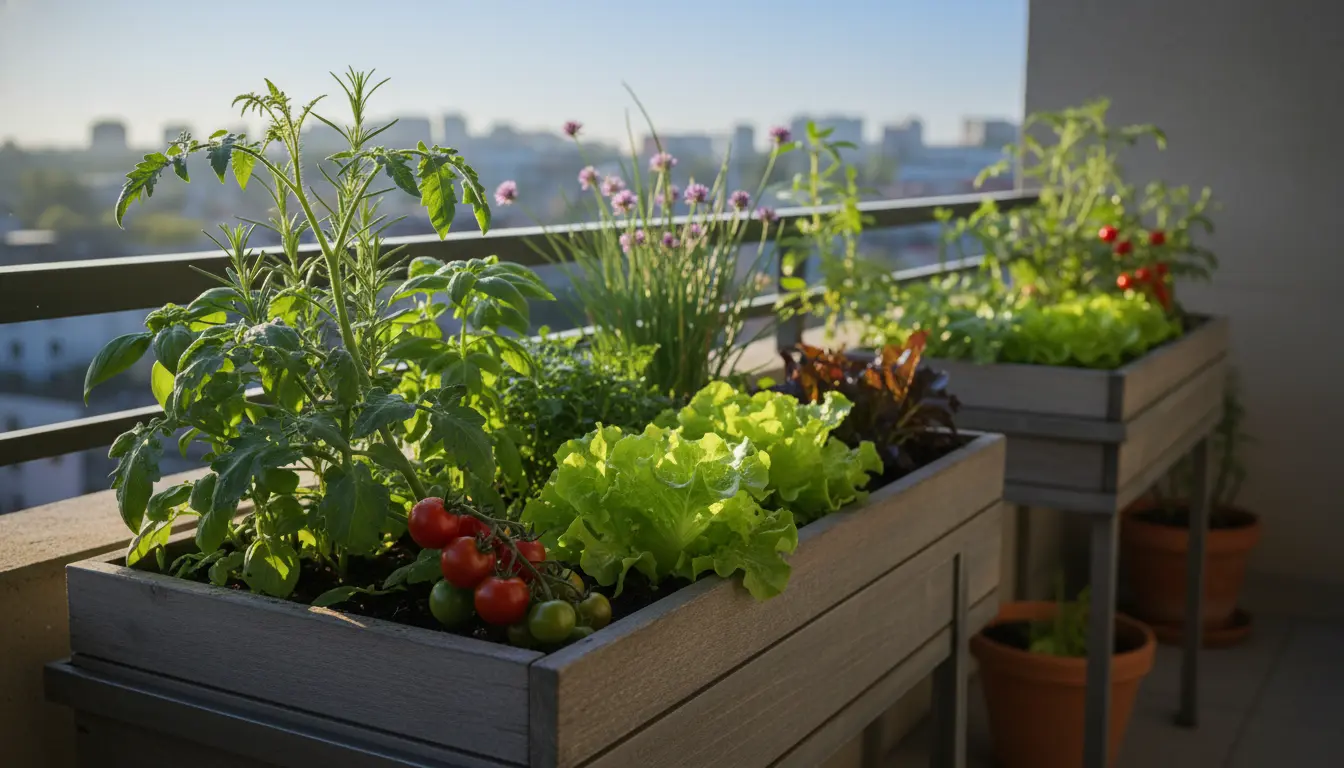
Why Start a Small Vegetable Garden
Growing food in a limited space saves money, improves nutrition, and reduces environmental impact. A small vegetable garden fits balconies, patios, or tiny yards and is manageable for busy people.
Plan Your Small Vegetable Garden
Planning is the most efficient first step. Decide what you want to grow, how much space you have, and the time you can commit.
Choose the Right Location
Most vegetables need 6–8 hours of direct sunlight. Observe your space for a few days to pick the sunniest spot.
If sunlight is limited, select shade-tolerant crops like leafy greens, herbs, and some root vegetables.
Decide on Garden Type
Options include raised beds, containers, vertical planters, and window boxes. Choose based on space, budget, and mobility needs.
- Raised beds: Better drainage and soil control.
- Containers: Flexible and good for balconies.
- Vertical gardens: Save ground space, good for vining crops.
Prepare Soil and Containers
Good soil is the backbone of productivity. For in-ground gardens, test soil pH and amend as needed. For containers, use a quality potting mix with compost.
Soil Mix for Containers
A simple container mix: 40% high-quality potting mix, 40% compost, 20% coconut coir or perlite for drainage. Avoid garden soil in pots because it compacts.
Soil Testing and Amendment
Test kits are inexpensive and reveal pH and nutrient levels. Add lime for acidity adjustment or sulfur to lower pH. Work in compost to improve structure and fertility.
Select Vegetables for a Small Garden
Choose high-yield, space-efficient crops. Focus on what you will eat frequently and what grows well in your climate.
- Leafy greens: Lettuce, spinach, kale — quick harvest cycles.
- Herbs: Basil, parsley, chives — compact and useful.
- Compact fruiting plants: Cherry tomatoes, patio peppers, bush beans.
- Root crops: Radishes and carrots — good for tight spaces and succession planting.
Planting and Layout Tips
Use square-foot gardening or intensive spacing to maximize small areas. Stagger plantings with succession sowing to extend harvest periods.
Companion Planting Examples
Companion planting can improve yields and reduce pests. Examples include planting basil with tomatoes and marigolds near beans to deter pests.
Watering and Fertilizing a Small Vegetable Garden
Consistent moisture is more important than frequent shallow watering. Water deeply and less often to encourage strong roots.
- Install a drip irrigation line or use a watering can for precise delivery.
- Mulch around plants to retain moisture and reduce weeds.
- Feed plants every 3–4 weeks with a balanced organic fertilizer or compost tea.
Pest and Disease Management
Prevention is the easiest control. Keep plants healthy, remove diseased leaves, and encourage beneficial insects like ladybugs and lacewings.
Nonchemical Controls
Use row covers for young seedlings, hand-pick larger pests, and rotate crops to reduce disease buildup. Soap sprays can control many soft-bodied insects.
Maintenance Schedule for a Small Vegetable Garden
A simple weekly routine keeps the garden productive. Spend 20–60 minutes per week checking moisture, harvesting, and weeding.
- Weekly: Check soil moisture and water deeply if needed.
- Biweekly: Harvest mature crops and feed with fertilizer if growth slows.
- Monthly: Inspect for pests, prune overcrowded plants, top up mulch.
Harvesting and Storage
Harvest early mornings when crops are cool to preserve flavor. Harvest frequently to encourage continued production for crops like lettuce and beans.
Store produce appropriately: leaf greens in the fridge wrapped in a damp towel, tomatoes at room temperature to retain flavor.
Most herbs and leafy greens can be harvested continuously by cutting outer leaves, allowing the center to keep growing for weeks.
Small Case Study: Balcony Garden That Fed a Family of Two
Emma, a city dweller with a 6-by-4-foot balcony, used five 12-inch containers and two vertical planters. She planted cherry tomatoes, basil, leaf lettuce, and bush beans.
By staggering sowings and using a weekly compost-tea feed, she harvested salad greens three months per season and produced enough tomatoes and beans to supplement meals. Her total time investment was about 2 hours per week.
Common Mistakes and Quick Fixes
- Overwatering: Let compost dry slightly between waterings and add drainage holes to containers.
- Planting too densely: Thin seedlings to the spacing on seed packets to prevent disease.
- Ignoring sunlight needs: Move containers seasonally or choose shade-tolerant crops if light is limited.
Final Tips to Start a Small Vegetable Garden
Begin small and expand as you gain confidence. Track what grows best in your microclimate and keep notes on successful varieties.
Use local resources like extension services, community gardens, or seed swap groups to learn and conserve costs.
Starting a small vegetable garden is practical, rewarding, and scalable. With a little planning and weekly attention, even the smallest spaces can produce fresh, nutritious food.