
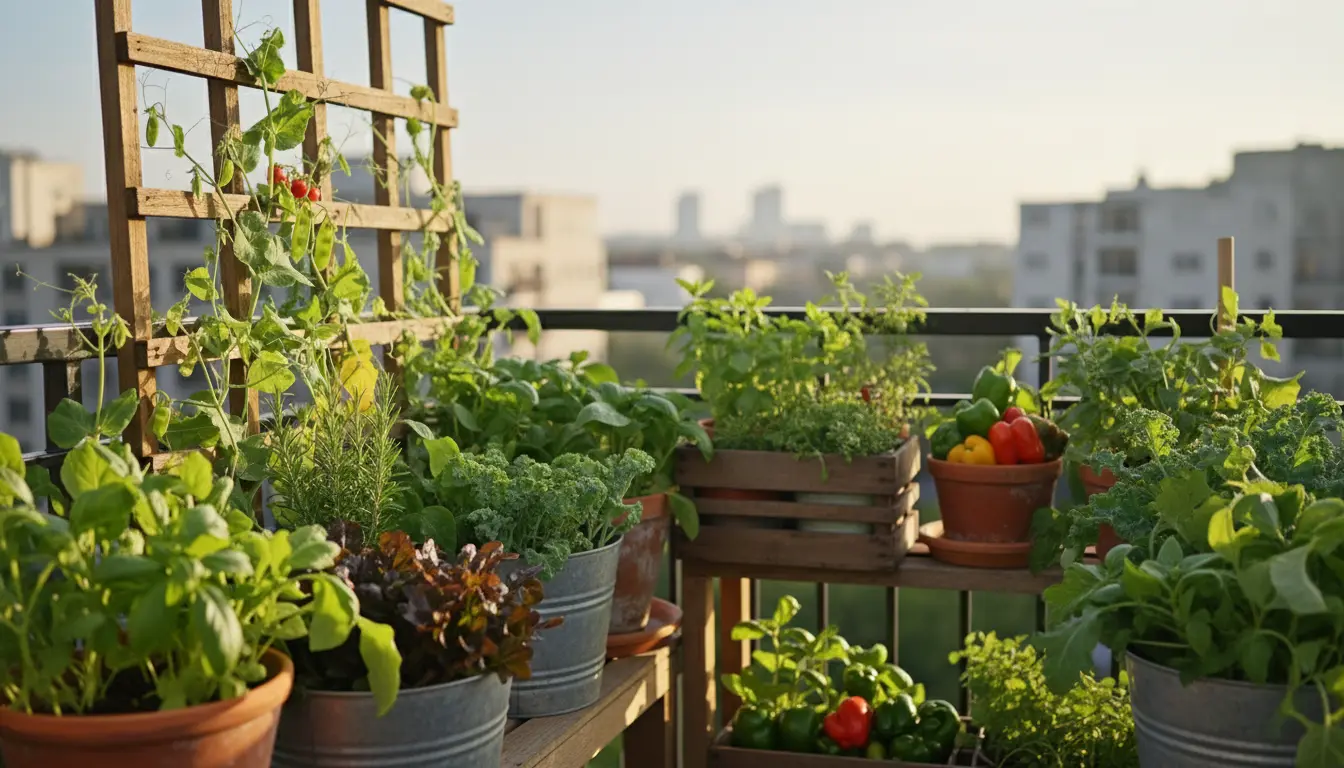
Growing vegetables in limited space is practical and rewarding when you plan deliberately. This guide breaks down the key steps to build a productive small space vegetable garden, whether you have a balcony, patio, or tiny yard.
Choose the Right Location for a Small Space Vegetable Garden
Light is the most important factor. Most vegetables need at least 6 hours of direct sunlight daily. Observe potential spots for a week to note morning and afternoon light patterns.
Also check wind exposure and access to water. A sheltered spot with easy hose or watering-can access reduces plant stress and daily effort.
Location checklist
- 6+ hours of direct sun for leafy and fruiting vegetables
- Protection from strong prevailing winds
- Convenient access to water and tools
- Stable surface for containers or raised beds
Pick Containers and Structures for Small Space Vegetable Gardens
Containers and raised beds maximize soil depth and control. Use sturdy pots, grow bags, window boxes, or a shallow raised bed depending on available area.
Match container size to crops. Deep-rooted plants like tomatoes and peppers need at least 12–18 inch pots. Leafy greens and herbs grow well in shallower containers.
Container examples
- Tomatoes: 15–20 gallon container or large grow bag
- Peppers and eggplant: 10–15 gallon container
- Leafy greens: 6–8 inch deep window boxes or 5-gallon pots
- Root crops (carrots, radishes): 12 inch deep containers
Use the Right Soil and Amendments
Good soil in containers is light, drains well, and holds nutrients. Use a commercial potting mix labeled for vegetables rather than garden soil.
Amend with compost and slow-release organic fertilizer to support steady growth. A typical mix: 60% potting mix, 30% compost, 10% perlite or coarse sand for drainage.
Select Vegetables for a Small Space Vegetable Garden
Choose compact, high-yield, and fast-maturing varieties. Look for words like “compact”, “bush”, or “dwarf” on seed packets.
Good choices for small spaces include cherry tomatoes, bush beans, salad greens, radishes, bush cucumbers, herbs, and microgreens.
Planting strategies
- Succession planting: Sow fast crops (radishes, lettuce) every 2–3 weeks for continuous harvest.
- Vertical growing: Train vining crops like cucumbers or pole beans on trellises to save ground space.
- Interplanting: Pair slow growers (tomatoes) with quick crops (lettuce) that harvest earlier.
Watering and Nutrient Management
Containers dry out faster than beds. Watering frequency depends on temperature and pot size; check soil daily in hot weather. Water deeply until excess drains from the bottom.
Feed container plants every 2–4 weeks with a balanced liquid feed or slow-release granules according to product directions. Watch for signs of nutrient deficiency and adjust accordingly.
Pest and Disease Control in a Small Space Vegetable Garden
Prevent problems by starting with healthy plants and clean containers. Rotate crop families in containers year to year when possible to reduce disease buildup.
Use physical controls first: hand-pick pests, use row covers, and prune for better air circulation. Apply organic sprays like insecticidal soap or neem oil when needed.
Seasonal Care and Extending the Harvest
Use cold frames, cloches, or frost cloth to extend the season in spring and fall. Move containers to warmer microclimates, like against a south-facing wall, during cold snaps.
Succession planting and staggered containers allow continuous harvesting across seasons. Replace finished crops with new plantings to keep production steady.
Simple Tools and Supplies for a Small Space Vegetable Garden
- Hand trowel and pruners
- Watering can or small hose with gentle nozzle
- Potting mix and compost
- Fertilizer appropriate for vegetables
- Trellis or stakes for vertical crops
Real-World Example: Balcony Vegetable Garden Case Study
Maria lives in a second-floor apartment with a 6×4 foot balcony. She arranged four large containers along the railing and two stackable planters against the wall.
She planted cherry tomatoes in deep pots, mixed leafy greens in long troughs, and trained pole beans up a simple bamboo trellis. With weekly feeding and deep watering twice a week during summer, she harvested fresh salads and tomatoes for five months.
The result: a steady supply of produce and a pleasant green space without a yard.
Checklist to Start Your Small Space Vegetable Garden
- Assess light and space for a minimum of 6 hours sun.
- Choose suitable containers and fill with quality potting mix.
- Select compact vegetable varieties and plan planting layout.
- Set up watering routine and fertilization schedule.
- Monitor pests and use prevention first.
Starting a small space vegetable garden is manageable with the right planning and simple routines. Focus on containers that match your plants, prioritize sunlight, and use succession and vertical techniques to maximize yield. With modest effort you can enjoy fresh homegrown vegetables even in tight spaces.