
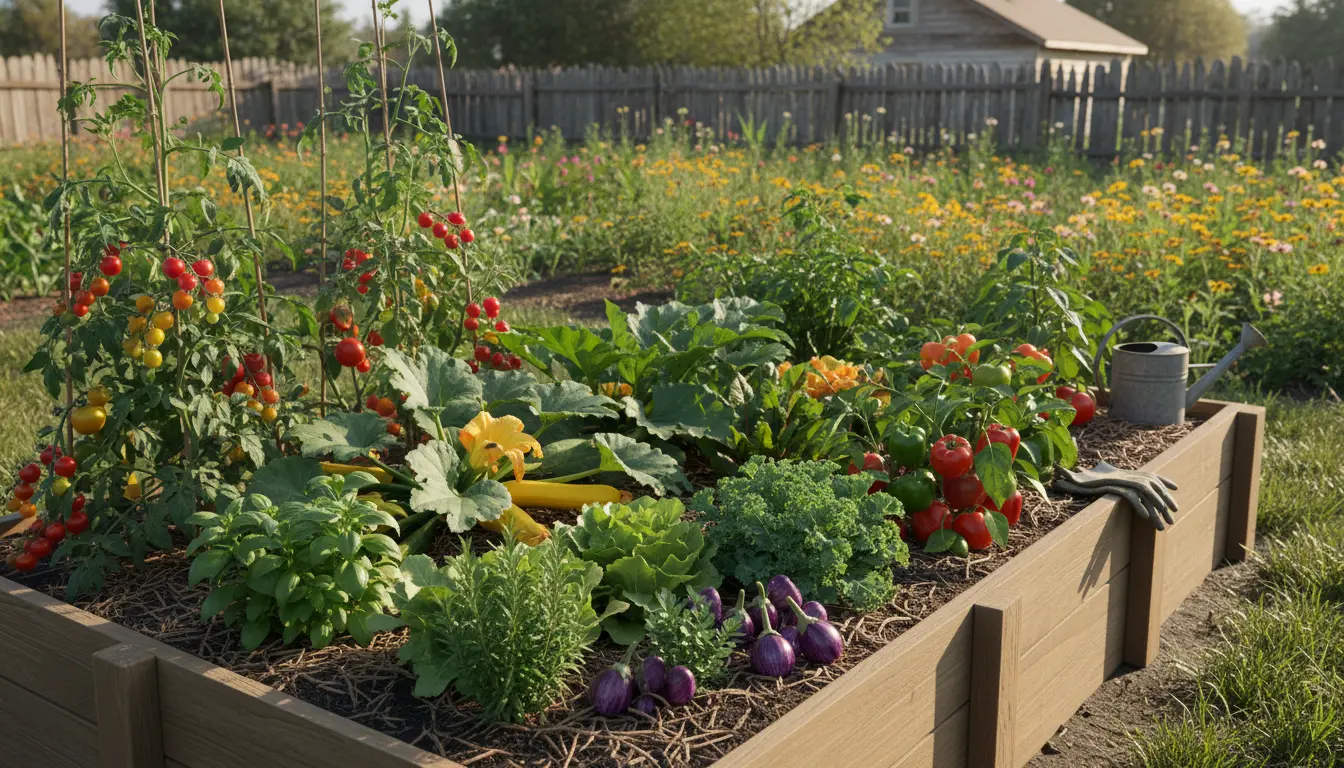
Starting a vegetable garden is one of the most practical ways to grow fresh produce and learn a useful skill. This guide gives clear, step-by-step instructions you can use whether you have a yard, a raised bed, or a balcony container.
Start a Vegetable Garden: First Steps for Beginners
Before digging, make a simple plan. Decide what you want to grow, how much space you have, and when your local frost dates occur. Matching plant choices to your space and climate reduces stress later.
Choose the right location
Vegetables need at least 6 hours of direct sunlight daily. Look for a spot with good drainage and easy access to water. Avoid heavy shade from trees or buildings.
Select plants for beginners
Start with reliable, low-maintenance crops. Fast-growing and forgiving options include lettuce, radishes, cherry tomatoes, green beans, and herbs like basil. These give quick wins and steady motivation.
Soil Preparation and Bed Setup
Healthy soil is the foundation of a productive garden. Test soil texture and pH if possible, and improve it with organic matter for better structure and nutrients.
Raised beds or containers are often easiest for beginners. They warm faster in spring and allow you to control soil quality. If using in-ground beds, remove weeds and loosen the top 8–12 inches of soil.
- Mix 30–50% compost into the topsoil for nutrients and moisture retention.
- Use a balanced organic fertilizer at planting if the soil is very poor.
- Mulch with straw or shredded leaves to conserve moisture and suppress weeds.
Planting: Timing and Techniques
Follow seed packet or plant tag instructions for spacing and planting depth. Planting at the right time prevents stress and poor yields.
Sowing seeds vs. buying seedlings
Seeds are cheaper but need more care early on. Seedlings (transplants) give a head start, especially for tomatoes and peppers. For crops like carrots and radishes, direct-sow seeds into the bed.
Companion planting basics
Mixing compatible plants can reduce pests and boost growth. For example, plant marigolds near tomatoes to deter nematodes, or grow basil beside tomatoes to enhance flavor and attract pollinators.
Watering and Maintenance
Consistent watering is essential. Most vegetables prefer deep, infrequent watering rather than light daily sprinkles. Aim for 1–1.5 inches of water per week, adjusted for rain and heat.
- Water at the soil level to keep foliage dry and reduce disease.
- Use drip irrigation or soaker hoses for efficiency and even moisture.
- Check soil moisture with your finger; if the top 1–2 inches are dry, water.
Pest and Disease Management for Beginners
Observe your garden weekly. Early detection makes problems easier to fix. Use physical barriers, hand-picking, and organic controls before chemical options.
Simple pest-control methods
- Row covers prevent insect damage on young plants.
- Neem oil or insecticidal soap works on soft-bodied pests like aphids.
- Rotate crops yearly to reduce soil-borne diseases and pest build-up.
Planting legumes such as beans or peas adds nitrogen to the soil naturally, which benefits the following crop if you rotate your beds.
Quick Wins and Harvest Tips
Choose some crops that mature quickly to keep motivation high. Radishes, salad greens, and baby spinach can be harvested in 3–6 weeks. Regular harvesting encourages continued production.
Pick vegetables in the morning when they are firm and cool. Store produce properly to extend shelf life—leafy greens in sealed bags with a paper towel, tomatoes at room temperature away from direct sun.
Example planting schedule
- Early spring: peas, radishes, spinach, and lettuces.
- After last frost: tomatoes, peppers (transplants), beans, and basil.
- Late summer: quick crops like fall lettuce and turnips for autumn harvest.
Small Real-World Case Study
Case study: Anna converted a 4×6 foot raised bed on her urban lot into a productive vegetable garden. She mixed compost into purchased topsoil, planted cherry tomatoes, bush beans, leaf lettuce, and basil.
Within ten weeks she harvested continuous salad greens and enough tomatoes for weekly salads. Anna used a soaker hose on a timer, mulched heavily, and picked pests by hand. The small scale and simple maintenance kept the project manageable and rewarding.
Common Beginner Mistakes and How to Avoid Them
- Planting too much: Start small and expand after one season.
- Overwatering: Use a moisture check before watering to prevent rot.
- Ignoring soil: Invest in compost—it’s the single best improvement for long-term success.
Starting a vegetable garden as a beginner is practical and achievable with basic planning and steady care. Focus on site, soil, plant choice, and consistent maintenance. Small wins build confidence and lead to better, larger gardens in future seasons.