
Why Home Composting for Beginners Matters
Composting reduces household waste and creates nutrient-rich soil for gardens and potted plants. For beginners, it is an affordable way to close the organic loop and improve soil health.
Starting composting can feel technical, but with a few practical steps you can set up a reliable system in weeks. This guide focuses on simple techniques that work for most homes.
Getting Started: Choose a Method for Home Composting for Beginners
Select a composting method that fits your space and time. Common options include a backyard bin, a tumbler, a worm (vermicompost) system, or a small countertop collection paired with municipal composting.
- Backyard bin: Low cost, good for yards and larger volumes.
- Compost tumbler: Faster decomposition, easier turning, higher cost.
- Vermicompost: Ideal for indoor or apartment setups using worms.
- Community or curbside composting: Minimal home work, depend on local services.
What You Need to Start
Gather basic supplies before you begin. You do not need expensive tools.
- Container or bin suited to your chosen method.
- Garden fork or turning tool (for backyard piles).
- Kitchen compost container with lid for scraps.
- Bulky brown materials like twigs or shredded cardboard for aeration.
Key Rules for Home Composting for Beginners
Follow these simple rules to keep a healthy compost pile. They prevent odors and speed up decomposition.
- Balance greens and browns. Aim for roughly 2–3 parts brown (carbon) to 1 part green (nitrogen).
- Aerate regularly. Turn the pile every 1–2 weeks in a backyard bin; tumblers are turned more often.
- Maintain moisture. Compost should feel like a wrung-out sponge — moist but not dripping.
- Chop large items. Smaller pieces break down faster and reduce pests.
Examples of Greens and Browns
- Greens: fruit and vegetable scraps, coffee grounds, fresh grass clippings.
- Browns: dry leaves, straw, shredded paper, cardboard, small wood chips.
Compost can reach temperatures of 130–160°F (55–70°C) in an active pile. Heat kills many weed seeds and pathogens when the pile is large and managed correctly.
Maintaining Your Compost
Maintenance is straightforward: monitor moisture, add materials in layers, and turn to add oxygen. Small, consistent actions prevent problems.
Keep a log or simple checklist for the first two months to track what you add and the frequency of turning. This helps identify what works in your climate.
Troubleshooting Common Issues
If your compost smells, it is likely too wet or has too many greens. Add browns and turn more frequently to introduce oxygen.
Soggy, compacted piles need bulky browns like straw or ripped cardboard. Slow decomposition often means the pile is too small or lacks nitrogen.
Using Finished Compost
Finished compost is dark, crumbly, and smells earthy. It can be used as a soil amendment, mulch, or potting mix ingredient.
- Top-dress lawns and garden beds with a thin layer of compost.
- Mix compost into garden beds at a ratio of about 1:4 (compost to soil) for planting.
- Use compost as a component of homemade potting mixes for containers.
Small Real-World Example: A Beginner Case Study
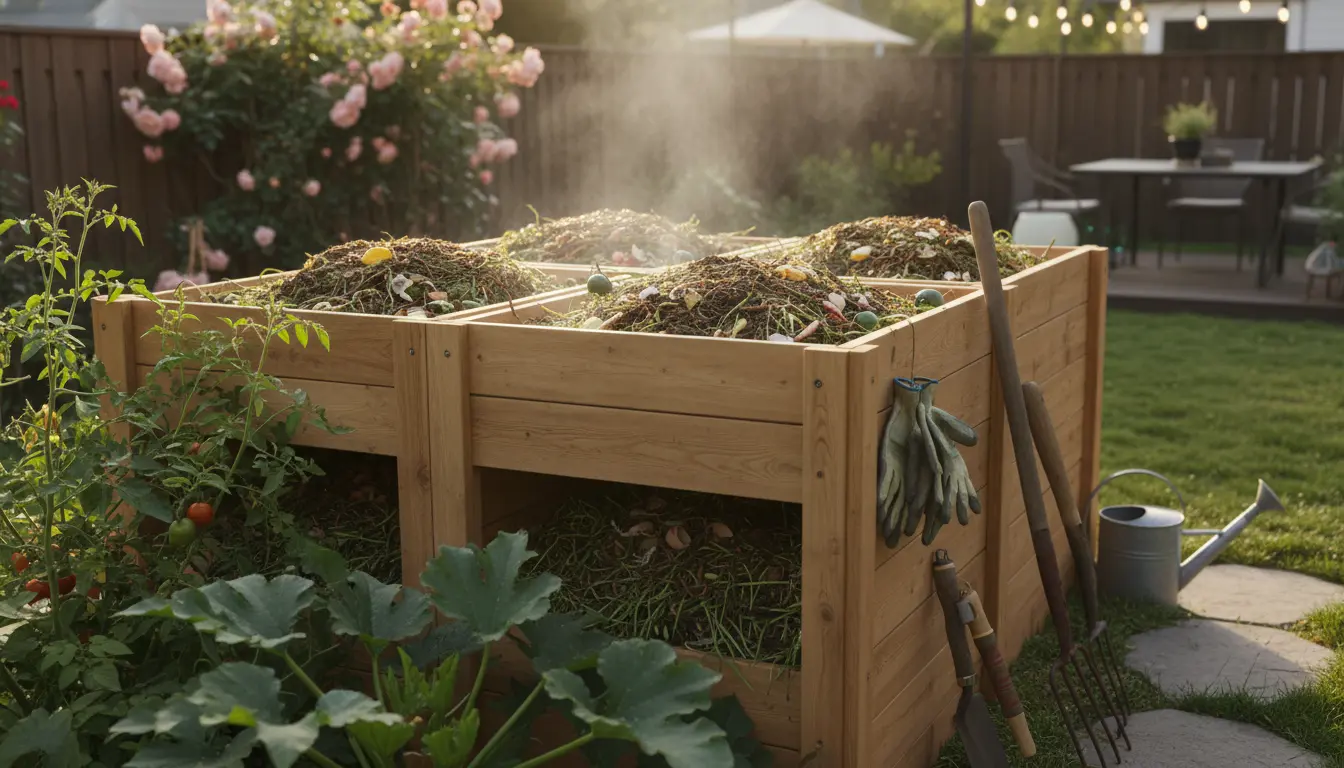
Case study: Sarah, a homeowner with a small yard, started a 3-bin backyard system. She layered shredded cardboard and dry leaves with kitchen scraps and grass clippings.
After turning weekly and adjusting moisture, she produced usable compost in four months. She used the compost to top-dress raised beds, which improved soil structure and plant growth the following season.
Practical Tips for Success
Keep these practical tips in mind as you set up and manage compost at home.
- Start small and scale up. A manageable pile reduces mistakes.
- Chop or shred materials when possible to accelerate breakdown.
- Use a lid or cover to retain moisture and keep pests out.
- Educate household members on what can and cannot be composted.
- Save garden lime or wood ash for occasional pH adjustments if needed.
Safe Composting Practices
Do not add meat, dairy, or oily foods to outdoor compost unless you have a hot, well-managed system. These attract pests and slow down the process.
Keep compost away from building foundations and maintain good drainage to avoid attracting rodents or creating runoff problems.
Final Steps to Start Today
Decide on a composting method that fits your space, gather basic supplies, and commit to simple weekly checks. Small consistent actions lead to steady results.
Within months you will transform kitchen and yard waste into a valuable resource for your garden, reducing waste and improving plant health.
Want a quick checklist to get started?
- Choose bin type and location.
- Collect kitchen scraps in a sealed container.
- Keep a supply of browns on hand.
- Turn and monitor moisture weekly.
- Use finished compost to improve soil.