
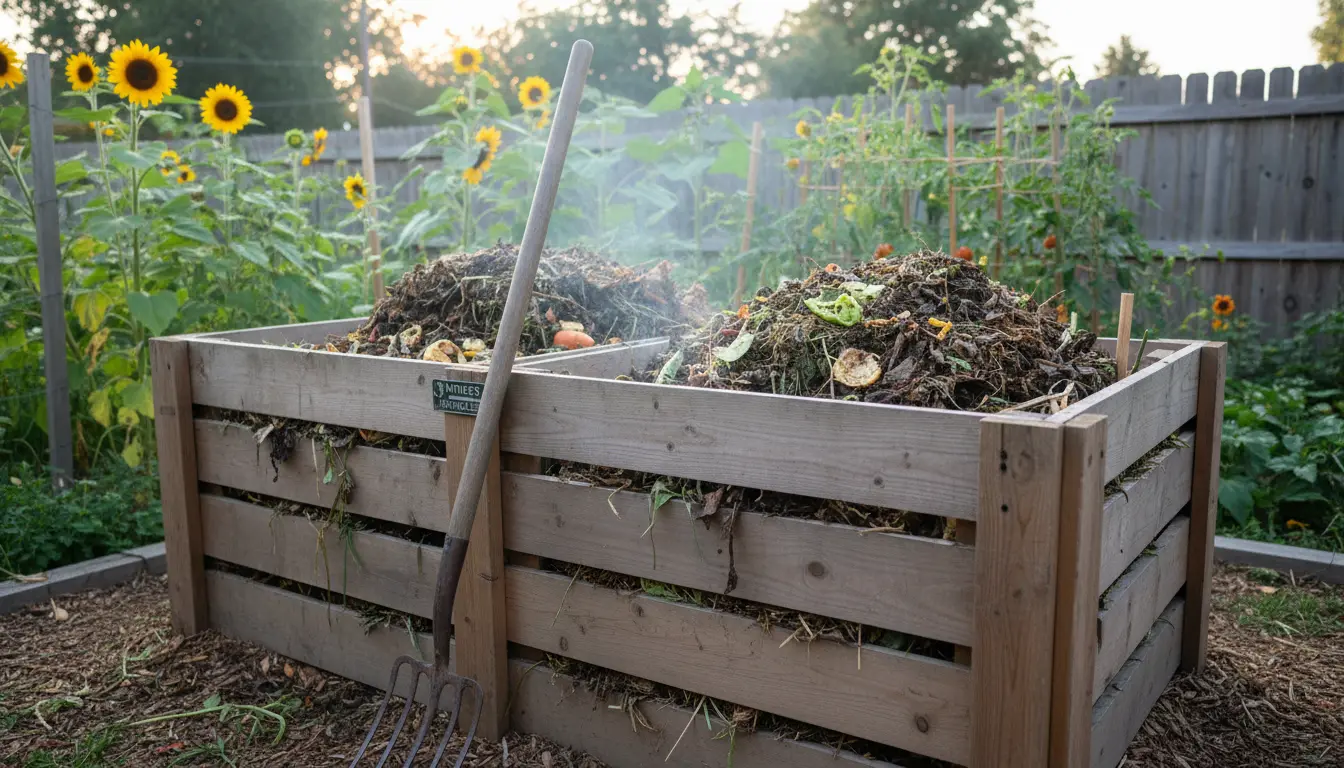
Home composting for beginners is a simple way to reduce kitchen and yard waste while producing nutrient-rich soil for plants. This guide gives clear, practical steps so you can start composting today and avoid common mistakes.
Home Composting Basics
Composting is the natural breakdown of organic material into humus. At home, you can manage this process to speed it up and produce usable compost for gardens or containers.
The main goals are to balance carbon and nitrogen, keep the pile aerated, and maintain moisture. These three factors determine how quickly and cleanly your compost develops.
Why Start Home Composting
Composting reduces landfill waste and returns nutrients to soil. It also cuts disposal costs and improves water retention in garden soil.
What to Compost in Home Composting
Use a mix of green (nitrogen) and brown (carbon) materials. Aim for roughly equal volumes, or a ratio near 2:1 brown to green by volume for steady results.
Greens (Nitrogen Rich)
- Vegetable and fruit scraps
- Fresh grass clippings
- Coffee grounds and tea leaves
- Manure from herbivores (rabbit, horse, cow)
Browns (Carbon Rich)
- Dry leaves and straw
- Shredded paper and cardboard (no glossy ink)
- Small wood chips and sawdust from untreated wood
What Not to Compost
Avoid meat, dairy, oily foods, and diseased plants. These items attract pests and can create odors or harmful pathogens.
Also avoid pet waste from dogs and cats, and treated wood products. Composting these can be unsafe or slow to break down.
Choosing a Compost Bin for Home Composting
Select a bin that fits your space and needs. Options include open piles, tumblers, and stationary bins. Each has pros and cons for maintenance and speed.
Bin Options
- Open pile: cheapest, best for large yards, requires turning with a pitchfork.
- Tumbler: faster breakdown and easy turning, good for small yards.
- Stationary bin: simple and low-cost, may need manual mixing.
Step-by-Step: How to Start Home Composting
- Pick a dry, well-drained location with some shade.
- Layer a base of coarse material like twigs for airflow.
- Add alternating layers of greens and browns. Chop large items to speed decomposition.
- Keep the pile moist like a wrung-out sponge; add water if dry.
- Turn the pile every 1–3 weeks to add oxygen and mix materials.
- Wait 2–6 months for compost to mature, depending on method and care.
Troubleshooting Home Composting Problems
If your compost smells, it’s likely too wet or has too many greens. Add brown material and turn the pile.
If decomposition is slow, the pile may be too dry or too small. Increase moisture, add more greens, or combine small piles to raise temperature.
Worm composting, or vermicomposting, can process kitchen scraps faster and is ideal for apartments. Red worms can eat half their weight in food daily.
Practical Tips for Home Composting Success
- Chop food scraps into small pieces to speed breakdown.
- Keep a kitchen caddy for scraps to reduce trips to the bin.
- Use a mesh or perforated bin to improve airflow if odors persist.
- Cover fresh food layers with browns to deter pests and flies.
Small Case Study: Apartment Composting Success
Sarah, a renter in a two-bedroom apartment, started vermicomposting in a two-bin system on her balcony. She used a small indoor caddy for kitchen scraps and fed her worms daily.
Within three months Sarah produced enough compost to feed six container plants. Her household food waste dropped by 60 percent and she reported fewer garbage odors.
Using Finished Compost
Finished compost is dark, crumbly, and smells earthy. Sift out large pieces and use the compost as a soil amendment or top dressing.
Combine compost with potting mix or garden soil at a 10–30 percent ratio for improved fertility and moisture retention.
Quick Checklist for Home Composting for Beginners
- Choose bin type and site
- Collect and balance greens and browns
- Maintain moisture and aeration
- Turn regularly and watch for pests
- Harvest finished compost after 2–6 months
Home composting for beginners is an achievable, low-cost step toward reducing waste and improving soil health. With basic care—balance, moisture, and airflow—you can create rich compost that benefits your plants and the environment.