
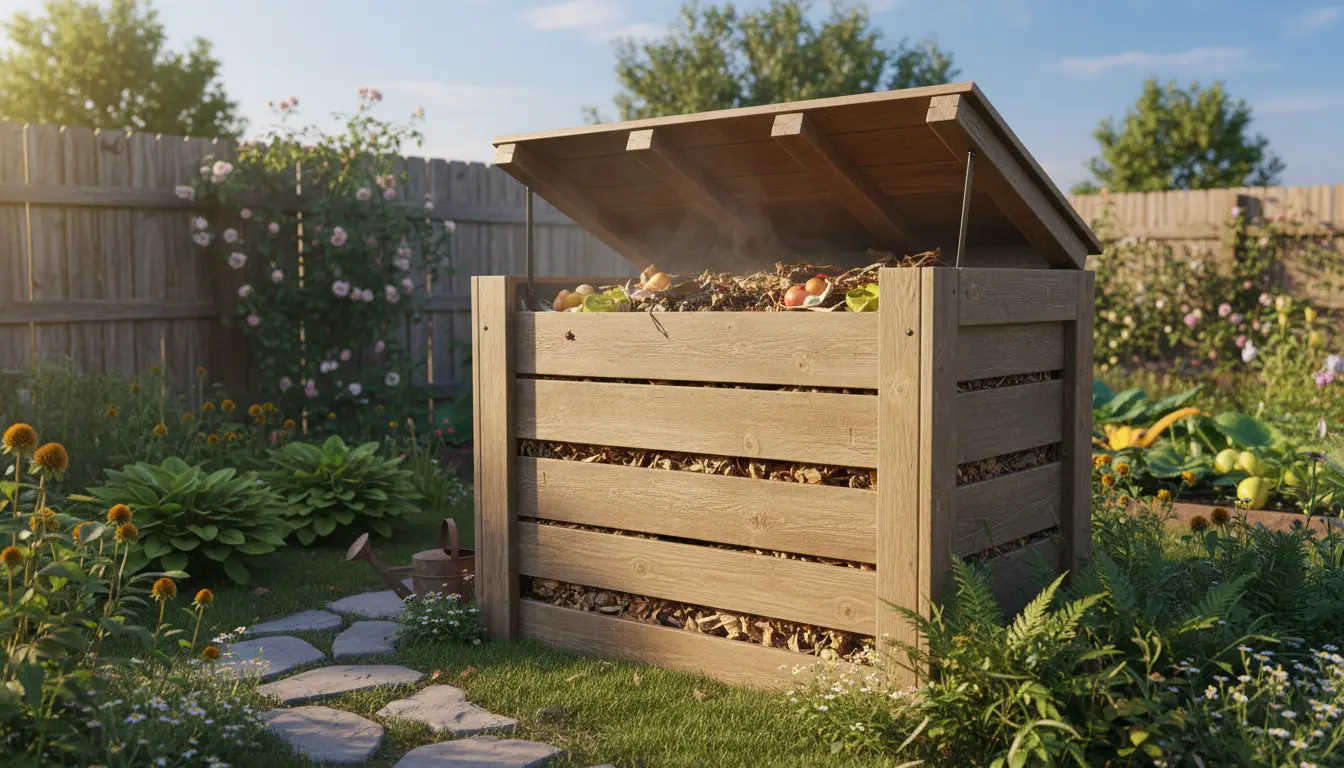
Start Composting at Home Today
Home composting turns kitchen scraps and yard waste into a useful soil amendment. This guide gives clear, practical steps so you can begin composting at home without guesswork.
Why Choose Home Composting
Home composting reduces landfill waste and improves garden soil. It is low cost and works at any scale from apartment bins to backyard piles.
Benefits of home composting
- Reduces household waste and trash bags
- Creates nutrient-rich compost for plants
- Improves soil structure and water retention
- Reduces need for chemical fertilizers
Getting Started with Home Composting
Choose a method that fits your space and lifestyle before you start. Common options include a simple bin, tumbler, vermicompost (worms), or a backyard pile.
Choosing a composting method
Small spaces and apartments: use a worm bin or a compact indoor bokashi system. Backyard gardens: use a stationary bin or a turned pile. Tumblers suit homeowners who want faster mixing and less manual turning.
What to collect for home composting
Successful compost relies on a balance of carbon and nitrogen materials. Keep two containers: one for dry browns and one for wet greens.
- Greens (nitrogen): fruit and vegetable scraps, coffee grounds, fresh grass clippings
- Browns (carbon): dry leaves, shredded paper, cardboard, straw
Where to Place Your Compost Bin
Pick a level spot with good drainage and partial shade if possible. Avoid placing a bin too close to living spaces if odors or pests are a concern.
Practical placement tips
- Keep bins on soil rather than concrete to allow drainage and worm access.
- Place near your kitchen or back door to reduce the effort of carrying scraps.
- Ensure easy access for turning or harvesting finished compost.
Daily and Weekly Composting Tasks
Maintain your compost with a few simple habits that prevent problems and speed decomposition. Regular small tasks save time and yield better compost.
- Add kitchen scraps in small amounts rather than dumping a large batch.
- Layer greens and browns to maintain balance.
- Turn or aerate the pile weekly for faster breakdown.
- Keep the pile moist but not soggy—like a wrung-out sponge.
Common Problems and Simple Fixes
Most composting issues are easy to resolve with minor adjustments. Address problems early to avoid pests, odors, or slow decomposition.
Smells
Cause: too many wet greens or poor aeration. Fix: add browns like shredded paper, and turn the pile to add oxygen.
Pests
Cause: exposed cooked food or meat. Fix: avoid meat and dairy, bury scraps under browns, use a closed bin or tumbler if rodents are a problem.
Slow decomposition
Cause: pile too dry, too small, or lacking nitrogen. Fix: moisten, add fresh greens, or combine small piles into one larger mass to retain heat.
Well-managed home compost can reach temperatures of 120 to 160°F, killing many weed seeds and speeding decomposition. Turning and balancing greens and browns helps achieve these temperatures.
How to Tell When Compost Is Ready
Finished compost is dark, crumbly, and earthy smelling. Fork through the pile—if most material is unrecognizable and feels like soil, it is ready to use.
Small Real-World Case Study
Example: A two-person household in a small yard started a 3-bin system. They collected kitchen scraps in a countertop bucket and emptied it into the first bin twice weekly. After six months of turning and balancing, they produced a wheelbarrow of finished compost that cut their garden’s watering needs and reduced trash by 25%.
Quick Home Composting Checklist
- Choose a bin type: tumbler, stationary, or worm bin
- Start a container for kitchen scraps
- Maintain a 2:1 ratio of browns to greens by volume
- Turn the pile weekly for aeration
- Monitor moisture: keep it like a wrung-out sponge
- Harvest finished compost when dark and crumbly
Final Tips for Sustainable Home Composting
Start small and refine your routine as you learn what works in your climate. Keep notes on what you add and how often you turn the pile to improve results over time.
With regular care and simple adjustments, home composting becomes an easy, rewarding habit that cuts waste and feeds your garden naturally.