
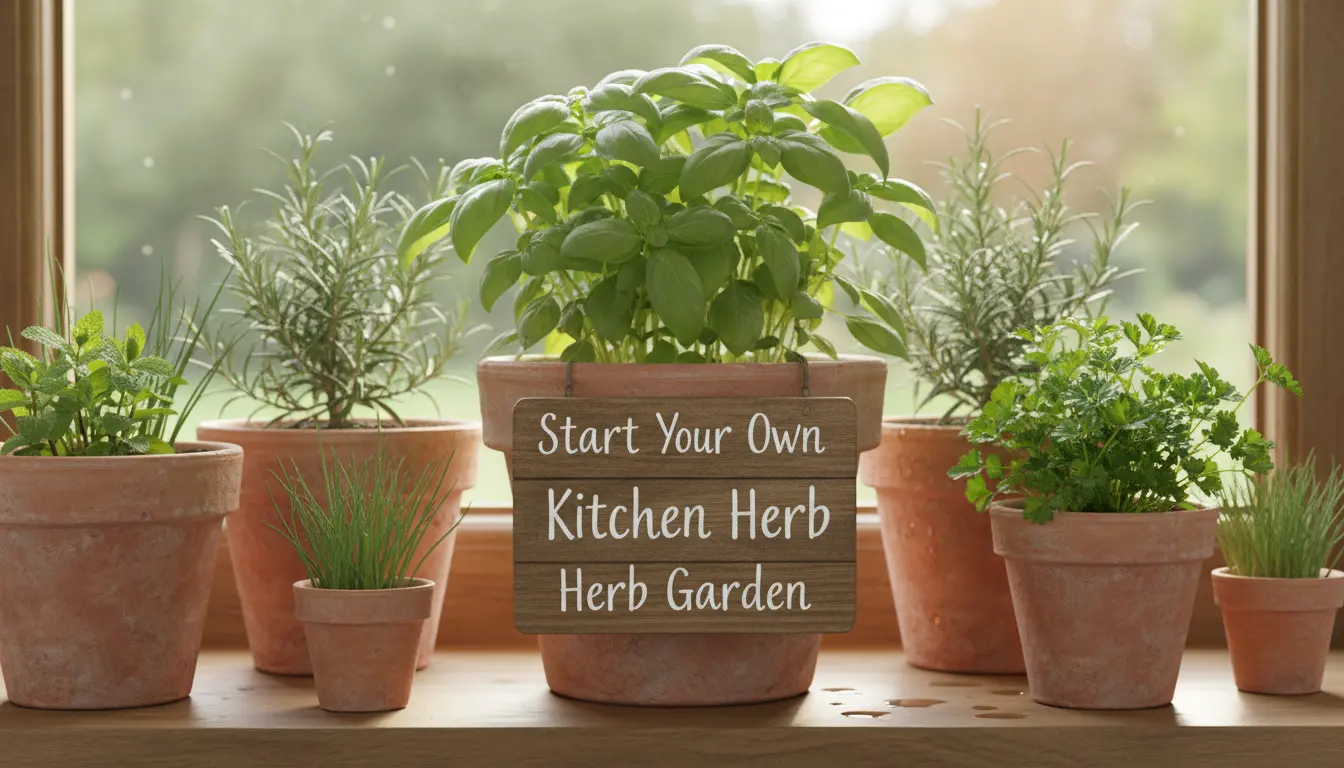
Why Start a Kitchen Herb Garden
A kitchen herb garden brings fresh flavor to meals and saves money. It also fits small spaces and needs minimal tools.
This guide shows clear steps to plan, plant, and maintain a thriving kitchen herb garden you can start this weekend.
Choose the Right Herbs for a Kitchen Herb Garden
Select herbs that match your cooking and light conditions. Some herbs need more sun, while others tolerate lower light.
- Basil – Great for sunny spots and quick harvests.
- Parsley – Tolerates partial shade and is biennial.
- Thyme – Low water needs and loves sun.
- Mint – Spreads fast, best kept in its own pot.
- Chives – Good in partial sun and easy to cut back.
Plan Your Space and Containers
Decide where the herb garden will live: a windowsill, counter, balcony, or shelf. Light levels determine your herb choices.
Choose containers with drainage holes and sizes that match root needs. Use shallow pots for herbs like chives, and deeper pots for basil.
Container Options
- Individual pots for single herbs — easier to manage water and spreaders like mint.
- A long trough for multiple herbs — good for a sunny windowsill.
- Reusable kitchen containers (cleaned cans or jars) — line with pebbles and add drainage.
Soil and Potting Mix for a Kitchen Herb Garden
Herbs do best in a well-draining potting mix. Avoid garden soil because it compacts and can harbor pests.
Use a commercial potting mix labeled for containers or make your own blend: 2 parts potting mix, 1 part perlite, 1 part compost.
Light and Placement Tips
Most culinary herbs need 4–6 hours of direct sunlight per day. South or west-facing windows deliver the best light.
If natural light is limited, use a 12-inch LED grow light set on a timer for 10–14 hours daily. Keep lights 6–12 inches above plants.
Watering and Feeding Your Kitchen Herb Garden
Water when the top 1 inch of soil feels dry. Overwatering causes root rot; underwatering leads to wilting and slow growth.
Feed herbs with a balanced liquid fertilizer once every 3–4 weeks during the growing season. Dilute to half strength to avoid leaf burn.
Watering Checklist
- Check soil moisture by touch before watering.
- Water until excess drains from the pot bottom.
- Empty saucers to prevent standing water.
Pruning, Harvesting, and Maintenance
Regular pruning keeps herbs productive. Pinch or cut stems above a leaf node to encourage bushy growth.
Harvest frequently but avoid removing more than one-third of the plant at a time. This ensures steady regrowth.
Common Maintenance Tasks
- Rotate pots weekly to promote even light exposure.
- Trim flowers on basil and cilantro to extend leaf production.
- Check for pests like aphids and remove by hand or rinse with water.
Many herbs produce their strongest flavor just before they flower. Regular light pruning delays flowering and increases leaf yield.
Troubleshooting a Kitchen Herb Garden
Yellow leaves often mean overwatering or poor drainage. Leggy growth usually indicates insufficient light.
Solutions: improve drainage, reduce water frequency, move plants closer to light, or add supplemental grow lighting.
Simple, Real-World Case Study
Maria, an apartment cook, started a windowsill herb garden with six 4-inch pots: basil, parsley, chives, thyme, mint, and oregano.
She placed the pots on a south-facing sill, used a store-bought container mix, and watered twice weekly. Within six weeks she had regular harvests and used the herbs in salads and pasta.
Key wins: keeping mint in a separate pot to stop spread and pinch-pruning basil to avoid flowering. The garden cost under $50 and reduced store-bought herb trips.
Quick Start Checklist to Start a Kitchen Herb Garden
- Pick 3–6 herbs that match your light conditions.
- Choose pots with drainage and a good potting mix.
- Place in a sunny spot or use a grow light.
- Water when top inch of soil is dry and feed lightly monthly.
- Prune and harvest regularly to encourage growth.
Final Tips for Ongoing Success
Start small and expand when you feel confident. Keep a simple log of watering and harvests to learn what each herb needs.
Enjoy the process. A kitchen herb garden is low-risk, offers fresh flavor, and improves indoor air a bit while brightening your kitchen.