
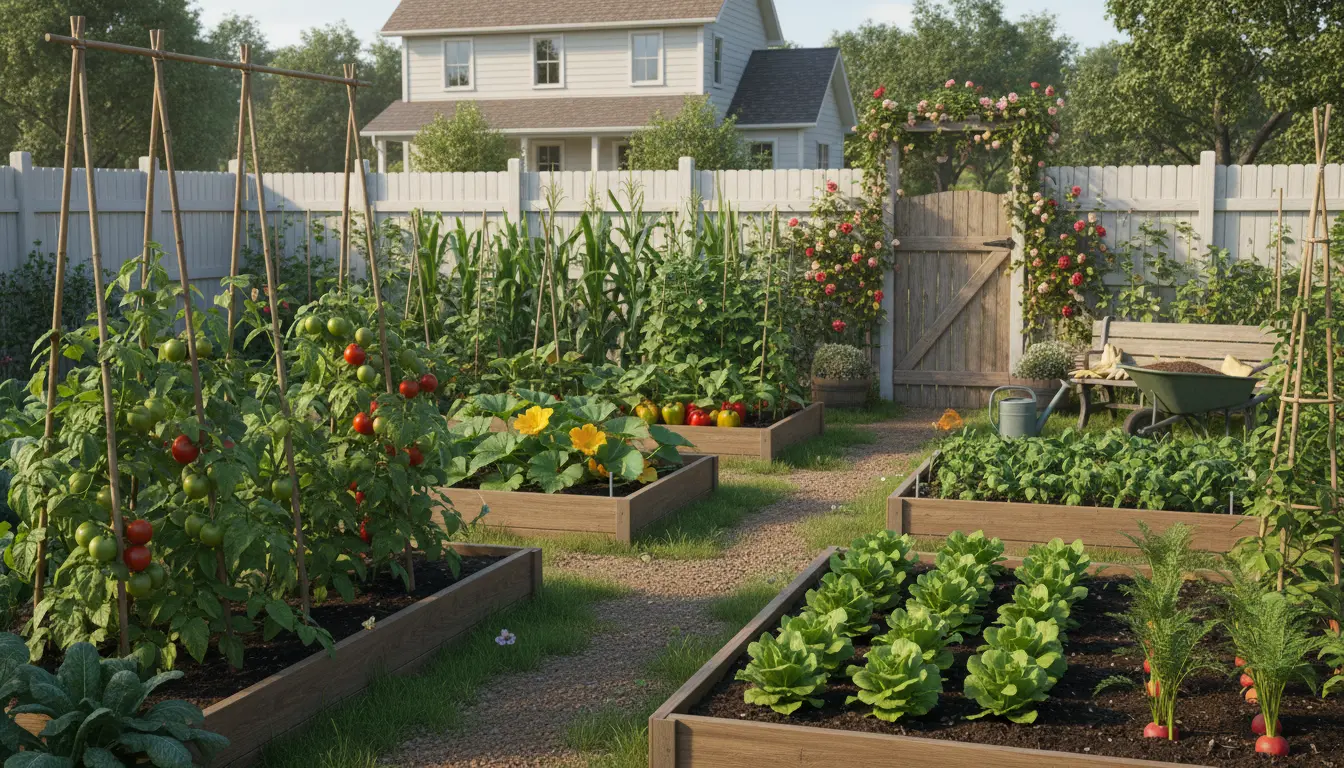
Starting a vegetable garden is a practical way to grow fresh food, reduce grocery costs, and enjoy time outdoors. This guide shows clear steps to start a vegetable garden, from choosing a site to harvesting crops.
Why Start a Vegetable Garden
A vegetable garden gives you control over what you eat and how it is grown. It also improves mental well-being and can be scaled to any yard size.
Beginners can begin with a few easy crops and expand as skills grow. The key is planning and simple, consistent care.
Choose a Location to Start a Vegetable Garden
Most vegetables need at least six hours of direct sunlight each day. Observe potential locations at different times to check sunlight and shade periods.
Consider access to water and proximity to your home. Closer gardens are easier to maintain and harvest from often.
Sun, Water, and Soil Considerations
- Sunlight: 6–8 hours of sun is ideal for many vegetables.
- Water: Ensure a hose or irrigation is nearby.
- Soil: Look for a spot with good drainage and minimal compaction.
Plan What to Grow
Start with 4–8 easy vegetables that match your climate and kitchen needs. Choose varieties labeled for beginners or disease resistance.
- Leafy greens: lettuce, spinach
- Root crops: carrots, radishes
- Nightshades: cherry tomatoes (compact varieties)
- Legumes: bush beans
Use a garden journal or simple sketch to plan spacing and succession planting.
Prepare Soil for a New Vegetable Garden
Good soil is the foundation of a productive garden. Test soil if possible or improve it with organic matter.
Options for beginners include in-ground beds, raised beds, or containers. Raised beds warm faster and drain well.
Soil Preparation Steps
- Clear grass and weeds from the area.
- Loosen soil to 8–12 inches for in-ground beds.
- Mix in 2–4 inches of compost to improve fertility and structure.
- Level and water the bed to settle the soil before planting.
Planting: Seeds or Starts
Decide whether to plant seeds directly or use seedlings (starts). Fast-growing crops like radishes and beans do well from seed.
Tomatoes and peppers often establish faster when planted as starts purchased from a nursery.
Basic Planting Tips
- Follow seed packet depth and spacing instructions.
- Water gently after planting to settle soil around roots.
- Use mulch to reduce weeds and conserve moisture.
Watering and Maintenance
Consistent moisture is more important than frequent shallow watering. Aim to keep the root zone evenly moist.
Water in the morning to reduce evaporation and disease risk. Use a drip line or soaker hose for efficiency.
Weeds, Pests, and Common Problems
- Weed by hand or with shallow cultivation to avoid disturbing roots.
- Inspect plants weekly for pests and disease signs.
- Use row covers, handpicking, or organic controls for pests when possible.
Harvesting and Succession Planting
Harvest regularly to encourage more production. Pick leafy greens often and harvest tomatoes when fully colored.
Practice succession planting: replace early crops with new plantings to extend harvests through the season.
Did You Know?
A single 4×8 foot raised bed can produce enough vegetables for a small family when planted intensively and rotated each season.
Small Real-World Example
Case study: A 10×10 backyard plot produced the following in one season for a family of two. They planted cherry tomatoes, bush beans, lettuce, carrots, and zucchini.
- Tomatoes: 30 pounds from 6 plants
- Beans: 18 pounds from staggered plantings
- Lettuce: Continuous harvest over 3 months
- Carrots: One large harvest of 10 pounds
They used compost, mulched heavily, and watered with a timer on a soaker hose. Small investments in soil and watering paid off in steady yields.
Quick Checklist to Start a Vegetable Garden
- Choose a sunny location with water access.
- Decide raised bed or in-ground method.
- Amend soil with compost and test drainage.
- Select 4–8 beginner-friendly crops.
- Plant seeds or starts at correct spacing.
- Water consistently and mulch to conserve moisture.
- Inspect plants weekly and harvest regularly.
Final Tips for New Gardeners
Start small and expand as you learn which crops work best. Keep records of planting dates, varieties, and successes to improve each season.
Local extension services and community gardens are great resources for region-specific advice and trouble-shooting.
With a modest initial effort—site choice, soil improvement, and consistent care—you can successfully start a vegetable garden and enjoy fresh produce all season.