
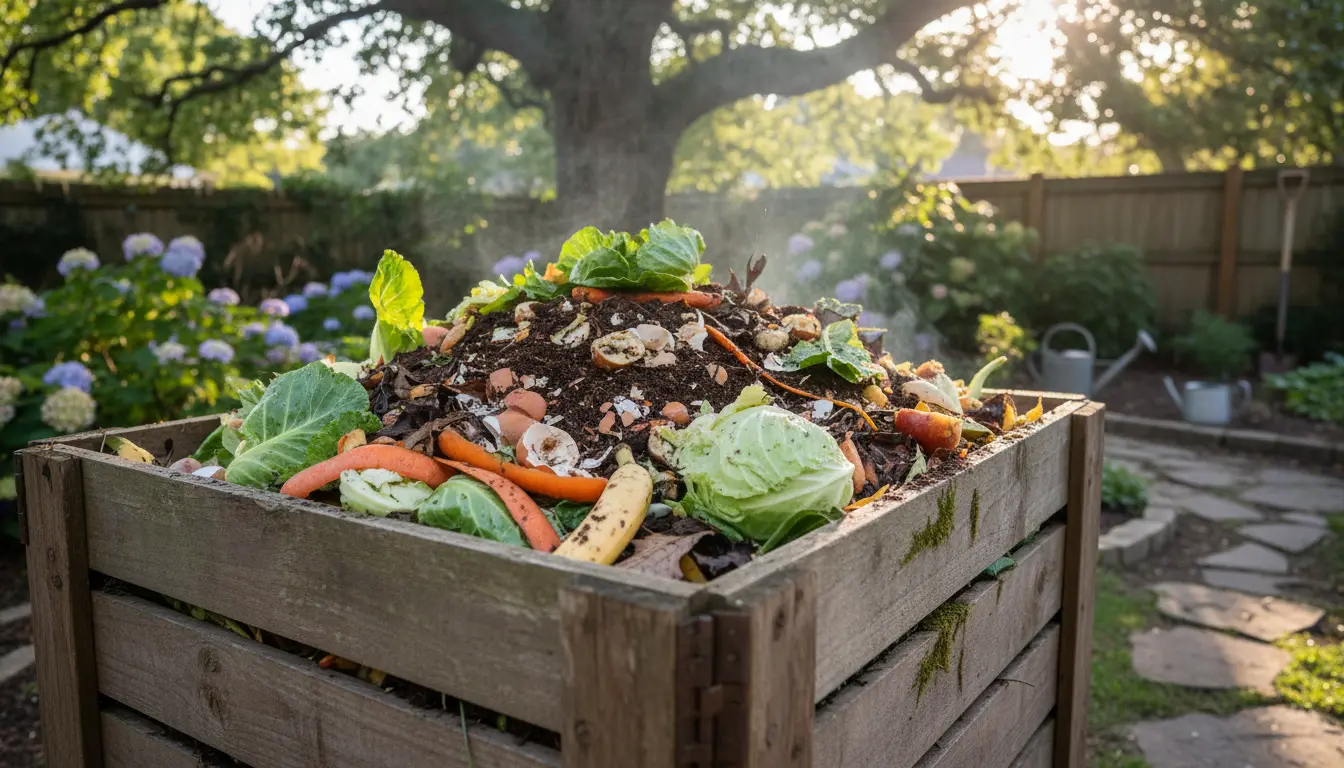
What is composting at home?
Composting at home is the controlled breakdown of organic waste into nutrient-rich material you can use in gardens and potted plants. It recycles kitchen scraps and yard waste into valuable soil amendment while cutting landfill trash.
Benefits of home composting
Home composting reduces household waste, lowers methane emissions from landfills, and saves money on fertilizer. It also improves soil structure, water retention, and plant health when used correctly.
Composting can reduce your household waste by up to 30 to 40 percent, depending on diet and yard size.
Basic principles of composting at home
Successful composting balances carbon-rich ‘browns’ and nitrogen-rich ‘greens’ and keeps the pile moist and aerated. Aim for a mix that feels like a damp sponge and turn the pile to add oxygen.
Key inputs (what to add)
- Browns: dried leaves, straw, shredded paper, cardboard
- Greens: vegetable scraps, coffee grounds, grass clippings
- Avoid: meat, dairy, oils, diseased plants, and pet waste
Simple carbon to nitrogen guideline
A practical rule is roughly 3 parts browns to 1 part greens by volume. This maintains decomposition without bad smells.
Choose a method for composting at home
There are several methods to compost at home. Choose one based on space, budget, and how fast you want finished compost.
Cold pile composting
Cold composting is low-effort. You add materials over time and wait months to over a year for compost to form. It uses little maintenance but is slower.
Hot composting
Hot composting reaches higher temperatures and breaks materials down in weeks to months. It needs a larger volume, consistent mix, and regular turning to maintain heat.
Compost bins and tumblers
Bins and tumblers keep material contained and reduce pests. Tumblers make turning easy and speed up decomposition, making them good for small yards.
Step-by-step: How to start composting at home
Follow these steps to begin composting at home with a simple bin or pile.
- Pick a location: a well-drained spot with partial shade close to the kitchen for convenience.
- Select a container: choose a bin, tumbler, or a simple open pile depending on space and budget.
- Start with a base: add coarse browns like small branches or straw to help airflow.
- Add materials in layers: alternate greens and browns and chop larger items to speed decomposition.
- Keep it moist: water occasionally so the pile is as damp as a wrung-out sponge.
- Turn regularly: every 1–2 weeks for hot composting, or monthly for slower processes.
- Harvest finished compost: it is dark, crumbly, and earthy-smelling when ready.
Troubleshooting common issues
If the pile smells, it likely needs more browns or aeration. If decomposition is slow, add more greens, chop materials finer, and increase moisture and turning.
- Bad odor: add dry browns and turn the pile.
- Pests: avoid meat and dairy; use a closed bin or secure tumbler.
- Too wet: add shredded paper or straw and mix to improve drainage.
Using finished compost
Apply compost to garden beds, mix into potting soil, or use as a mulch top dressing. A thin layer helps seedlings and established plants without burning roots.
Small real-world example
Case study: A two-person household in an urban backyard used a 60-liter tumbler and kitchen-scrap collection jar. After six months of consistent use and turning twice a week, they diverted about 120 kg of organic waste from trash and produced 25 liters of compost for potted vegetables.
The family reported healthier tomato plants and saved roughly $30 on store fertilizer that season. Their practice shows small changes scale up over time.
Practical tips to keep composting at home simple
- Keep a small countertop container for scraps to make collection easy.
- Chop or blend larger scraps to speed breakdown.
- Layering and occasional turning reduces smells and pests.
- Use a kitchen bin with a tight lid if you live in an apartment and do bokashi or vermicomposting.
When to consider other systems
If you have limited outdoor space, try worm composting (vermicomposting) or bokashi for fermented food waste. Both work well in apartments when done correctly.
Final checklist to start composting at home
- Choose method: cold pile, hot compost, tumbler, or worms.
- Gather basic supplies: bin/tumbler, browns, and a garden fork or pitchfork.
- Keep to simple rules: mix browns and greens, maintain moisture, and turn occasionally.
Composting at home is a practical, low-cost way to reduce waste and improve your soil. Start small, learn by doing, and adjust as you go.