
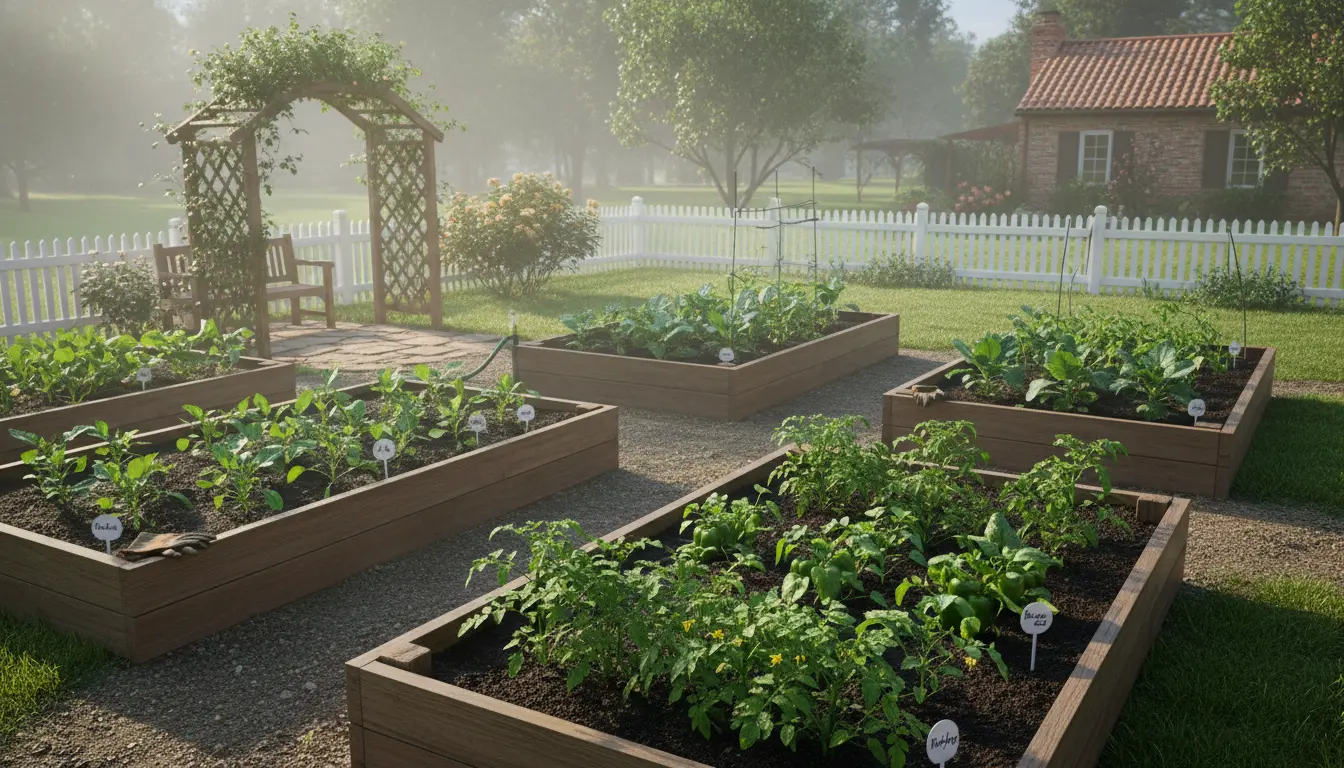
Starting a vegetable garden is a practical way to grow fresh food, save money, and enjoy time outside. This guide explains clear steps so beginners can plan, plant, and maintain a productive garden.
Why start a vegetable garden
A vegetable garden produces food, improves mental health, and teaches practical skills. It also gives control over seeds, soil, and growing methods for healthier produce.
How to start a vegetable garden: plan first
Good planning reduces mistakes and wasted effort. Spend time choosing location, garden type, and what to grow before buying tools or seeds.
Choose the right location
Most vegetables need 6 to 8 hours of direct sunlight. Look for a flat or gently sloped area with good drainage and nearby water access.
Decide garden type
Pick between in-ground rows, raised beds, and containers based on soil quality, space, and mobility needs. Raised beds warm faster and drain well.
Select vegetables to grow
Start with easy, high-yield vegetables like tomatoes, lettuce, radishes, and beans. Choose varieties suited to your climate and growing season.
How to start a vegetable garden: prepare soil and beds
Healthy soil is the backbone of a productive garden. Invest in soil improvement rather than expensive fertilizers.
Test and improve soil
Use a simple soil test kit to check pH and nutrient levels. Most vegetables prefer pH 6.0 to 7.0.
- Add compost to boost organic matter and microbial life.
- In heavy clay, mix in coarse sand or compost to improve drainage.
- In sandy soils, add compost and well-rotted manure to increase water retention.
Build beds and mark rows
For raised beds, use untreated wood, bricks, or composite boards. Make paths wide enough to reach the center without stepping on beds.
How to start a vegetable garden: planting and layout
Planting with purpose increases yield and minimizes pest and disease issues. Use spacing and companion planting to optimize growth.
Seed vs seedlings
Some crops like carrots and beans do well from seed. Tomatoes, peppers, and eggplants often perform better when transplanted as seedlings.
Planting layout tips
- Group plants by water needs to avoid over- or under-watering.
- Use vertical supports for vining crops like beans and cucumbers.
- Practice crop rotation to reduce soil-borne diseases year to year.
How to start a vegetable garden: watering and maintenance
Consistent watering, timely weeding, and regular feeding keep plants vigorous. Develop a simple routine to reduce stress on the garden.
Watering best practices
Water deeply and less frequently to encourage strong root systems. Aim to wet the root zone rather than spraying leaves to reduce disease risk.
- Use drip irrigation or soaker hoses for efficiency.
- Water in the morning when possible to limit evaporation.
Weeding and mulching
Remove weeds when small to prevent competition for nutrients and water. Apply organic mulch to suppress weeds and conserve moisture.
How to start a vegetable garden: pest and disease control
Preventive practices reduce the need for chemical controls. Observe plants often and act early when issues appear.
Integrated pest management basics
Use physical barriers, beneficial insects, and crop rotation. Hand-pick larger pests and remove infected leaves promptly.
Organic options
- Apply neem oil or insecticidal soap for soft-bodied pests.
- Use row covers to protect young plants from insects and birds.
- Encourage pollinators with flowering borders.
Tomatoes and peppers are related and share many pests. Rotating nightshade family crops reduces disease risk and improves long-term yields.
How to start a vegetable garden: harvest and continuous planting
Harvesting at the right time improves flavor and productivity. Many vegetables allow multiple harvests through successive planting.
Harvest timing
Pick leafy greens when young for best texture. Harvest beans and peas when pods are firm and before seeds enlarge.
Succession planting
Stagger plantings of quick crops like lettuce and radish every 2–3 weeks for a steady supply. Replace spent crops with fall-winter varieties in many regions.
Short case study: Small backyard start
Jane had a small sunny backyard and started with two 4×8 raised beds. She tested the soil, added compost, and planted tomatoes, lettuce, and bush beans in year one.
Within three months she harvested continuous lettuce and beans. Tomatoes produced well after staking and weekly deep watering. Jane saved money on groceries and expanded her beds in year two.
Quick checklist to start a vegetable garden
- Choose a sunny location with water access.
- Decide on in-ground, raised beds, or containers.
- Test soil and add compost or amendments.
- Select beginner-friendly vegetables for your climate.
- Plant with proper spacing and water deeply.
- Maintain with mulching, weeding, and pest observation.
Starting a vegetable garden requires planning, basic soil care, and consistent maintenance. Follow these practical steps to build a productive, manageable garden that fits your space and goals.