
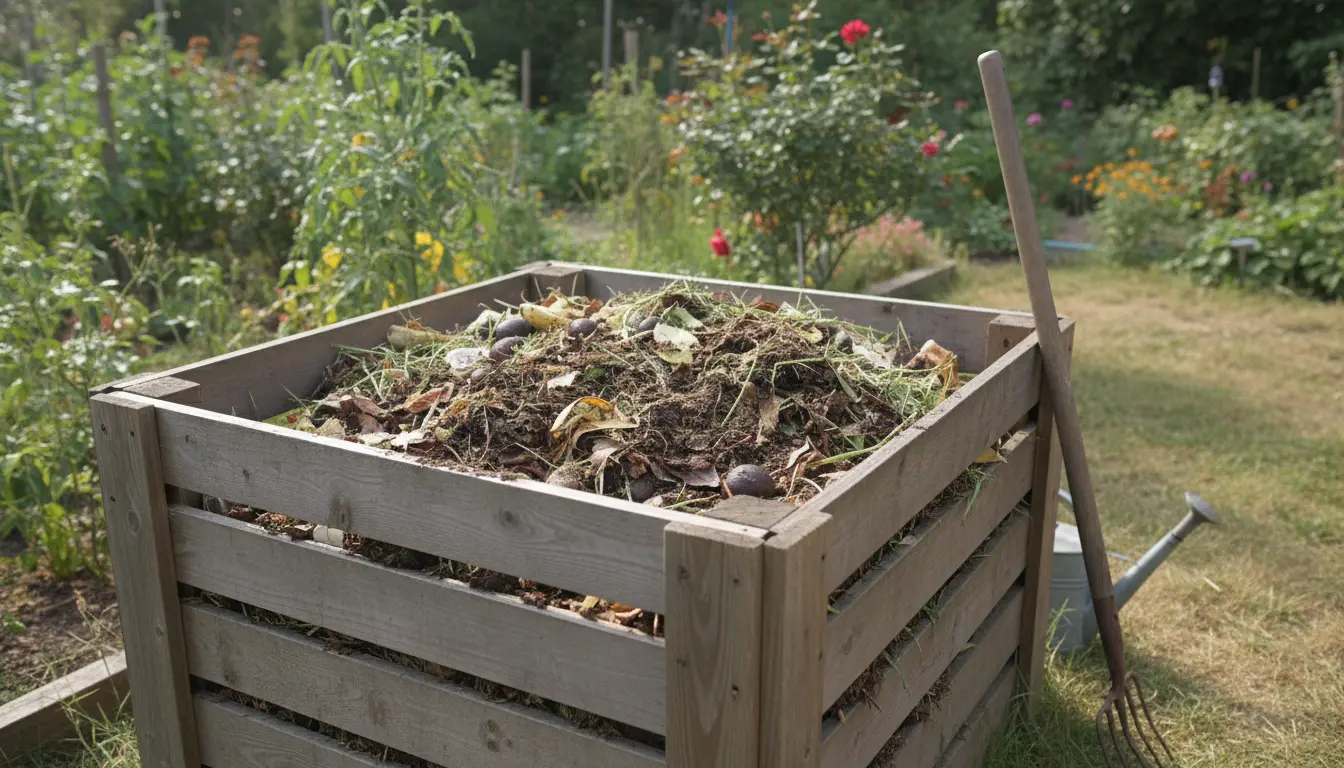
Start Composting at Home Today
Home composting turns kitchen scraps and yard waste into a valuable soil amendment. This guide gives clear, practical steps to begin composting at home without jargon.
Why Home Composting Matters
Composting reduces household waste and lowers methane emissions from landfills. It also returns nutrients to gardens and potted plants, improving soil structure and water retention.
Environmental and financial benefits of home composting
Composting at home cuts organic waste in your trash and can reduce grocery costs by improving garden yields. It is a low-cost way to support healthy plants and local ecosystems.
- Reduces landfill waste and greenhouse gases
- Improves soil and reduces fertilizer needs
- Conserves water through better soil structure
How to Start Home Composting
Choose a method that fits your space and schedule. Small apartments, balconies, and large backyards all have workable options.
Choose a system for home composting
Common setups include: a simple bin, a tumbler, a worm composting system (vermicompost), or a hot compost pile. Each has pros and cons related to speed, odor control, and maintenance.
- Closed bin: Easy and tidy for most homes.
- Tumbler: Faster turning and fewer pests, good for small yards.
- Vermicompost: Great indoors and for tiny spaces; requires red worms.
- Open pile: Cheapest for large gardens but needs space and more management.
Setup basics for home composting
Place your bin on soil or a breathable surface, not concrete, to allow worms and microbes to access the pile. Aim for a mix of ‘green’ and ‘brown’ materials and keep the pile moist but not soggy.
What to Compost and What to Avoid
Knowing what to add helps keep the compost healthy and fast-moving. Balance is the key.
Safe items to add
- Fruit and vegetable scraps
- Coffee grounds and tea bags (remove staples)
- Eggshells (crushed)
- Yard waste: leaves, grass clippings, small twigs
- Shredded paper and cardboard (no glossy print)
Items to avoid in home composting
- Meat, fish, bones, and dairy (attract pests)
- Oily or greasy foods
- Diseased plants or invasive weeds with seeds
- Pet waste from carnivores
Step-by-Step Home Composting Process
Follow these steps to build an active compost pile that decomposes reliably.
- Start with a layer of coarse browns (twigs or straw) for drainage.
- Add alternating layers of greens (kitchen scraps) and browns (leaves, shredded paper).
- Keep the pile moist like a wrung-out sponge; water if dry.
- Turn or mix the pile every 1–2 weeks to add oxygen for microbes.
- Monitor temperature: a warm interior indicates active decomposition.
- Harvest finished compost in 2–6 months depending on method and conditions.
Troubleshooting for Home Composting
Common issues can be fixed with small adjustments rather than throwing out the pile.
Smelly compost
Bad smells indicate too much moisture or too many greens. Add dry browns and turn the pile to introduce air.
Pests and flies
Secure the bin lid and bury fresh food scraps beneath a layer of browns. Use a closed tumbler or indoor worm bin if pests persist.
Slow decomposition
Chop or shred bulky materials, increase turning, and balance greens and browns. Adding a handful of finished compost can introduce helpful microbes.
Small Case Study: One Family’s Home Composting Success
Case: A family of four started a 60-liter tumbler in a suburban yard. They collected scraps in a countertop caddy and emptied it into the tumbler each day.
Results after 6 months:
- Household organic waste reduced by 55%
- Garden yield of tomatoes increased by 20% using compost-amended soil
- Time spent: about 10 minutes per week for turning and maintenance
This shows that a compact system and small weekly effort can deliver measurable waste reduction and gardening benefits.
Composting one ton of food waste can prevent about 0.5 to 1 ton of CO2 equivalent emissions compared with sending it to a landfill.
Quick Tips to Keep Home Composting Simple
- Use a countertop caddy with a tight lid to collect scraps hygienically.
- Chop larger items to speed decomposition.
- Keep a small supply of dry browns nearby for quick layering.
- Be patient: many factors affect speed, and seasonal changes will slow activity in winter.
Home composting is a practical, low-cost way to reduce waste and improve soil health. Start small, stick with the basic balance of greens and browns, and adjust as you learn what works for your space.