
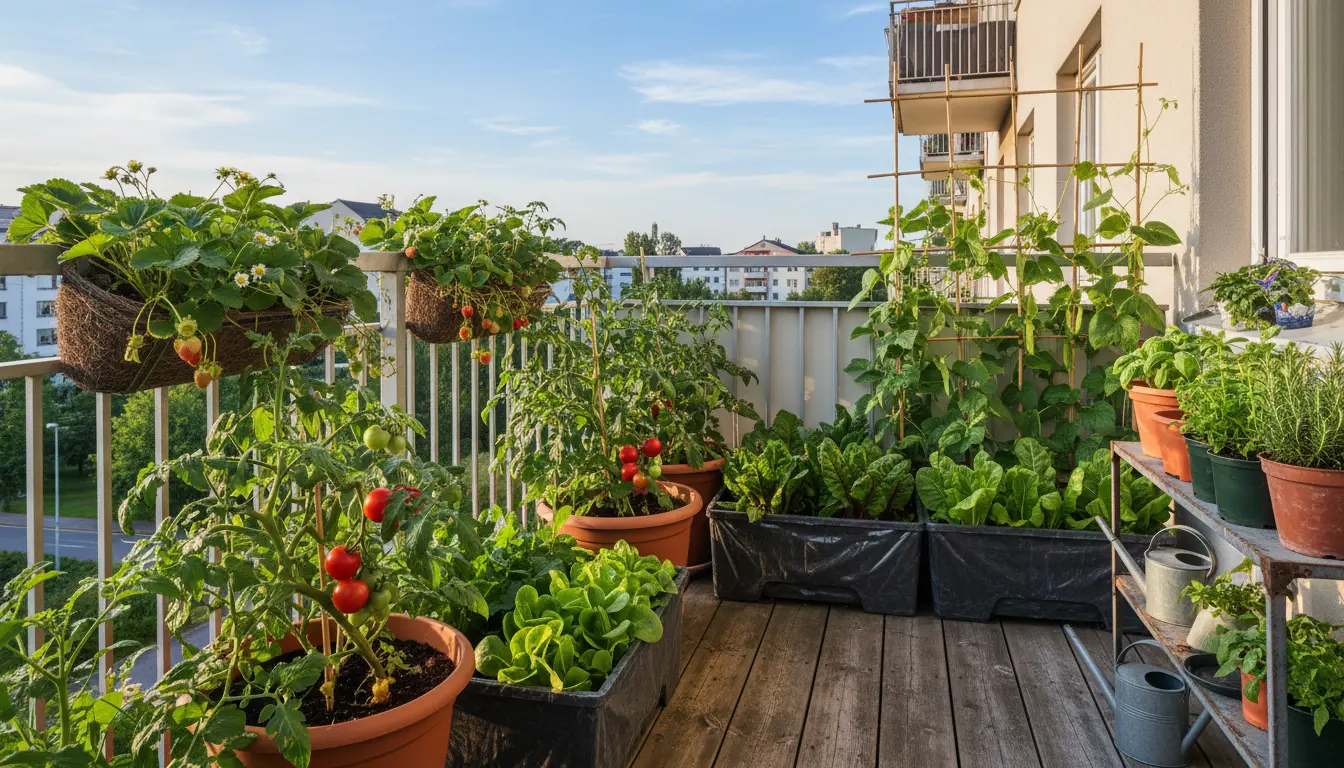
Why Start a Vegetable Garden in Small Spaces
Growing vegetables in tight areas is a practical way to produce fresh food without a yard. Small-space gardening saves money, reduces food miles, and is suitable for apartments, balconies, and patios.
This guide explains the steps to start a vegetable garden in small spaces, including container selection, soil, plant choices, watering, and maintenance.
Choose the Right Location for a Vegetable Garden in Small Spaces
Identify a spot that gets at least 4–6 hours of sunlight daily for most vegetables. South- or west-facing balconies or windowsills are usually best.
Consider wind, shade at different times of day, and ease of access for watering and harvesting.
Pick Containers and Layout for a Vegetable Garden in Small Spaces
Containers can be pots, raised beds, window boxes, or recycled buckets. The container size affects root space and moisture retention.
- Small herbs: 6–8 inch pots
- Leafy greens: 8–10 inch containers
- Tomatoes and peppers: 12–18 inch deep pots
- Root crops like carrots: at least 12 inches deep
Use saucers or trays to protect surfaces and add pot feet for drainage. Arrange taller plants at the back and cascading types near railings to maximize light.
Soil and Fertility for a Vegetable Garden in Small Spaces
Use a high-quality potting mix, not garden soil. Potting mix is lighter and holds water and air better, which is essential in containers.
Mix in slow-release organic fertilizer or add compost to the potting mix. Replenish nutrients every 4–6 weeks with liquid feed during the growing season.
Soil Mix Example
- 50% premium potting mix
- 30% compost or well-rotted manure
- 20% perlite or coarse sand for drainage
Plant Selection and Timing for a Vegetable Garden in Small Spaces
Choose compact or dwarf varieties cultivated for containers. Look for words like patio, bush, or compact on seed packets and plant tags.
Fast-growing crops work well in limited space: lettuce, radishes, spinach, baby carrots, bush beans, and dwarf tomatoes. Succession planting keeps harvests steady.
Seasonal Tips
- Spring: Start with peas, lettuce, spinach, and radishes.
- Summer: Move to tomatoes, peppers, cucumbers (trellised), and basil.
- Fall: Plant kale, spinach, and garlic for overwintering where climate allows.
Watering and Irrigation for a Vegetable Garden in Small Spaces
Containers dry out faster than ground beds, so consistent watering is vital. Check moisture daily in hot weather and water when the top inch of soil feels dry.
Consider drip irrigation, self-watering containers, or a simple wick system for hands-off watering. Mulch the top of pots with straw or shredded leaves to reduce evaporation.
Pest Control and Pollination in Small Spaces
Even small gardens attract pests. Inspect plants weekly and remove pests by hand when possible. Use insecticidal soap or neem oil for soft-bodied insects.
Encourage beneficial insects by planting flowers like marigolds, nasturtiums, or borage nearby. For balconies, gently shake flowering plants to improve pollination for tomatoes and peppers.
Small containers can yield as much as a full garden per square foot if you use intensive planting, vertical space, and succession cropping techniques.
Maintenance and Harvest Strategies for a Vegetable Garden in Small Spaces
Regular pruning, staking, and harvesting promote productivity. Remove yellowing leaves and pinch back indeterminate tomato suckers to control size.
Harvest leafy greens young for tender flavor and continuous growth. Rotate crops in containers each season by replacing a portion of the potting mix.
Quick Maintenance Checklist
- Daily: Check moisture and drooping leaves
- Weekly: Inspect for pests and pinch or prune as needed
- Monthly: Feed with a balanced liquid fertilizer
Case Study: Balcony Tomato and Lettuce Setup
Maria, a city apartment resident, converted a 6-foot balcony into a productive vegetable garden. She used two 18-inch pots for tomatoes and four 10-inch containers for mixed lettuces.
Planting timeline and results over one season:
- Week 1: Planted seedlings in late April
- Weeks 4–8: Regular watering and monthly feeding
- Weeks 8–16: Harvested 8–10 pounds of cherry tomatoes and weekly salad greens
Maria’s success came from using dwarf tomato varieties, vertical trellising, and succession planting for continuous lettuce harvests.
Common Mistakes to Avoid with a Vegetable Garden in Small Spaces
- Using garden soil in containers, which compacts and drains poorly.
- Choosing large plants without enough container depth or support.
- Overwatering or poor drainage leading to root rot.
Address these issues by selecting appropriate containers, using the correct mix, and ensuring drainage holes remain clear.
Final Tips for a Successful Vegetable Garden in Small Spaces
Start small and expand as you learn what works for your microclimate. Keep a gardening journal to track plant performance and conditions.
With the right containers, soil, plant varieties, and consistent care, you can reliably grow fresh vegetables even in the smallest spaces.