
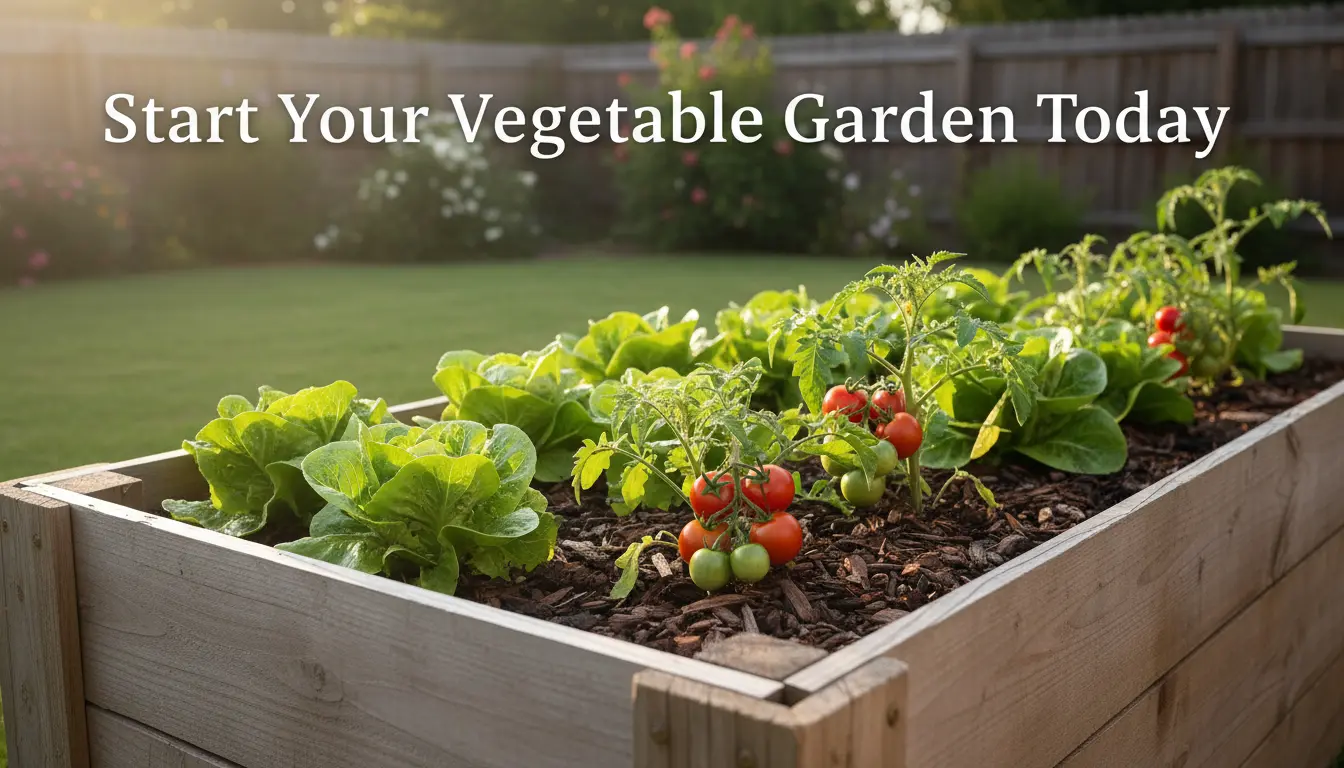
Starting a vegetable garden is a practical way to grow fresh food, save money, and enjoy time outdoors. This guide shows clear, step-by-step instructions so you can start a productive garden even if you have limited space or experience.
How to Start a Vegetable Garden: Choose Location and Size
Choose a spot with at least 6 hours of direct sun per day for most vegetables. Observe the area in the morning and afternoon to confirm sunlight exposure.
Decide on garden size based on available time and space. Beginners should start small: one or two raised beds or a few containers work well.
Key site factors
- Sunlight: 6–8 hours daily for tomatoes, peppers, and beans.
- Soil drainage: avoid low spots that collect water.
- Access: place near a water source and a short walk from the kitchen.
How to Start a Vegetable Garden: Plan What to Grow
Select vegetables you and your family will eat. Choose varieties suited to your climate and season to reduce problems and increase success.
For small gardens, prioritize high-yield and space-efficient crops like lettuce, radishes, bush beans, and cherry tomatoes.
Planning tips
- Start with fast-growing crops (lettuce, radish) for quick rewards.
- Add one or two challenging crops (tomatoes, peppers) as experience grows.
- Use succession planting to extend harvests: sow every 2–3 weeks for continuous greens.
How to Start a Vegetable Garden: Prepare Soil and Beds
Healthy soil is the foundation of a productive garden. Test soil pH and nutrient levels if possible; many local extension services offer low-cost tests.
Improve heavy or poor soil by adding organic matter such as compost or well-rotted manure. Aim for a loose, crumbly texture that drains well.
Bed options
- In-ground beds: cost-effective for larger areas with good native soil.
- Raised beds: easier to control soil quality and drainage; ideal for small yards.
- Containers: best for patios or balconies and small-space gardening.
How to Start a Vegetable Garden: Planting and Spacing
Follow seed packet or plant label spacing to reduce disease and improve air circulation. Overcrowding reduces yields and increases pest problems.
Plant seeds at the recommended depth and keep soil consistently moist until seedlings establish. Use mulch to conserve moisture and suppress weeds.
Companion planting basics
- Pair tall and short crops to maximize light (e.g., corn with beans).
- Avoid pairing crops from the same family in the same spot each year to reduce disease (crop rotation).
How to Start a Vegetable Garden: Watering and Maintenance
Water deeply and less frequently to encourage strong root growth. A typical schedule is 1–2 inches per week, adjusted for weather and soil type.
Use drip irrigation or soaker hoses to deliver water directly to the soil and reduce leaf wetness, which can lower disease risk.
Regular tasks
- Weed weekly to reduce competition.
- Monitor for pests and diseases; take action early with manual removal or organic controls.
- Feed plants with balanced fertilizer or compost tea as needed based on crop needs.
Tomatoes and peppers are heavy feeders and often benefit most from two boosts of organic fertilizer during the growing season: once at first fruit set and again four weeks later.
Small Real-World Example
Case study: A homeowner with a 10-by-4 foot raised bed planted a mix of lettuce, carrots, bush beans, and two determinate tomato plants. By improving soil with 3 inches of compost and using drip tape, they harvested salad greens within 30 days and sustained tomatoes through the summer. The small bed produced enough vegetables for a family of three and reduced grocery salad purchases by 40% that season.
How to Start a Vegetable Garden: Troubleshooting Common Problems
Leaf yellowing can indicate nutrient deficiency, overwatering, or compacted soil. Check drainage and consider a soil test to identify nutrient gaps.
Pest outbreaks often start small; inspect leaves and stems weekly. Hand-pick larger pests and use insecticidal soaps or row covers for protection when needed.
Seasonal adjustments
- Start seeds indoors 4–8 weeks before last frost for long-season crops.
- Use shade cloth in extreme heat to protect tender crops like lettuce.
- Plan for fall crops in late summer by sowing brassicas and root vegetables for cooler weather harvests.
Starting a vegetable garden is manageable when you focus on good site selection, healthy soil, proper watering, and steady maintenance. Begin small, learn each season, and expand as you gain confidence.
Use this plan to choose the right site, prepare the soil, pick crops suited to your needs, and maintain a thriving garden that provides fresh vegetables throughout the season.