
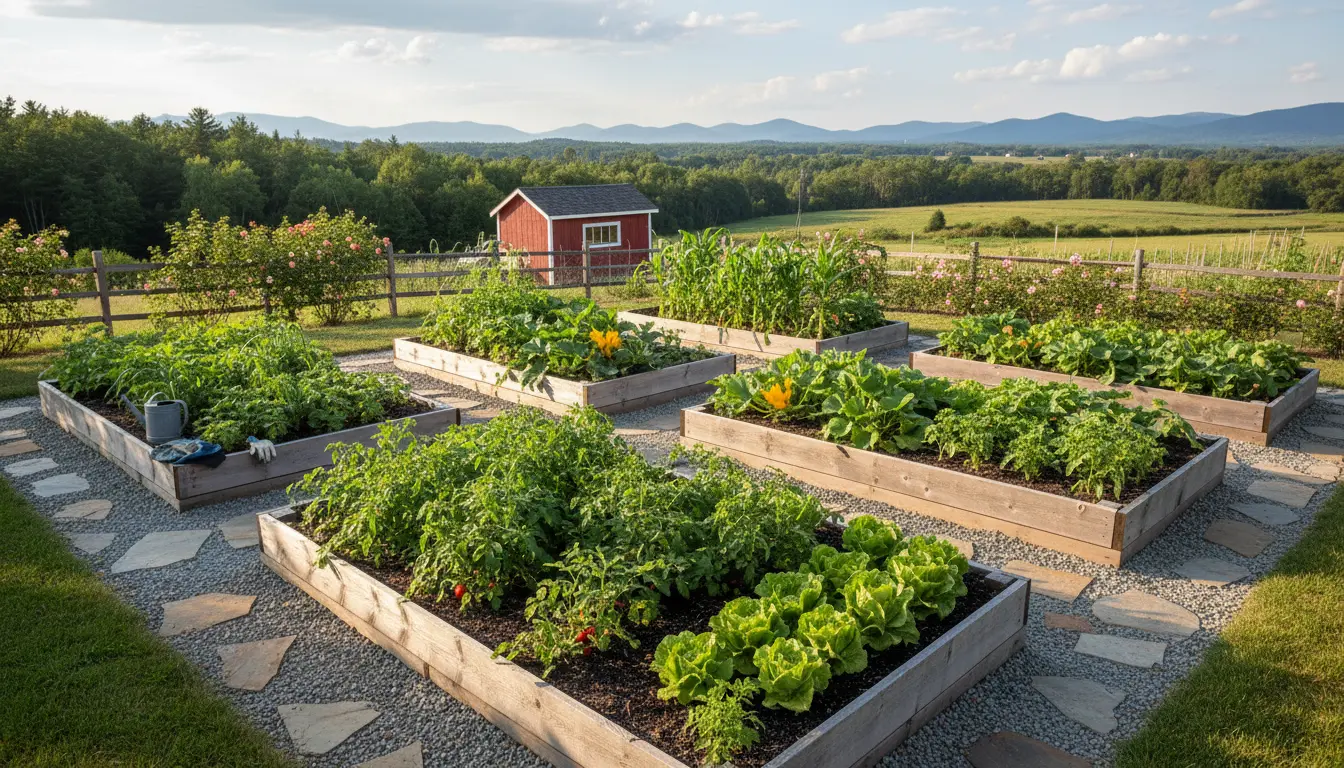
Starting a vegetable garden can be simple and rewarding. This guide breaks the process into clear steps so beginners can plan, plant, and maintain a productive garden with confidence.
Choose the Right Spot for Your Vegetable Garden
Location is the first choice you make when you start a vegetable garden. Pick a spot with at least six hours of direct sunlight, good drainage, and easy access to water.
Consider these points when selecting the site:
- Sun: Most vegetables need 6–8 hours of sun per day.
- Drainage: Avoid low spots that stay wet after rain.
- Access: Locate near a hose or rain barrel for easier watering.
- Wind protection: Shelter from strong winds with fences or hedges.
Decide Garden Type and Size
Think about the time and space you have. Beginners do well with one or two raised beds, containers, or a small in-ground patch.
Raised beds
Raised beds warm faster in spring and offer better soil control. They work well on compacted or poor-quality ground.
Containers
Containers are ideal on patios or balconies and are low maintenance. Choose pots large enough for root crops and ensure good drainage.
In-ground plots
In-ground gardens can be large and productive but require more soil work and weed control. Start small and expand as you gain experience.
Prepare Soil to Grow Vegetables
Healthy soil is the foundation of a productive vegetable garden. Test and amend soil before planting to ensure good structure and fertility.
Steps to prepare soil:
- Test soil pH with a store kit or local extension service.
- Add compost to improve texture and nutrients.
- Work in aged manure or balanced organic fertilizer if needed.
- For raised beds, use a mix of topsoil, compost, and coarse sand or perlite for drainage.
Choose Easy Vegetables for Beginners
Start with vegetables that are forgiving and fast to harvest. This builds confidence and delivers early rewards.
- Leafy greens: lettuce, spinach, and Swiss chard.
- Root vegetables: radishes and carrots.
- Nightshades: cherry tomatoes and peppers (container-friendly).
- Beans and peas: require simple trellises and grow quickly.
Companion planting tip
Plant basil near tomatoes to help repel pests and improve flavor. Marigolds can reduce some soil nematodes and insect damage.
Planting and Watering Basics
Follow seed packet instructions for depth and spacing when you start seeds directly. Transplants should be planted at the same depth as their nursery pots unless otherwise advised.
Watering guidelines:
- Water deeply and less often to encourage strong roots.
- Morning watering reduces disease risk compared with evening watering.
- Use drip irrigation or soaker hoses to deliver water to the root zone and save water.
Simple Maintenance for a Healthy Garden
Regular but brief maintenance sessions keep the garden productive. Spend 15–30 minutes, two to three times a week, on the following tasks.
- Weeding to reduce competition for nutrients and water.
- Inspecting for pests and diseases early to avoid larger problems.
- Removing spent plants or harvesting on time to encourage continuous production.
Organic pest control methods
Use hand-picking, insecticidal soap, or floating row covers for physical protection. Encourage beneficial insects like ladybugs and lacewings by planting nectar-rich flowers nearby.
Harvesting and Crop Rotation
Harvest vegetables at their peak for best flavor and nutrition. Frequent harvesting of lettuce and herbs encourages more growth.
Practice simple crop rotation by not planting the same family in the same spot season after season. This reduces disease and pest build-up in the soil.
Small Case Study: A First-Year Raised Bed
Maria, a homeowner with a small sunny yard, started a 4×4 ft raised bed in spring. She filled it with a mix of topsoil and compost and planted tomatoes, lettuce, and bush beans.
She watered with a soaker hose and mulched around plants to conserve moisture. By midsummer, she was harvesting salads weekly and had a steady supply of beans. The raised bed produced enough for her family of three and taught her which crops worked best in her microclimate.
Quick Checklist to Start a Vegetable Garden
- Select a sunny site with good drainage.
- Decide on raised beds, containers, or in-ground plots.
- Test and improve soil with compost and amendments.
- Choose easy crops for your first season.
- Water deeply, mulch, and monitor for pests.
Final Tips for New Gardeners
Start small, keep a planting calendar, and learn from each season. Gardening is an iterative process where observation leads to better results next year.
Join a local gardening group or consult extension service resources for region-specific advice. With basic planning and regular care, you can grow fresh vegetables successfully even as a beginner.