
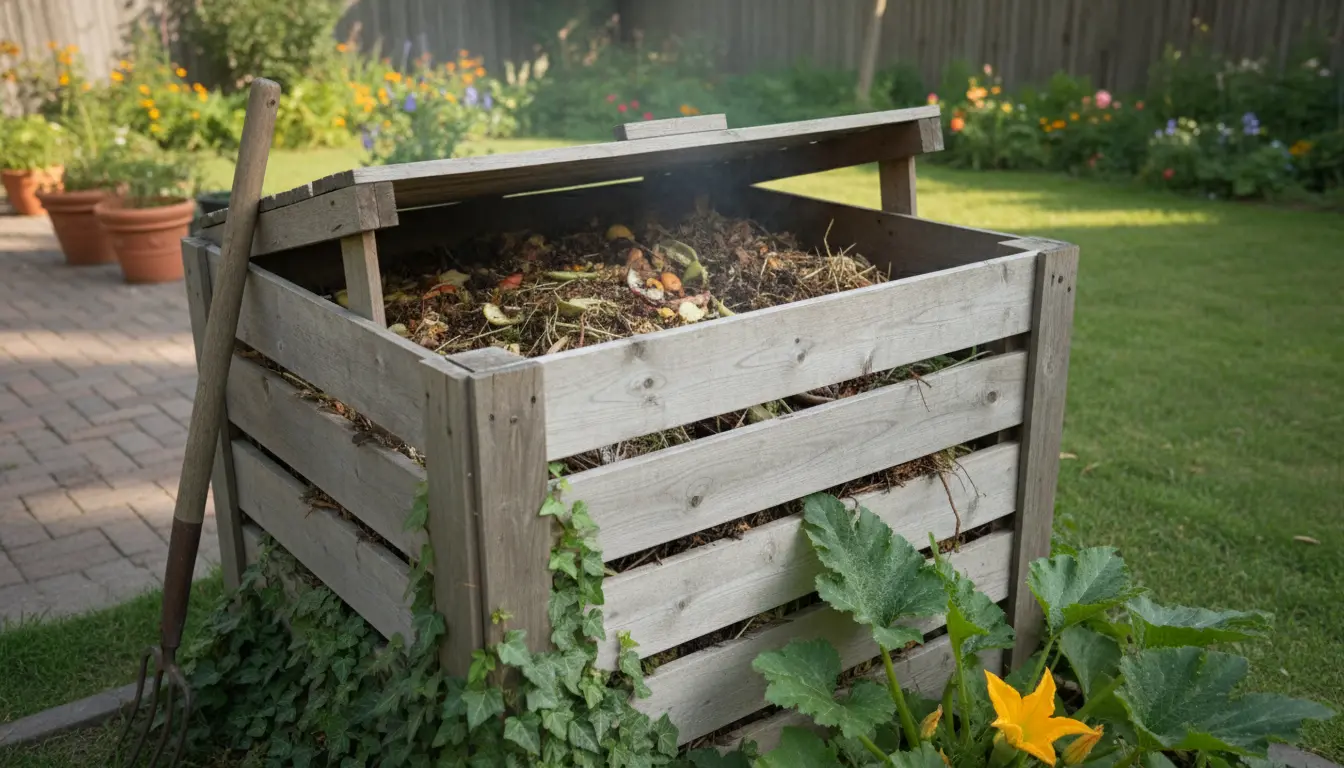
Home Composting Basics
Home composting turns kitchen scraps and yard waste into rich soil amendment. It reduces trash and improves garden health with minimal cost.
This guide walks you through the basics, startup choices, daily care, and common problems so you can start composting at home today.
What Is Home Composting?
Composting is the controlled breakdown of organic material by microbes, fungi, and small invertebrates. The result is humus, a nutrient-rich material that improves soil structure and plant growth.
Benefits of Home Composting
- Reduces household waste and trash collection costs.
- Provides free fertilizer for lawns and gardens.
- Improves soil water retention and aeration.
- Reduces methane emissions from landfills.
How to Start Home Composting
Starting home composting requires just a few decisions: system type, location, and what materials to compost. Choose an approach that fits your space and schedule.
Choosing a Bin or Pile
Pick a container based on available space and effort. Options include a simple backyard pile, tumblers, or stationary bins.
- Backyard pile: Low cost, good for large amounts of yard waste.
- Bin or tumbler: Tidy, faster decomposition, easier to turn.
- Indoor Bokashi or worm bin (vermicompost): Great for apartments or small kitchens.
Materials to Compost
Successful home composting balances carbon-rich “browns” and nitrogen-rich “greens.” Layer them and maintain moisture for active decomposition.
- Greens (nitrogen): vegetable scraps, coffee grounds, fresh grass clippings.
- Browns (carbon): dry leaves, shredded paper, straw, cardboard.
- Small amounts of soil or finished compost to introduce microbes.
What to Avoid
Exclude items that slow composting or attract pests. Avoid meat, dairy, oily foods, diseased plants, and pet waste from carnivores.
Managing Your Compost
Basic care involves maintaining the right moisture, turning the pile, and monitoring temperature. Regular attention speeds up the process and prevents odors.
Moisture and Aeration
Compost should feel like a wrung-out sponge. Add water during dry spells and mix in browns if it’s too wet. Turning the pile every 1–3 weeks introduces air and promotes even decomposition.
Temperature and Timing
A hot compost pile (between 40–65°C or 104–149°F) destroys weed seeds and breaks materials quickly. Cold composting takes longer but still produces good soil over months.
Troubleshooting Common Issues
- Smelly compost: Usually too wet or too many greens. Add browns and turn the pile.
- Slow breakdown: Increase surface area by chopping materials and ensure proper moisture.
- Pests: Use closed bins, bury food scraps, and avoid meat/dairy.
- Too dry: Add water and greens to reactivate the pile.
Home Composting Tips and Best Practices
Small habits improve results. Chop larger items, keep a countertop container for scraps, and layer materials rather than dumping everything in at once.
- Store kitchen scraps in a covered container or freezer until transfer day.
- Shred cardboard and paper before adding to speed decomposition.
- Mix new material into the center of the pile to heat it up faster.
Composting one ton of organic waste can save about 0.9 to 1.5 metric tons of CO2 equivalent by avoiding methane production in landfills.
Case Study: Small Urban Garden Success
Example: A two-person household in a city started a worm bin in year one and a 3-bin backyard system in year two. They diverted 120 kg of kitchen waste in the first year and produced enough compost for two raised beds.
Result: Their tomato harvest improved, soil water retention increased, and they reduced weekly trash volume by nearly 40% within 12 months.
Practical Steps to Start This Week
- Choose a bin or method that suits your space.
- Collect a small supply of browns (shredded paper, leaves).
- Begin a small pile or bin and add a mix of greens and browns.
- Monitor moisture and turn once every 1–3 weeks.
- Use finished compost on houseplants or garden beds after 2–6 months.
Home composting is practical and flexible. Start small, adjust as you learn, and scale up when you’re comfortable. The result is less waste, healthier soil, and a more sustainable home.