
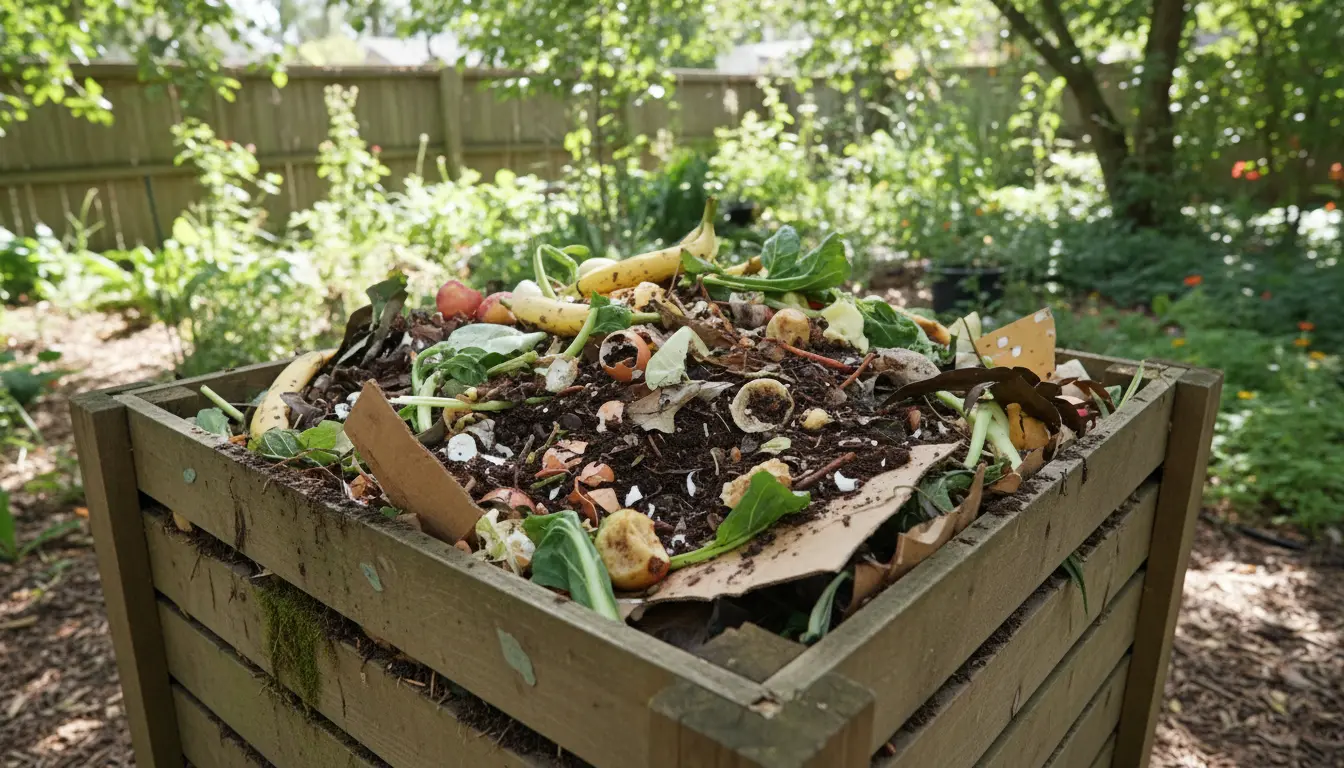
Why Choose Home Composting for Beginners
Home composting turns kitchen scraps and yard waste into a useful soil amendment. It reduces landfill waste, lowers household odor problems from trash, and feeds your garden naturally.
This guide focuses on simple, low-maintenance methods that work for most households. No fancy equipment or advanced knowledge is required.
Home Composting for Beginners: Getting Started
Decide on a composting method that fits your space: a backyard bin, tumblers, or a simple pile. Apartment dwellers can use a worm bin (vermicompost) or a sealed countertop container transferred regularly to a community compost site.
Gather basic supplies: a container or bin, a garden fork or turning tool, and a balance of green and brown materials. You can start small and scale up as you learn.
What to Compost: Home Composting for Beginners
Compost materials fall into two groups: greens and browns. Greens provide nitrogen and moisture; browns provide carbon and structure.
- Greens: vegetable scraps, fruit peels, coffee grounds, fresh grass clippings.
- Browns: dry leaves, shredded newspaper, cardboard, straw, small twigs.
Aim for a rough 2:1 to 3:1 ratio of browns to greens by volume. Too many greens make the pile soggy and smelly; too many browns slow decomposition.
Simple Steps to Build a Compost Bin
Follow these basic steps to create a functional compost setup that a beginner can manage easily.
- Choose a location: partial sun and good drainage are ideal.
- Assemble the bin: use a purchased bin, wooden pallet frame, or a plastic garbage can with holes for airflow.
- Add a base layer: coarse browns or small branches to allow airflow at the bottom.
- Start layering: alternate greens and browns in thin layers to maintain balance.
- Moisten: the pile should feel like a wrung-out sponge; add water if dry.
- Turn periodically: use a fork or shovel to mix the pile every 1–2 weeks for faster results.
Managing Your Compost: Tips and Troubleshooting
Compost needs air, moisture, and a balance of materials. Adjust these three elements to fix common problems.
- Smelly pile: add more browns and turn the pile to introduce air.
- Slow breakdown: chop materials smaller and add moisture and nitrogen-rich greens.
- Pests and rodents: avoid meat, dairy, oily foods, and put food scraps in the center of the pile or in a closed bin.
- Too dry: water lightly and cover the pile during dry spells.
Speeding Up Compost for Quick Results
If you want finished compost faster, increase the surface area and heat. Shredding materials and keeping the pile moist and turned will promote faster microbial activity.
Hot composting (maintaining internal temperatures of 130–150°F) can finish in a few months. For beginners, a cold composting approach that produces usable compost in six months to a year is simpler.
Using Finished Compost
Finished compost is dark, crumbly, and smells earthy. Use it to improve soil structure, retain moisture, and add nutrients.
- Top-dress garden beds with a 1–2 inch layer in spring or fall.
- Mix into potting soil at a 10–25% ratio for container plants.
- Use as mulch around shrubs and trees to suppress weeds and conserve water.
One household can divert up to 30% of its waste from the trash by composting kitchen and yard scraps. That reduces methane emissions and returns nutrients to the soil.
Real-World Example: A Small Urban Garden Case Study
Maria, an apartment gardener, started a 20-liter worm bin on her balcony. She deposited kitchen scraps every other day and added shredded paper for bedding.
After four months, she harvested rich worm castings and applied them to two raised beds. Her tomato plants grew more vigorously, and she reported fewer watering needs thanks to improved soil retention.
Tools and Low-Cost Options for Home Composting for Beginners
You don’t need expensive tools to start. A pitchfork or garden fork helps turn the pile, a compost thermometer can be useful for hot composting, and a simple bin or DIY pallet frame works fine.
For apartments, vermicompost kits and countertop pails make indoor composting manageable.
Common Mistakes to Avoid
- Adding meat, dairy, or oily foods to open piles.
- Neglecting to balance greens and browns.
- Expecting instant results—composting is a biological process that takes time.
Final Checklist for Home Composting for Beginners
- Choose the right bin for your space (outdoor bin, tumbler, or worm bin).
- Maintain a 2:1 to 3:1 brown-to-green ratio.
- Keep the pile moist but not waterlogged.
- Turn the pile periodically to introduce oxygen.
- Monitor and adjust based on smell, moisture, and decomposition rate.
Starting home composting is a small change with big benefits. With basic materials and a little attention, beginners can reduce waste, enrich soil, and support healthier gardens year-round.