
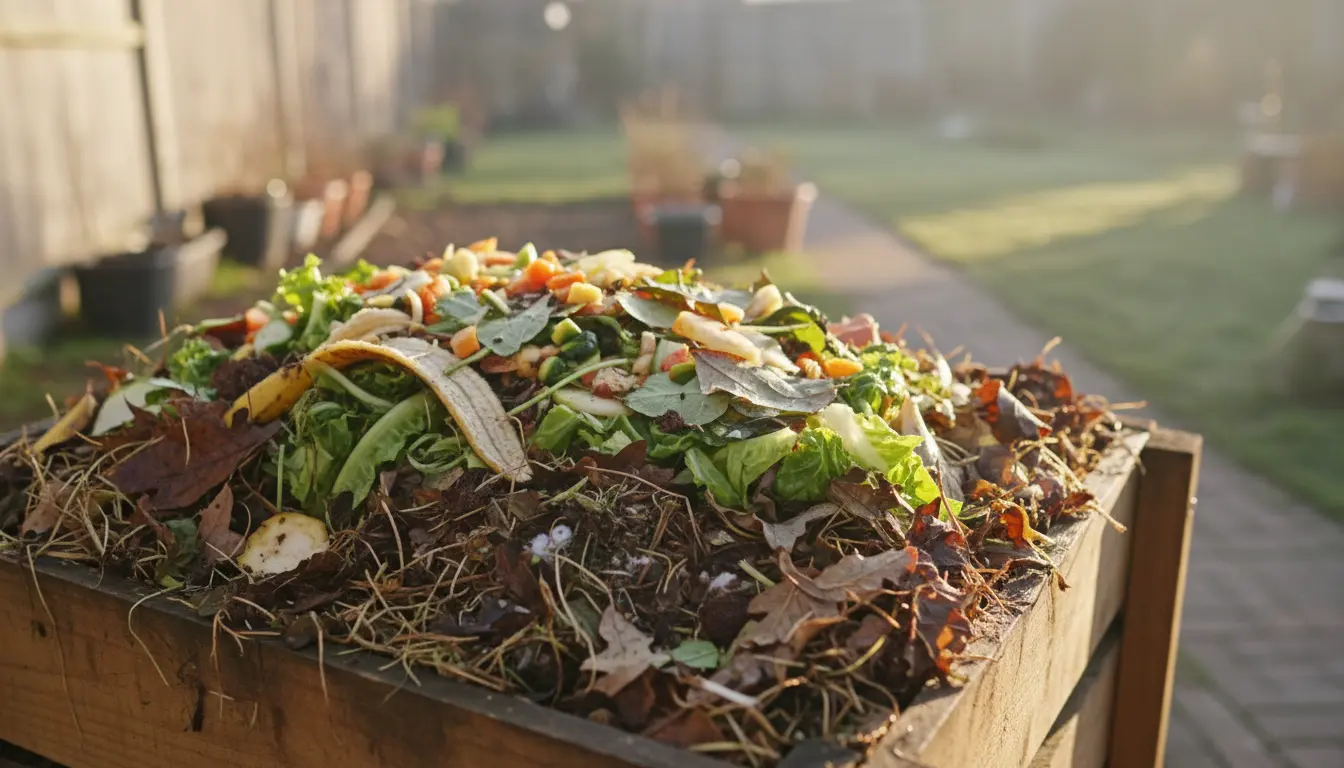
Why Home Composting Matters
Home composting turns kitchen and yard waste into useful soil amendment. It reduces landfill waste, lowers methane emissions, and improves garden soil structure.
Composting is accessible for apartment dwellers and homeowners alike. With simple equipment and basic routine care, most households can manage effective composting.
How to Start Home Composting
Starting home composting requires choosing a system, collecting appropriate materials, and learning basic maintenance. Follow these steps to get reliable results fast.
1. Choose a Compost System
Select a compost setup that fits your space and needs. Options vary from simple bins to tumblers and worm composting.
- Open pile: Low cost, works well for yards with space.
- Compost bin: Neat and contained; good for suburban backyards.
- Tumbler: Faster mixing and easier turning; good for small lots.
- Vermicompost (worms): Ideal for apartments or kitchen-only waste.
2. Know What to Compost
Balance ‘greens’ (nitrogen-rich) and ‘browns’ (carbon-rich) to keep decomposition healthy. Aim for roughly 2–3 parts browns to 1 part greens by volume.
- Greens: Fruit and vegetable scraps, coffee grounds, fresh grass clippings.
- Browns: Dry leaves, shredded paper, cardboard, straw, wood chips.
- Avoid: Meat, dairy, oils, diseased plants, and pet waste.
3. Start Layering and Maintain Moisture
Begin with a layer of coarse browns to aid airflow at the base. Alternate greens and browns in thin layers to prevent compaction.
Keep the pile as damp as a wrung-out sponge. Too dry and microbes slow down; too wet and it smells. Adjust with water or more browns as needed.
4. Aeration and Turning
Oxygen fuels the microbes that break down organic matter. Turn the pile every 1–2 weeks to introduce air and speed up decomposition.
Tumblers simplify turning. For bins, a garden fork or compost aerator can help. Vermicompost systems need surface mixing instead of deep turning.
Common Problems and Troubleshooting
Even small issues are solvable with quick adjustments. Use the checklist below to diagnose common composting problems.
- Bad smell: Add more browns, turn to increase airflow, or check for excess moisture.
- Pile is dry and slow: Add greens and water lightly.
- Pests: Avoid adding meat or oily foods, secure the bin, and bury scraps under browns.
- Not heating up: Add fresh greens, increase pile size, or insulate the bin to retain heat.
How to Use Finished Compost
Finished compost is dark, crumbly, and earthy-smelling. It can be used in the garden, potted plants, or as a lawn top dressing.
- Soil amendment: Mix 1–2 inches into topsoil before planting.
- Mulch: Spread 1–3 inches around plants to retain moisture.
- Potting mix: Blend one part compost with two parts potting soil for container plants.
Composting one ton of organic waste prevents roughly 0.5 to 1 ton of carbon dioxide equivalent from entering the atmosphere, depending on local landfill conditions.
Small Case Study: One Household’s Results
Sarah, a homeowner in Portland, started a 50-gallon compost bin and a small worm bin for kitchen scraps. She kept a simple rule: all food scraps went into the worm bin or were buried under browns.
In six months she reduced her weekly trash by about 60% and produced a steady supply of compost used in raised beds. A few simple changes—shredding leaves and regular turning—improved composting speed and reduced odors.
Practical Tips for Busy Households
Make composting simple so it sticks as a habit. Small adjustments can lead to consistent results.
- Use a countertop compost pail with a tight lid for easy collection.
- Freeze scraps if you can’t compost them immediately to prevent pests.
- Keep a bag of shredded paper or dry leaves handy to balance greens quickly.
- Set a calendar reminder to turn a bin every 1–2 weeks.
Quick Checklist to Start Home Composting
- Choose a compost system that fits your space and lifestyle.
- Collect greens and browns separately to balance layers.
- Keep the pile moist but not wet and aerate regularly.
- Monitor for pests and smells; adjust materials and turning frequency.
- Harvest finished compost when it is dark and crumbly.
Home composting is a manageable, low-cost way to reduce waste and improve soil. Start small, learn from a few cycles, and adapt the process to your household’s rhythm.