
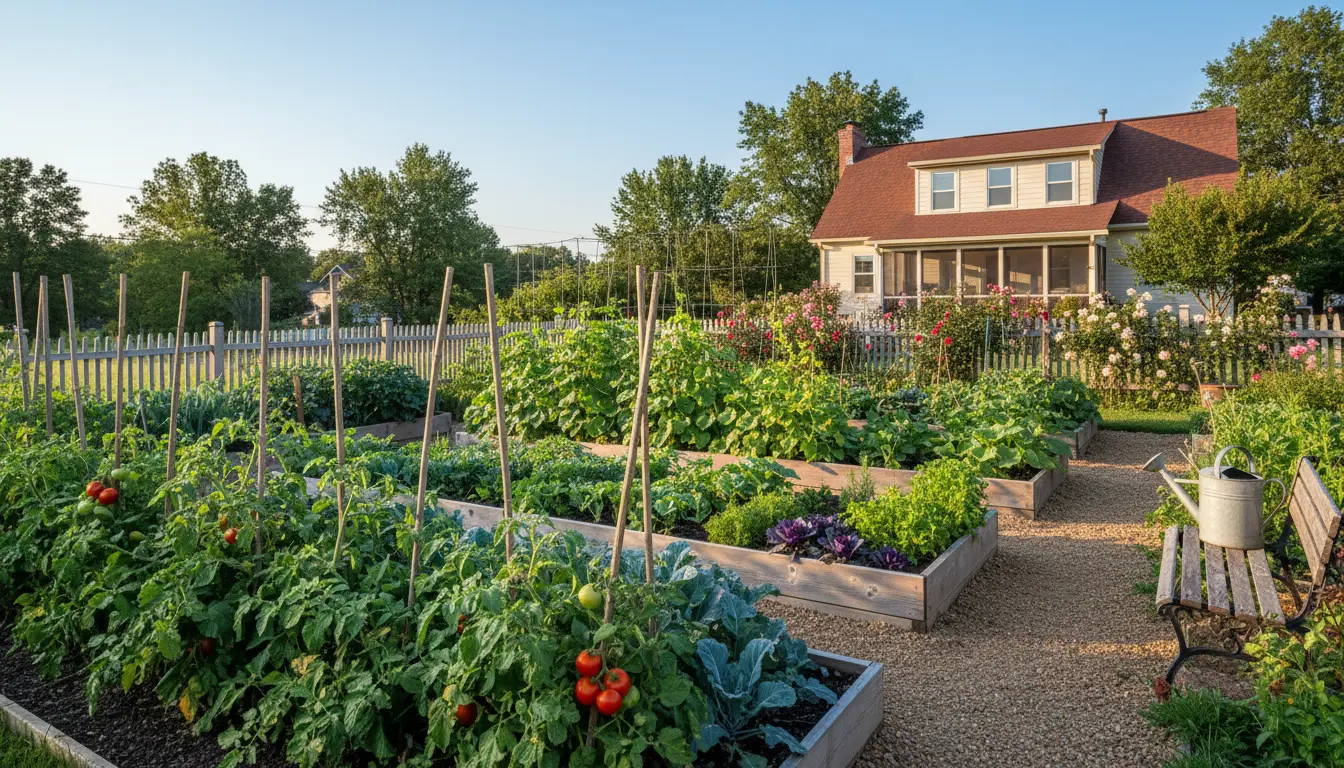
Why Start a Vegetable Garden
Growing your own vegetables saves money and gives you fresher, tastier produce. A beginner vegetable garden is also a manageable project that builds skills season by season.
This guide gives clear steps you can follow in a small backyard or on a balcony. No advanced tools or prior experience required.
Planning Your Vegetable Garden
Start by choosing the right location. Most vegetables need 6–8 hours of direct sunlight and good drainage.
Decide on garden type: in-ground beds, raised beds, or containers. Each has pros and cons for soil control, drainage, and spacing.
Site Selection for Your Vegetable Garden
Look for a level area with full sun and easy access to water. Avoid low spots where water collects.
Consider wind exposure and nearby trees that may compete for nutrients and light.
How Much Space Do You Need
Beginners can start with a 4×4 or 4×8 raised bed, or a few large containers. These sizes are easy to maintain and provide a measurable yield.
Plan walkways so you can reach plants without stepping on beds.
Soil and Bed Preparation for a Healthy Vegetable Garden
Soil quality is the most important factor for plant health. Test soil pH and texture if possible.
Most vegetables prefer slightly acidic to neutral soil (pH 6.0–7.0).
How to Improve Soil for a Vegetable Garden
- Add 2–4 inches of compost to feed soil life and improve structure.
- For heavy clay, mix in coarse sand and organic matter to improve drainage.
- For sandy soils, add compost and well-rotted manure to retain moisture.
Choosing Vegetables for a Beginner Vegetable Garden
Pick vegetables that are easy to grow and forgiving of small mistakes. Fast-growing crops give quick wins.
Best Vegetables for a Beginner Vegetable Garden
- Tomatoes (determinate types for small spaces)
- Lettuce and salad greens (quick harvest)
- Zucchini and summer squash (high yield)
- Radishes and carrots (root crops for containers)
- Beans and peas (easy to train on supports)
Planting Schedule and Techniques
Check your local frost dates and plan sowing or transplanting accordingly. Cool-season crops go in early spring, while warm-season crops need frost-free conditions.
Follow seed packet spacing recommendations and plant at the correct depth for each crop.
Succession Planting Tips for a Productive Vegetable Garden
- Plant fast crops (radishes, lettuce) every 2–3 weeks for continuous harvest.
- After harvesting a spring crop, replant with a summer crop if conditions allow.
- Use vertical supports to increase space and air flow for vining plants.
Watering and Maintenance
Consistent watering is critical. Most vegetables need about 1 inch of water per week, more during hot or dry spells.
Water at the base of plants early in the morning to reduce evaporation and disease risk.
Simple Daily and Weekly Tasks
- Check soil moisture and adjust irrigation.
- Pull weeds before they set seed.
- Monitor for pests and signs of disease; remove affected leaves.
Pest Control and Organic Options for Your Vegetable Garden
Start with prevention: healthy soil, proper spacing, and crop rotation reduce pest pressure. Encourage beneficial insects like ladybugs and lacewings.
Use physical barriers, hand-picking, or organic sprays only when needed.
Common Pest Solutions
- Aphids: blast with water or use insecticidal soap.
- Slugs: set traps or use diatomaceous earth around seedlings.
- Blight or fungal issues: improve air flow and avoid wetting foliage.
Harvesting and Storage
Harvest vegetables at peak ripeness for the best flavor and nutrition. Use sharp shears to avoid damaging plants.
Store crops appropriately: leafy greens refrigerated, root vegetables in cool, dark storage, and tomatoes at room temperature until fully ripe.
Many herbs and some vegetables release natural compounds that deter pests. Planting basil near tomatoes can improve flavor and help reduce insect problems.
Small Real-World Example
Case study: Sarah transformed a 10×10 ft backyard corner into one 4×8 raised bed and four 12-inch containers. She planted cherry tomatoes, basil, two lettuce succession rows, and bush beans.
In her first season she harvested enough salad greens for two people all summer and 20–25 pounds of tomatoes by mid-fall. Her total investment was under $150 including soil and plants.
Final Checklist to Start Your Vegetable Garden
- Choose a sunny, accessible site.
- Decide bed type: raised bed, in-ground, or containers.
- Improve soil with compost and test pH when possible.
- Select easy crops and follow planting dates for your area.
- Set up watering, monitor pests, and harvest promptly.
Starting a beginner vegetable garden is a step-by-step process. Focus on simple, consistent care and you will build confidence and better yields each season.